
Opinion: A metal-clad hybrid with Polar smarts is exactly what the doctor ordered, but Casio needs to finally get serious about the category
There was a period in the mid-2010s when hybrid smartwatches seemed to be the most sensible corner of the wearable world.
It was a neat agreement: keep the mechanical watch hands and your dignity, and we’ll hide a step counter and some vibration motors under the dial. It was a way for the traditional ‘big watch’ players to enter the arena without looking like they were trying to out-Silicon Valley Apple.
But we all know how that story ended. The execution was more often than not half-baked. We saw Fossil Group flood the market with dozens of versions that eventually felt like they were simply maintaining position before they bailed on the category entirely last year.
Even Garmin, whose specialty is finding success in a niche, seems to have gone quiet on its Vivomove line—that clever (but ultimately fiddly) concept of physical hands hovering atop an E-ink display.
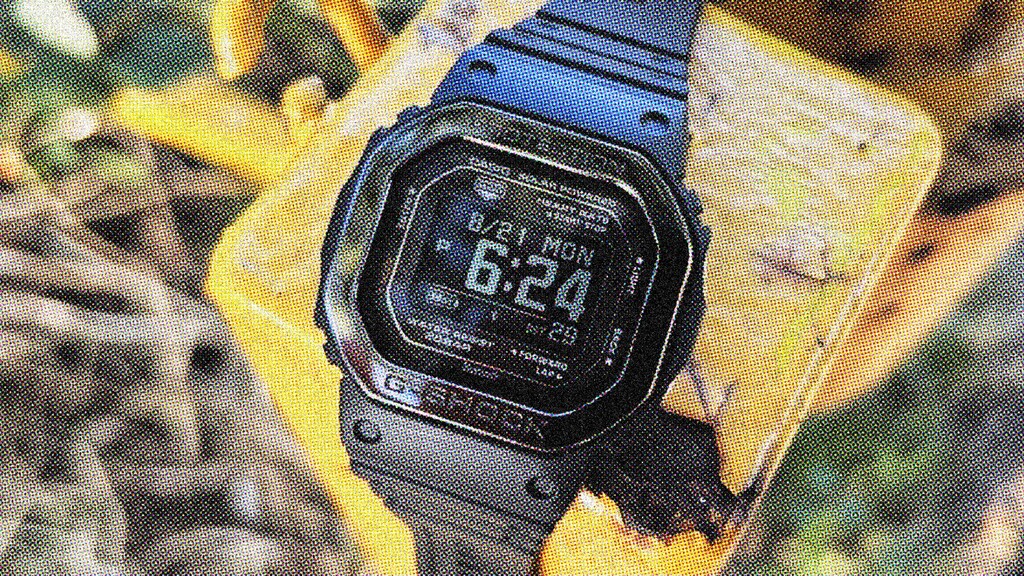
Now, news of a rumored Casio G-Shock GM-H5600 has leaked, suggesting a ‘Full Metal’ version of the square-faced hybrid we reviewed in 2023.
On its own, a metal bezel isn’t going to shift the tectonic plates of the hybrid watch industry. But it’s an indication that Casio is sitting on an opportunity it doesn’t quite seem to know how to exploit.
Advertisement
The Fossil fallout and the search for a hero
So, why did the hybrid dream sour? It’s a mix of things, but mostly it felt like a weird fit. Tech brands tried to make watches that looked classy but lacked soul, while fashion brands like Fossil produced watches from fashion houses that looked great but had shallow tech that ticked boxes without adding real value.
Since Fossil’s exit from the smartwatch market in 2022, the hybrid space has been quiet. It’s as if everyone decided that if you want health data without a screen, you just buy an Oura Ring or a Whoop 5.0 and be done with it.
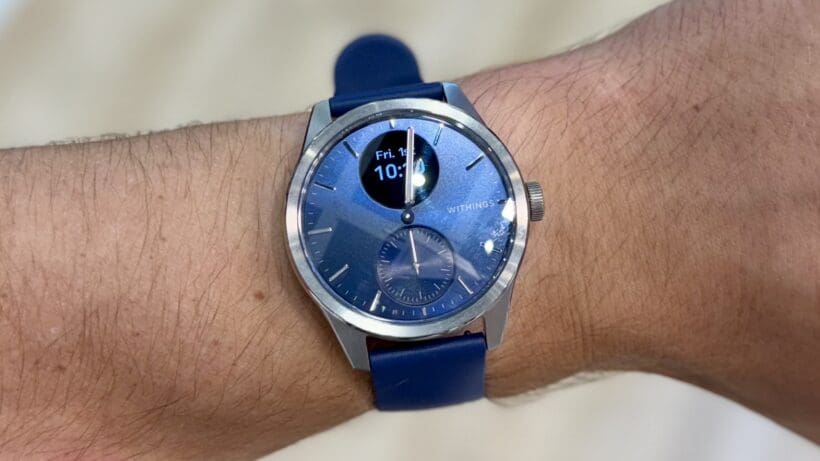
The only one who has saved face in this niche is Withings. It’s had its ups and downs as a brand, but its ScanWatch models have outlasted the rest. Why? Well, Withings isn’t a watch brand trying too hard; it’s a health company that realized a watch is a great vehicle for its sensors and can tie in with the rest of its hardware. Withings doesn’t try and be something it’s not.
 (Image credit: Wareable)
Casio, however, has something Withings will never have: genuine, cult-level credibility among watch enthusiasts. The G-Shock Square is a design icon. And if Casio could stop treating its hybrids like sporadic, regional side-quests and actually define what a G-Shock hybrid is, it could dominate this space.
Getting serious about the Polar partnership
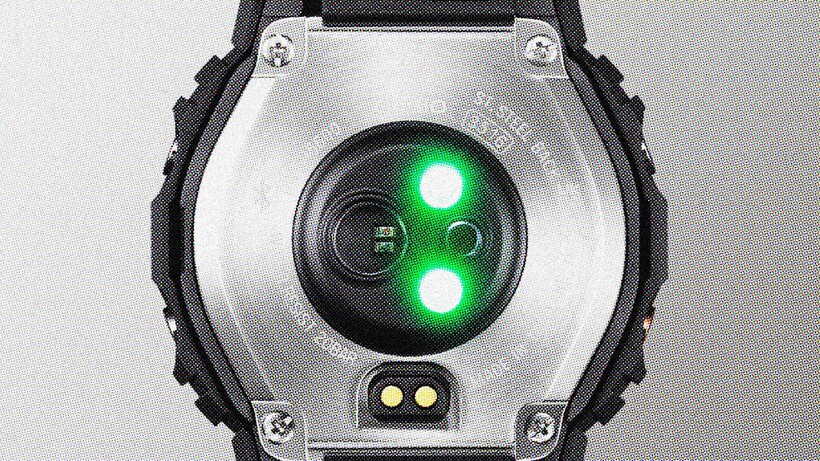
To be fair, Casio has already dipped its toes in. The DW-H5600 and the GBD-H2000 were decent attempts, and the partnership with Polar was a smart move. Let’s be honest: Polar’s own software is hardly the gold standard anymore, but what it can produce is still miles ahead of the clunky, unreliable software Casio was trying to build in-house.
Advertisement
The problem, as we say, is that these launches feel a bit random. We get a resin version here, a metal bezel there, and half the time the best features are locked to specific markets or buried in an app that still feels a decade behind the competition.
If this rumored metal GM-H5600 is going to mean anything, it needs to act as the launch of a consistent, global strategy. Casio needs to stop testing smart features and start integrating them as standard premium features across the whole range.
 (Image credit: Wareable)
This could be the Ray-Ban Meta moment for the hybrid industry—where the smart version of a ‘dumb’ icon integrates so well that the tech seems like an invisible upgrade rather than a compromise.
Solving the obsolescence anxiety
The biggest hurdle for the people who actually buy G-Shocks—the collectors and the tough-watch purists—is software obsolescence.
Nobody wants to spend $500 on a metal watch only to have it become a paperweight when the tracking features and software are buggy with no updates forthcoming.
Advertisement
Casio could fix this by leaning into its indestructible brand. Reimagine the hybrid not as a lite smartwatch, but as a traditional watch with an enhanced (and possibly modular) core.
If the battery or tech dies in ten years, it should have the classic G-Shock functions to fall back on. That’s how Casio could pull in those turned off by the disposable nature of devices like the Apple Watch.
It feels like there is a huge opportunity here. There are plenty of people who are tired of lit-up panels and distractions, but might still want to know how many steps they’ve taken. Startups and smart rings are filling that gap, but they lack the heritage of a proper watch brand.
If Casio can find the space to go all-in—with a consistent launch pattern, better app support, and a clear message—they won’t just be saving a category, they’ll be owning it.