
NEW YORK, Jan. 22, 2026 /PRNewswire/ — Nexar, a leader in AI-powered mobility solutions and one of the largest distributed vision networks on U.S. roads, today announced the appointment of AI pioneer Yann LeCun to its Board of Directors, as physical AI systems—those that perceive, reason, and act in the real world—begin to scale beyond research environments and into safety-critical deployment.
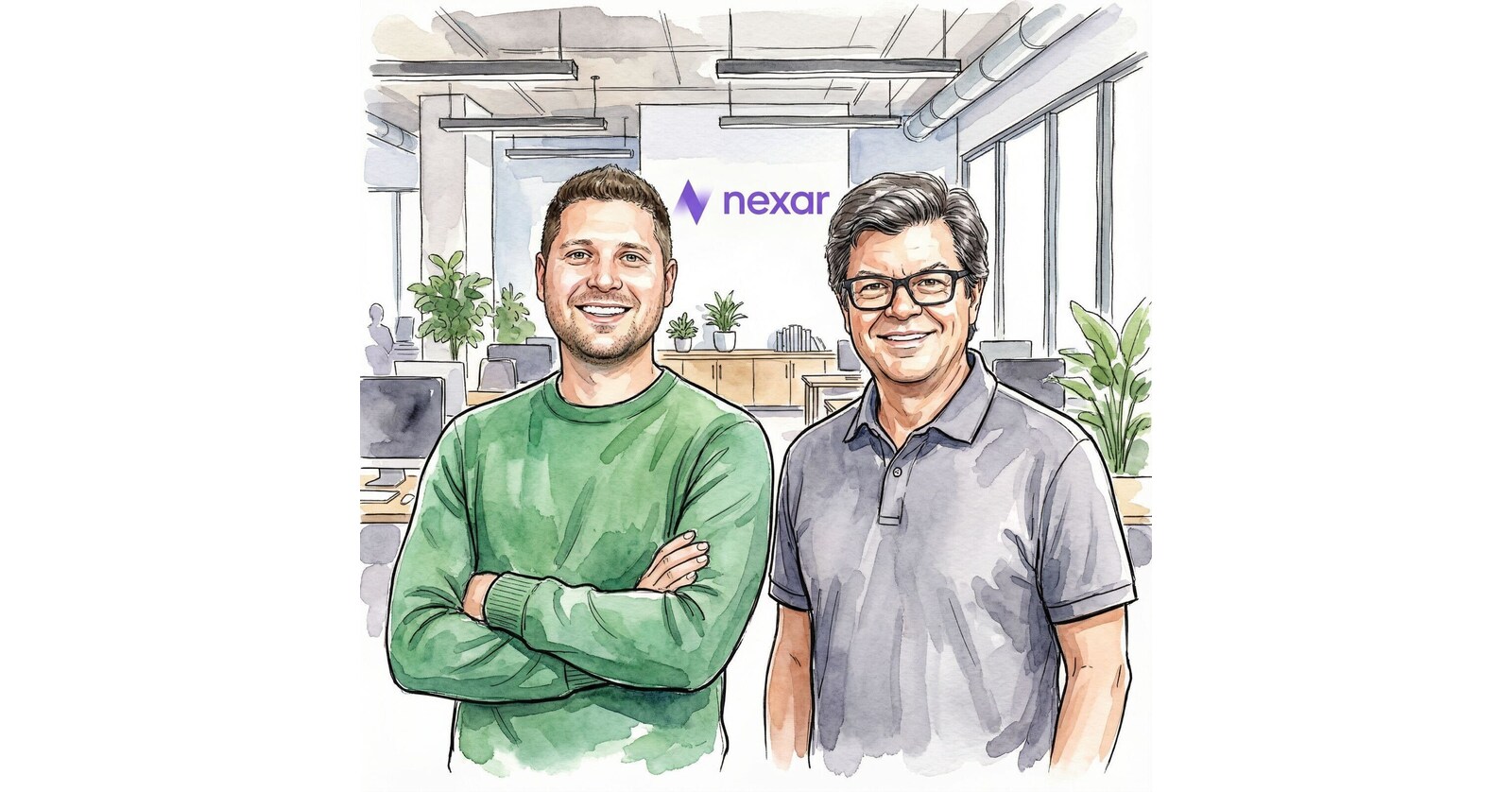
Zach Greenberger, CEO of Nexar (left) and AI pioneer and Nexar board member Yann LeCun (right). Nexar, a leader in AI-powered mobility solutions and one of the largest distributed vision networks on U.S. roads, has announced the appointment of AI pioneer Yann LeCun to its Board of Directors, as physical AI systems—those that perceive, reason, and act in the real world—begin to scale beyond research environments and into safety-critical deployment.
As AI moves into physical domains, progress is no longer constrained primarily by model architecture or benchmark performance. The limiting factor has shifted to exposure: whether systems can learn from real, unpredictable environments, at scale, using rich sensory data. For physical AI, that learning substrate is increasingly video—continuous observation of how the world actually behaves.
“Building capable AI systems requires learning accurate models of how the world works,” said LeCun. “Those models don’t emerge from abstractions alone. They come from sustained exposure to reality—with all its variability, ambiguity, and edge cases.”
LeCun’s decision to join Nexar’s board reflects the field’s shift toward building predictive world models from real-world experience—a shift Nexar’s BADAS platform was designed to enable.
LeCun is widely recognized for shaping modern artificial intelligence and for advancing learning paradigms centered on world models—internal representations that allow systems to predict, reason about, and plan within complex environments. As AI systems leave controlled settings and begin operating in the physical world, the ability to build reliable world models increasingly depends on continuous interaction with real environments, not simulations alone.
Nexar has spent more than a decade building infrastructure for that kind of learning. Its distributed vision network captures real-world driving video across geographies, road types, weather conditions, and rare edge cases—producing a continuously growing record of physical-world behavior at scale. That data is used to train, test, and validate AI systems against reality, where performance is measured by outcomes on real roads, not synthetic scenarios.
“As intelligence moves into real environments, the companies that succeed will be those grounded in reality,” said Zach Greenberger, CEO of Nexar. “Yann’s perspective reinforces how we think about Nexar’s role: providing the real-world experience AI systems need to build reliable world models and earn the right to deploy.”
LeCun joins Nexar’s board as the company continues to expand how large-scale, real-world video data supports applied AI across mobility and adjacent physical domains, with additional platform updates expected in the coming months.
About Nexar
Nexar turns cars into vision sensors to understand the world. Its platform powers vision-connected services and apps at scale, making new vision-based applications for better driving powered by a crowd-sourced vision feed. Using anonymous, aggregated data captured from this network, Nexar has developed a portfolio of vision-based data services for the autonomous vehicle industry and public and private sector partners to make roadways safer and more efficient. More information at https://www.nexar-ai.com/
SOURCE Nexar
