
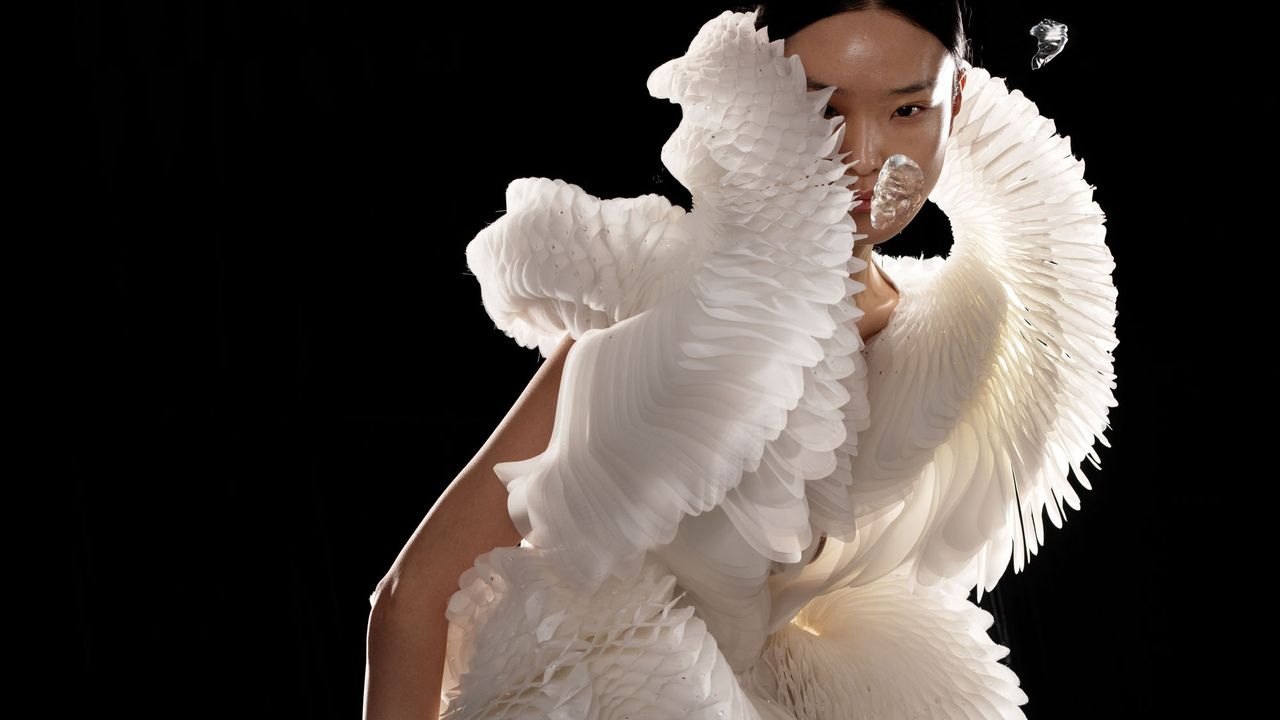
Although the Brooklyn Museum transferred its costume holdings to the Costume Institute in 2009, BAM has presented one blockbuster exhibition after another, many monographs (Virgil Abloh, Thierry Mugler, Christian Dior, Pierre Cardin, Jean Paul Gaultier), and some on broad themes: “Solid Gold,” “Africa Fashion,” “Studio 54: Night Magic.” How does Yokobosky see “Sculpting the Senses,” fitting in—and standing out—from this schema?
“For Dior, I incorporated over 20 significant works from the museum’s permanent collection, offering conversations between Christian Dior’s interests, his successors, and artists whose work engaged similarly,” the curator explained. “For example, in the mid-1950s, Christian Dior spoke about how every season he is offered a panoply of beautiful fabrics in many colors, but at the end of the day he would be happy to just work in black…which to me, spoke to the works of artists like Louise Nevelson and Ad Reinhardt, who made similar convictions about the color black. That was a major highlight for me, visually bringing those dresses and artworks in conversation.” He continued: “For Iris van Herpen, her mood boards aren’t filled with fashions and photographs of past decades, but with images of the aquatic universe, drawings of the nervous system, and millions of years old paleontology specimens. Her references are unlike those of other designers of dresses and gowns, and so her creations have both an other-worldly and ‘new’ aspect. And so for this exhibition, ‘Sculpting the Senses,’ we are including objects such as coral and a work by Collectif Me, that appears as if a ‘slice of ocean’ was brought into the gallery.”
The Van Herpen exhibition is not a retrospective in the same way that, say, Mugler’s was because she is alive, her career is still very much a work in progress, and, as Yokobosky notes, “Van Herpen’s work feels profoundly of the present.” As a result, what visitors will come away with is less a contextualization of fashion work in the past than a developing story, which is likely to affect how people experience the exhibition. Rather than projecting possible takeaways from the show, the curator said, “I like them to feel immersed in the subject, in the experience—which includes visual candy as well as intriguing written information. Sometimes sound, and more. Each person can tune into what they find interesting and walk away with a different feeling and different knowledge, and more—through their own associations. So I don’t think there’s one outcome, but many permutations.” This is a curatorial approach that syncs with how people are thinking more broadly about style today.
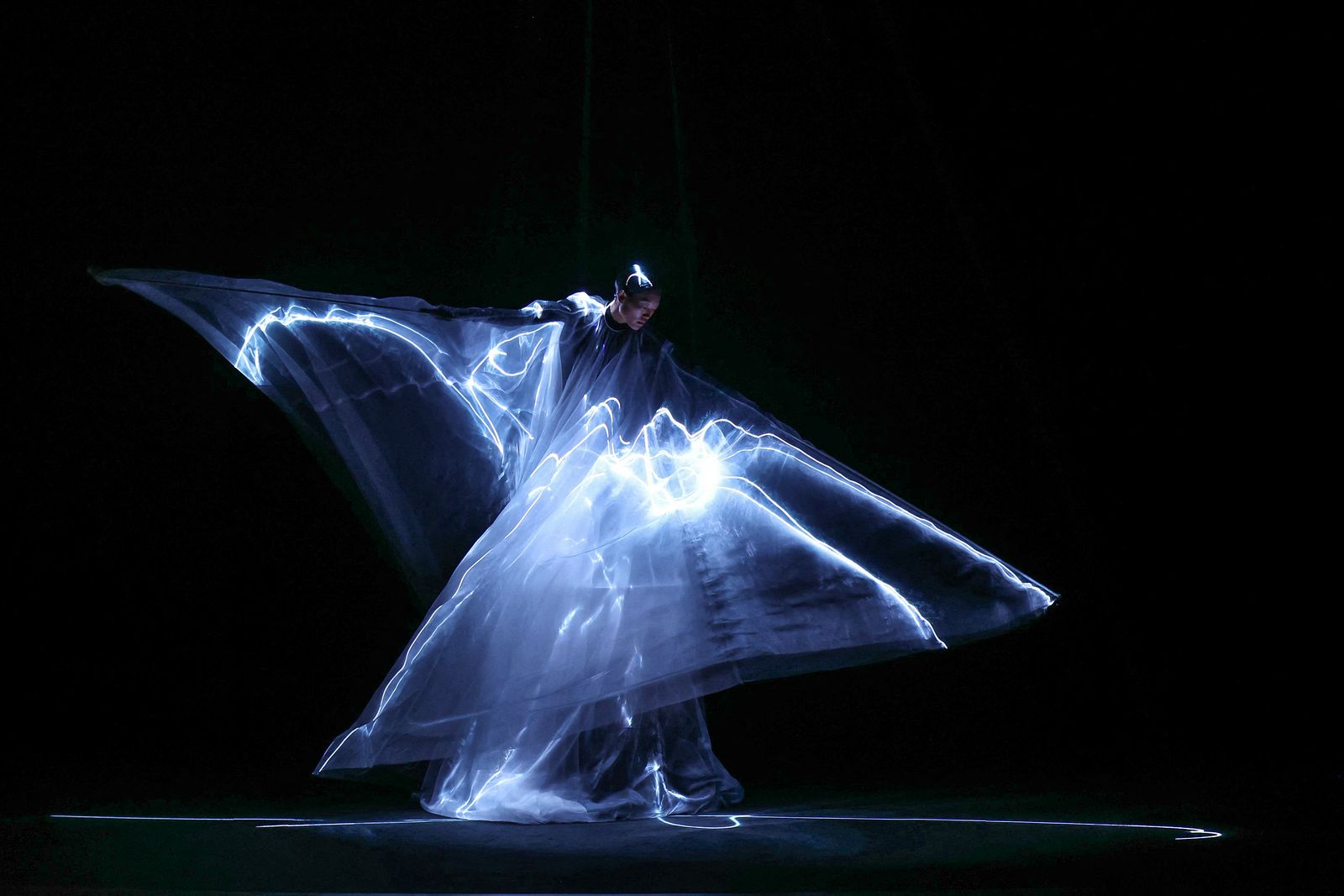
Iris van Herpen, fall 2025 couture
Photo: Thomas Samson / Getty Images