
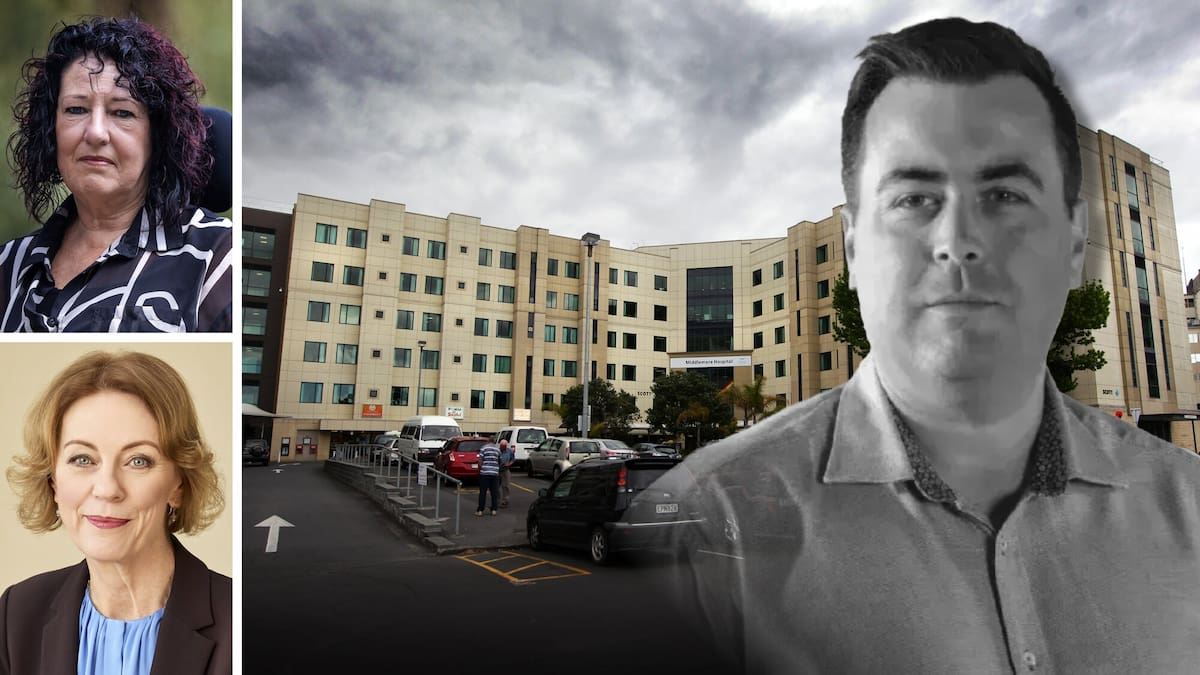
Auckland man Gareth Lowndes is still waiting for answers from the Health & Disability Commissioner four years after his mother’s death following a routine medical procedure.
The HDC, which assesses, investigates and resolves complaints about care quality, has admitted that about 40% of complaints still under investigation were filed more than three years ago.
The figure was approximate because the Crown agency did not have the IT tools to count the exact number, it said in answer to questions from the select committee.
“People are living in limbo and can’t move on. People like me have lost a loved one and don’t have answers,” Lowndes said.
He believed the problem was linked to “systemic underresourcing”, which had led to “far-reaching consequences” for families, healthcare professionals, and the integrity of New Zealand’s healthcare system.
Parliament petitioned
Lowndes petitioned Parliament for “urgent resourcing” to address the HDC’s backlog of complaints and to make its processes more efficient, while setting clear timelines for its investigations.
He noted that Budget 2025 allocated $1 million specifically to address the complaints resolution backlog. However, he sought to have the $3million of funding cut from the previous Budget restored immediately, to address the case backlog and modernise IT systems.
He also requested an independent inquiry into its operations, processes and management structure to check its fitness to carry out its functions.
The health select committee, which assessed the petition last month, issued a final report in which it expressed concern that the HDC was not resourced properly to conduct “thorough investigations while managing a high volume of complaints”.
At the same time, it considered a petition of the Health Consumer Advocacy Alliance running concurrently, which sought an independent patient safety commissioner accountable to Parliament.
While the committee was non-committal about further steps, it said future resourcing of the HDC might be needed to address some of the concerns.
The committee said the HDC played a vital role in improving patient safety and protecting consumers’ rights, but it was not convinced that every measure to improve processing times had been taken.
It was also concerned that it was unable to produce an exact number of complaints older than three years, because, according to the HDC, its IT systems were unable to readily produce this figure without manual processes.
The committee considered that prominent leadership and initiative to address systemic issues were lacking.
Health and Disability Commissioner Morag McDowell acknowledged the stress that delays caused for providers and complainants.
She told NZME that, like many public agencies, its ability to undertake broader, systemic inquiries was influenced by the funding and resourcing available.
Morag McDowell, a former Crown prosecutor and Auckland coroner, has headed the Health & Disability Commissioner since September 2020.
“For HDC, addressing complex, sector-wide issues by way of investigation requires sufficient capacity and resource to ensure this work can be carried out alongside core complaints functions – a matter recognised by the committee,” McDowell said.
“That said, much of HDC’s work is focused on quality and safety improvements for the system.”
What is the HDC?
The HDC is an independent Crown entity responsible for the promotion and protection of health and disability consumer rights.
Its remit is to assess, investigate and resolve complaints about care quality.
It makes recommendations to health organisations and monitors their implementation.
McDowell, a former Crown prosecutor and Auckland coroner, has headed the HDC as lead commissioner since September 2020. She was re-appointed for a six-month term in September last year, according to a Government notice in the NZ Gazette.
A four-year wait
Lowndes’ action was forged by his own experience with the HDC immediately after the death of his mother at Auckland’s Middlemore Hospital in January 2022, after a routine outpatient procedure.
The family had received a report from the hospital, but were still waiting for the results of the HDC investigation.
A recent update said a draft report had been reviewed and that further information from an independent expert had been requested.
“It could be a couple more months to go,” Lowndes told NZME.
Auckland woman Tracy Jarman, left paralysed from spinal surgery at a private hospital, is also still waiting for a decision years after lodging a complaint with the HDC.
The former corporate high-flyer has been in a wheelchair since surgery in 2021 to relieve symptoms from an ongoing chronic condition.
Former chief financial officer Tracy Jarman’s life was turned upside down four years ago when she emerged paralysed from her fifth surgery for spinal cysts. Photo / Mike Scott
Jarman said her complaint to the HDC had helped her to process what had happened because of the amount of research required in forming the statement, but she was frustrated by delays in providing a decision.
She told NZME this week that she still struggled with what had happened, and the lack of resolution had made it harder to move on.
“Every time I check my emails, I hope for an outcome, but the only emails I get are every three months saying, ‘Sorry it’s taking so long’.”
Wait times grow with 52% increase in complaints
Lowndes said that, while the HDC had experienced a 52% increase in complaints over the past five years, its funding had not increased, and had been reduced by $3m in the 2024 Budget, which was a 16.5% reduction on the previous year.
The committee noted the HDC’s caseload was also influenced by concerns raised in 2020 by the Ombudsman, who said the threshold for complaints needing an investigation was too high.
A reduction in the threshold resulted in increased numbers of complaints proceeding to investigations.
Lowndes’ research revealed that average investigation wait times had increased 17% in four years from 2018-19.
In 2019-20, the average investigation time for a complaint was 762 days. By 2022-23, that had risen to 893 days.
He believed the problem was linked partially to budget cuts but also to increased caseloads since the Covid-19 pandemic.
The HDC said the number of complaints received rose an “unprecedented” 25% in the year from 2020-21, from 2721 complaints to 3413.
Complaints dealt with novel and complex issues related to the pandemic, the committee said.
However, the gap was beginning to close with a 40% increase in case closures in 2024-25 and a 33% reduction in the number of complaints still open, the HDC said.
It was now closing more complaints than it received, with a net closure rate of 120%.
McDowell said that, in the 2024-25 year, HDC’s funding was reduced by 9.6%, but it managed to close 4406 complaints — a 40% increase on the number closed in the previous year.
She said “targeted early resolution initiatives” had also played a key role in this progress, with average early resolution timeframes reducing from 17 weeks to 10 days.
Lowndes was disappointed that the committee’s report had not been forwarded to the Health Minister for recommendation.
Health Minister Simeon Brown said he would remain focused on ensuring the HDC had the support it needed to carry out its work effectively. Photo / RNZ Mark Papalii
Committee chairman Sam Uffindell, a National MP, has not responded to NZME’s request for comment.
Health Minister Simeon Brown told NZME he “greatly valued” the important role the HDC played for patients and families, which was why the Government provided an additional $1m last year to help reduce the backlog of cases.
He said the funding had enabled the HDC to improve the efficiency of its processes, resulting in continued increases in the number of complaints being resolved.
“I will remain focused on ensuring it has the support it needs to carry out its work effectively.”
The HDC told the committee it had taken steps to improve in the past 18 months, including a leadership restructure, staffing and operational changes, and streamlining its processes.
In the past year, it made 809 recommendations for quality improvement in the health and disability sector, resulting in a 91% compliance rate.
In addition, it escalated 329 systems and public safety issues to agencies that could address such concerns.
Software used to manage complaint cases was being upgraded, and it received $500,000 last June for a new case management system, which would be ready in March.
McDowell said she was proud of the hard work and committed efforts of her team, which had enabled “significantly improved results”.
The health select committee said it would continue to monitor the situation as part of its regular financial scrutiny of the HDC.
Lowndes said he had lobbied Middlemore Hospital to introduce new procedural guidelines and audits, and he was now working with Health New Zealand/Te Whatu Ora to roll out the guidelines to other hospitals.
Tracy Neal is a Nelson-based Open Justice reporter at NZME. She was previously RNZ’s regional reporter in Nelson-Marlborough and has covered general news, including court and local government, for the Nelson Mail.