
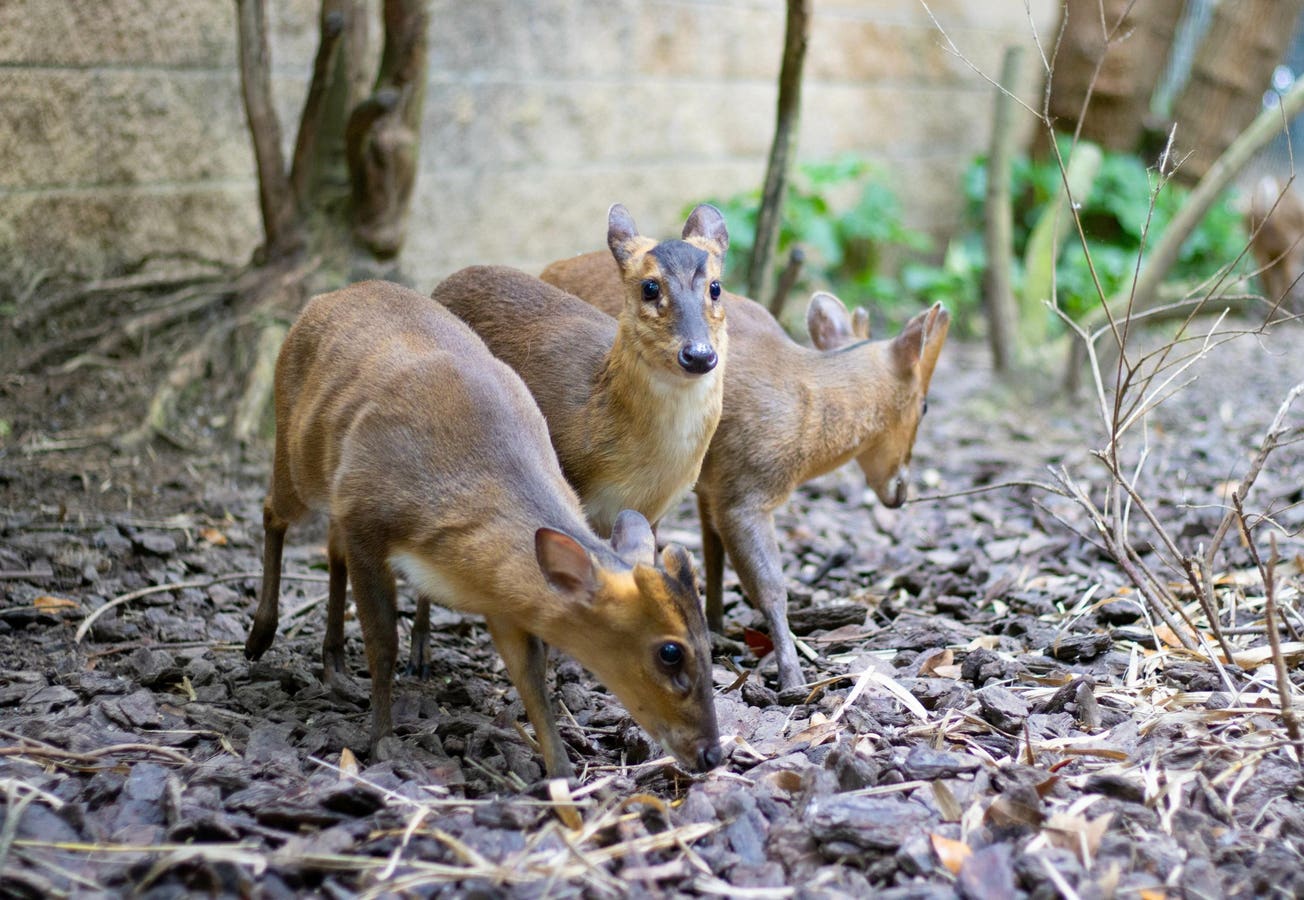
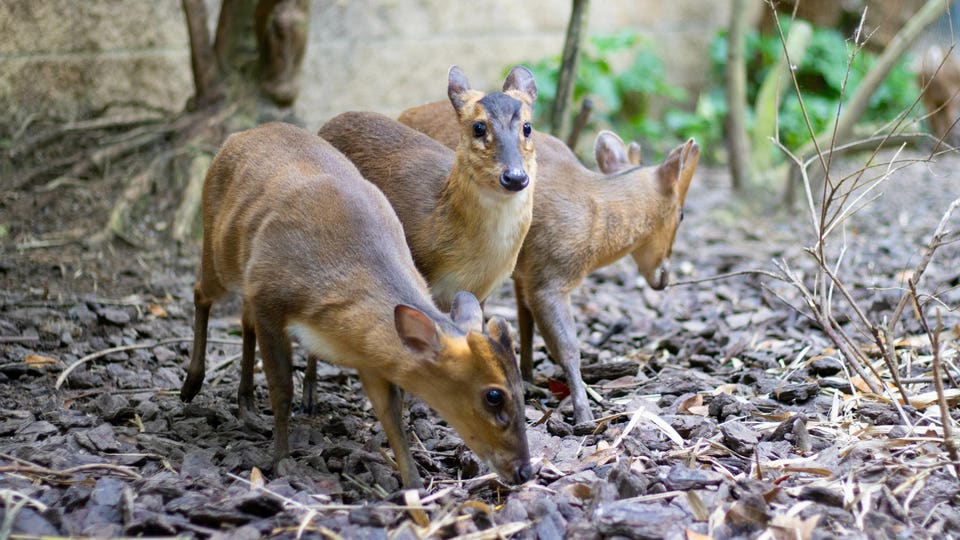
Once written off as extinct, the silver-backed chevrotain forces scientists to confront how much of biodiversity still lives beyond our sight.
getty
The silver-backed chevrotain (Tragulus versicolor) was first formally described in 1910, based on only four live specimens. After this, only one verifiable sighting was made of it alive in 1990. Everything else that we knew about this small, deer-like mammal was based on data from two dozen hunted or deceased specimens that had been collected in southern Vietnam between 1978 and 1993.
During this time, there were no formal surveys or search efforts made. No photographs. No physical evidence. For this reason, post-1993, the silver-backed chevrotain was believed to most likely be extinct — that is, until 2019, when one walked past a camera trap.
This rediscovery wasn’t dramatic; there wasn’t an expedition racing against time, nor any last-minute rescues. The specimen was documented in thousands of motion-triggered images collected during a biodiversity survey. In other words, it never actually vanished in the first place; it had simply gone unnoticed.
Why The Silver-Backed Chevrotain Was Presumed To Be Extinct
Chevrotains, also known as mouse-deer, are among the smallest hoofed mammals on Earth. Yet despite their resemblance to deer, they aren’t closely related at all. Instead, they belong to the family Tragulidae, a lineage that diverged early in the evolution of even-toed ungulates. They lack antlers, retain primitive skeletal features, and use enlarged canine teeth (especially in males) for defense, rather than head-to-head combat.
As a 2004 study from the Russian Journal of Theriology describes, the silver-backed chevrotain is distinctive even within this unusual group. Based on the specimen obtained from local Vietnamese hunters in 1990, the authors note that it has a darker, more contrasting coat than other Southeast Asian species. Its unique, silvery-gray dorsal patch is what gave it its name.
The silver-backed chevrotain inhabits the lowland forests of southern Vietnam. Notably, these are ecosystems that have experienced extensive deforestation, agricultural conversion and hunting pressure over the last century.
However, unlike larger mammals, chevrotains don’t leave obvious signs of their existence. They are nocturnal, highly solitary, extremely wary and rarely vocalize. On top of this, they also freeze rather than flee when threatened, which is a strategy that works well against predators, but not well at all against habitat loss or wire snares.
Crucially, almost no targeted surveys were conducted for the species after the early 20th century. This means that its presumed extinction was based less on evidence of absence and more on the absence of any evidence. In conservation biology, that distinction matters.
Why No One Noticed That The Silver-Backed Chevrotain Was Still Alive
The rediscovery came from a study published in Nature Ecology & Evolution in 2019, led by researchers working with Global Wildlife Conservation and Vietnamese partners.
Instead of searching specifically for the chevrotain, the team deployed over thirty camera traps across multiple forest sites to assess mammal diversity. These camera traps are motion- and heat-sensitive devices that operate continuously, often for months, capturing images without the need for human presence. They were left untouched for between April and July of 2018.
Among the tens of thousands of photographs that were captured, there were multiple clear images of Tragulus versicolor, which were distinct enough to rule out misidentification with other chevrotain species.
Most notably, it wasn’t a single accidental image. The species appeared repeatedly at several sites, both individually and in groups, which suggests that there is a small but persistent population of silver-backed chevrotains still alive in Vietnam. It had somehow managed to survive decades of environmental pressure, unseen but not extinct.
From a biological perspective, this is more indicative of a detection problem than a survival miracle.
What The Silver-Backed Chevrotain Teaches Us About Extinction Declarations
Small, cryptic mammals are systematically underrepresented in conservation assessments. Large-bodied species attract attention because they are easier to detect and often culturally significant, but small ones need intensive, long-term monitoring. This is something that many regions simply don’t have the funding for.
In Vietnam, particularly, conservation resources have historically been mostly focused on primates, elephants and large carnivores. In turn, the species was essentially “lost” to all of science because the root causes of its scarcity were never addressed: poaching and habitat loss.
Declaring a species extinct requires strong evidence that the last individual has died. In practice, this means that many “extinct” species can (and often do) persist at low densities unbeknownst to us, especially in remote or understudied habitats. These are sometimes called “Lazarus species” — organisms that reappear after being presumed gone. The silver-backed chevrotain joins this group, alongside species like the coelacanth and the Laotian rock rat.
The silver-backed chevrotain’s quiet return is not a feel-good story about resilience alone. It’s a reminder of how incomplete our picture of the natural world still is. Even in the 21st century, with satellites and genetic tools, highly basic questions remain unanswered. What species are still out there? How many have disappeared simply due to a lack of record? And how many persist just beyond our detection thresholds?
For biologists, the lesson here is clear: absence of data is not data of absence.
Which animal best reflects your protective instincts and values? Discover your guardian species with this science-inspired test: Guardian Animal Test
Our bond with nature shapes how we value and protect the species and areas that need it most — like the silver-backed chevrotain. Discover yours with this science-backed test: Connectedness to Nature Scale