
Fifty-something Robyn’s explanation of how her drinking has changed as she’s got older is telling.
“When I was younger, I drank to have a good time,” she says.
“Now I drink to have an okay time. It gets me through the day and I can’t imagine life without it. Wine o’clock is my favourite time of the day.”
Robyn* is one of many Kiwi women in their forties, fifties and sixties who drink most days. She knows her daily intake of around three glasses – one as she’s cooking dinner, one with her meal and one unwinding afterwards – is above the recommended guidelines. But it’s a routine part of her life that she enjoys and it gives her something to look forward to, so she tends to ignore the potential health hazards.
“I gave up smoking years ago and I do lots of other healthy things,” she insists.
“I walk a lot, I hardly ever eat processed or sugary foods. I figure the wine isn’t going to kill me.”

The trouble is, it could. Alcohol has been classified as a type 1 carcinogen by the International Agency for Research on Cancer, alongside substances such as tobacco and asbestos. The World Health Organisation links it to seven types of cancer, including bowel and breast cancer.
And, of course, alcohol can be addictive and for some people developing an addiction may lead to a whole host of issues, including abusive behaviour, relationship breakdowns and an inability to do their jobs properly.
But because it is socially acceptable, many people don’t see alcohol as a problem. Dr Kate Kersey, a public health policy and alcohol researcher at the University of Auckland, says women in midlife often don’t realise that marketing and our drinking culture have conditioned them to use alcohol as a way to cope with life’s stresses.
Kate did her PhD on alcohol and midlife women, including looking at how and why they drank.
“I definitely saw that drinking is something women do to respond to life’s difficulties. It takes the edge off when things are hard and is a quick fix to a lot of problems. But what they don’t see until later on is the long-term impacts. If you’re drinking a couple of big glasses of wine four times a week, you’re getting tothe level considered to be risky drinking.”
How our changing world has shaped our drinking
A number of factors over the years have influenced how women now in their forties, fifties and sixties drink, says Kate.
These include:
The deregulation of laws since the 1980s, which have meant alcohol can be widely advertised. Some of it is specifically marketed to women.
Wine becoming available to buy in supermarkets, where most of the shoppers are women.
The advent of drinks aimed at women, like RTDs, which were launched in the 1990s. Marketers now target drinks like artisan gins directly at women.
Drinking venues, like wine bars, becoming more feminised and appealing to women.
Women now aged in their fifties and sixties became old enough to drink in the ’80s and ’90s, when imbibing alcohol was seen as a sign of independence
“There was this empowerment movement for women in the 1980s, where we were told we were equal to men and that also meant when it came to drinking,” explains Kate.
“Alcohol became very embedded in socialising.”
Girl power and the “ladette culture” in the late 1990s and early 2000s was a big deal in the UK, where young women were unapologetic about drinking, often to excess, and having a good time, like blokes the same age. It’s likely to have influenced women here.
From the 2000s onwards, we began seeing “wine mum culture”, where indulging in a nice sauvignon blanc or merlot after a busy day became regarded as a way of coping with the stresses of motherhood.
“When you have babies, your life changes dramatically and often you don’t drink for a while,” says Kate.
“Drinking alcohol again can be seen as a way of reclaiming the identity you had before you became a mother, and a way of having fun and relaxing while dealing with the demands of parenting.”
Drinking patterns established when children were young can continue as women get older, and they may drink more once their kids have left home and they have freedom to do what they want.
“Alcohol has many different meanings to women at different stages but often those reasons they drink are quite strong, like feeling alcohol is something they can look forward to.”
How much should you be drinking?
The guidelines for women are two standard drinks a day, with a maximum of 10 a week. Even just one standard drink a day increases the risk of some cancers.
What’s a standard drink?
It’s one that contains 10 grams of pure alcohol. It’s the amount of alcohol in your drink, not how much liquid is in your glass, that determines how much booze you’ve had. Every bottle, can or cask of alcohol must have a label that tells you how many standard drinks it contains. This number varies depending on the strength of the drink.
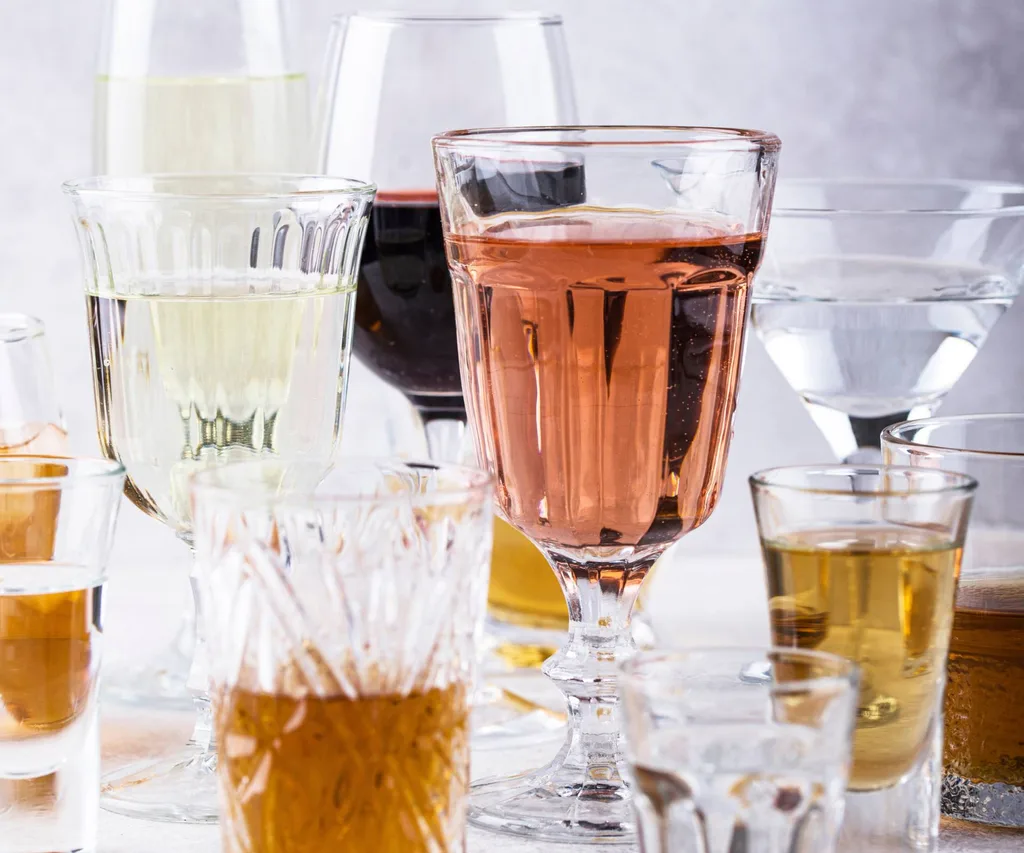
A standard drink containing 10g of pure alcohol is:
100ml pour of 12.5 percent wine
330ml can of 4 percent beer or cider
30ml pour of 42 percent spirits
Five ways to cut down on drinking
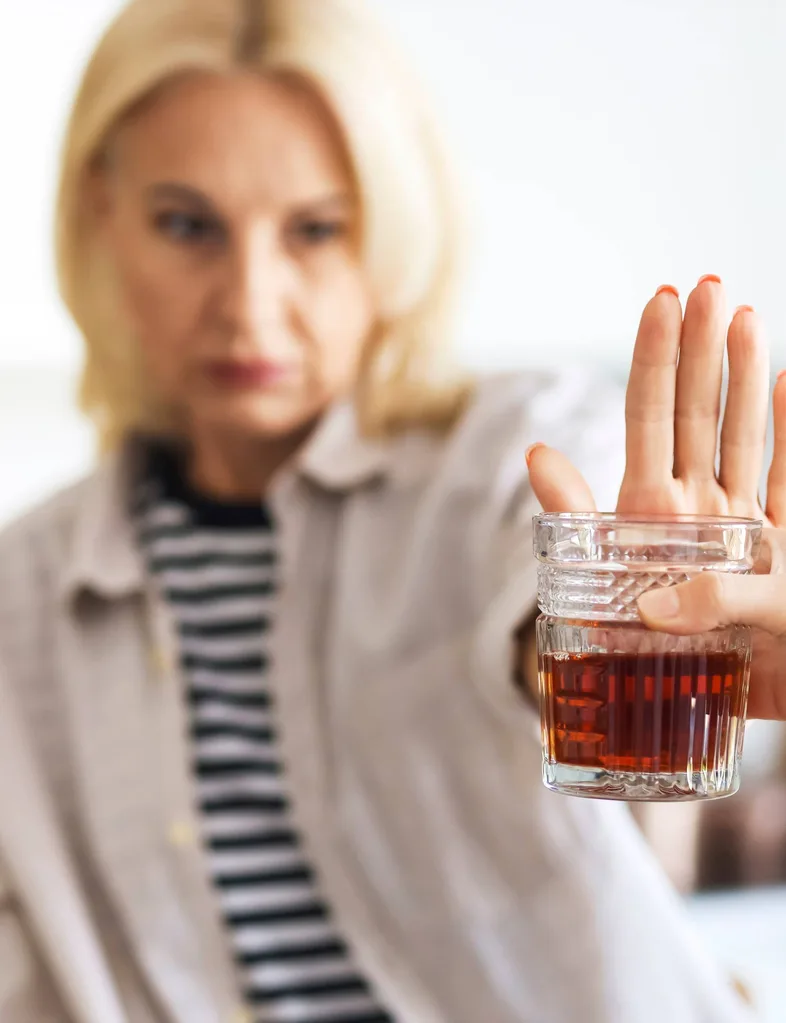
Have at least two alcohol-free days a week.
Know what a standard drink is, set yourself a limit and stick to it when you do drink.
Have non-alcoholic drinks before and in between alcoholic drinks.
Switch to lower alcohol beers and wines.
Plan other activities or tasks when you would normally drink.
‘I thought alcohol was my friend’
Drinking was as much a part of Julia’s daily routine as brushing her teeth. Within moments of walking in the door from work, the divorced mum of three would pour herself a glass of wine.
“I drank every day,” says Julia*, 47.
“I’d done it for years – most of my friends did it. We bonded over drinking. I have some friends I’ve pretty much never seen without a glass of wine in their hands. “When the kids were little,
I didn’t drink until they’d gone to bed, but once they were older, I’d head straight for the fridge when I got home. It was my reward for getting through the day.”
Over time, her two glasses of wine a day became three and then four. Although hangovers were rare, the admin worker would often feel “fuzzy and not quite with it” the next morning.
“I didn’t think my drinking interfered with my work, but looking back, I can see that I was muddling through.”
It took Julia a long time to accept that her drinking was not good for her.
“I had a health scare and when the doctor asked how much alcohol I drank, I wasn’t honest. Even though what I told her was less than I actually drank, she said, ‘That’s too much, you need to cut down.’ “She freaked me out talking about things like an increased risk of cancer and since there’s already a history of cancer in my family, I thought, ‘Okay, time to do something.’”

Did you know?
According to NZ Health Survey statistics in 2023, out of women aged 35-54 who drank, 13-16 percent of them consumed alcohol in a way that carried a high risk of future damage to their physical or mental health.
After a couple of unsuccessful efforts to reduce her alcohol intake on her own, Julia saw a therapist who specialises in addiction and attended a support group.
“That really helped because it touched on why I drink and why I need that feeling alcohol gives me. It has a lot to do with some issues in my past. It was a way for me to escape all the hard stuff.”
Now Julia is learning to cope with less alcohol.
“I still drink – I haven’t given up completely,” she says.
“But I have been able to set myself limits and stick to them. “I have several alcohol-free days a week and I drink more low-alcohol wine. It hasn’t been easy but I know it will be worth it. I just have to stop thinking of alcohol as my friend. It isn’t.”
*Names have been changed
Do you justify your alcohol intake?

Kate’s research found that some women who realise their drinking is not great for their health try to balance out their “bad habit” with healthier behaviours.
“The more women drink, the more they tend to justify it by seeing other things they do as healthy and compensating for the alcohol. So they might drink, but exercise regularly and eat a good diet. They think, ‘Well, my lifestyle is pretty healthy overall – it’s just the drinking that’s not so good for me.’”
While a nutritious diet and exercise are important for wellbeing, they won’t compensate for the alcohol that you’re putting into your body. Promoting the health benefits of not drinking might be one way to change attitudes.
“People don’t respond well to feeling like they’re going to be deprived, but a lot of them may re-think their drinking if you talk about the short and long-term benefits, like having more energy and your mood being better,” says Kate.
Meanwhile, getting the message across about the harms of alcohol with a strong advertising campaign could also alter viewpoints.
“We changed attitudes towards tobacco,” points out Kate. “Putting warning labels on alcohol bottles about the health risks would be a good place to start.”
Related