

January 26, 2026 — 1:57pm
Save
You have reached your maximum number of saved items.
Remove items from your saved list to add more.
Save this article for later
Add articles to your saved list and come back to them anytime.
Got it
AAA
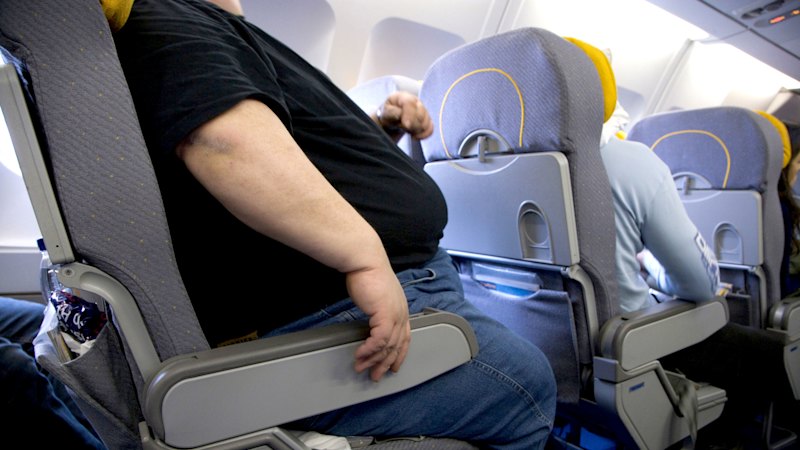
Airlines may be surprise beneficiaries of the popularity of weight loss drugs such as Wegovy and Mounjaro thanks to increased profits as a resut of lower fuel costs.
Analysts from Wall Street investment bank Jefferies have calculated that if weight loss trends continue, a 10 per cent slimmer society could yield an average 4 per cent increase in earnings per share among major US airlines.
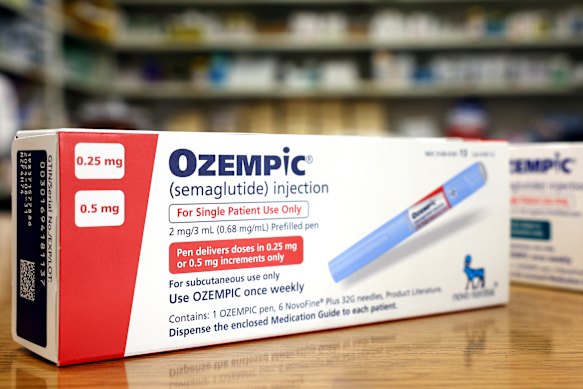 As of 2025, about 2 per cent of Australians were taking Ozempic or similar drugs.Getty Images
“A slimmer society = lower fuel consumption,” equities analyst Sheila Kahyaoglu wrote. Fuel makes up 20 to 30 per cent of an airline’s cost, which is reflected in the price of the ticket.
Since 2022, the US adult obesity rate has declined to 37 per cent from about 40 per cent, as GLP-1 appetite and blood sugar regulator drugs reshape the population.
“With the drug now available in pill form and obesity rates falling, broader usage could have further implications for waistlines,” wrote Kahyaoglu, who noted that until GLP-1, passenger weight had been out of the control of many people.
Looking at airlines American, Delta, United and Southwest, her team calculated that a 10 per cent slimmer US society would mean a 2 per cent weight saving, which could trim fuel expenses by up to 1.5 per cent. This would add an average of 3.9 per cent in earnings per share across the four airlines.
Aviation company Honeywell estimates that every 450 grams of a plane’s weight, “including crew, passengers, baggage and the aircraft itself”, totals up to about $US10,000 ($14,436) in annual fuel costs on commercial aircraft.
Sydney-based Peter Harbison, chairman of GreenerAirlines.com, which promotes a greener aviation industry, said that when the GLP-1 drugs were rolled out, there was an expectation once-obese customers could begin to travel, leading to a rise in demand.
“Airlines had already factored in heavier passenger weight years ago,” he said.
Related Article
“I think the drugs’ impact would be marginal for the weight of aircraft in the short-to-medium term, given there are so many other variables,” Harbison said. “But if you were getting up to 1 per cent of the cost of the flight, it makes a difference.”
In Australia, about 32 per cent of the population was obese in 2022, according to the Bureau of Statistics.
The reported use of the weight loss drugs in the US is higher as well, rising from 5.8 per cent of US adults in early 2024 to 12.4 per cent today.
As of 2025, about 2 per cent of Australians were taking Ozempic and similar GLP-1 drugs. Nearly half of the doses were bought privately.
Aviation lecturer Salim Hijazeen, of Melbourne’s Swinburne University, cautioned that GLP-1s were unlikely to make more than a scant difference to airlines.
“Generally, airlines would try and focus on fuel optimisation more than wanting to plan around what the potential health trends of the population are,” he said.
“It’s very unlikely that something like this could significantly impact the weight of the aircraft in terms of the passenger weight,” he said.
Jefferies’ analyst Kahyaoglu calculated her forecast by combining the weight of 178 passengers aboard a Boeing 737 Max 8, with average pre-Ozempic weight per person being 81.6 kilograms. Factoring in the number of people who take drugs such as Ozempic and their impact, the same passengers’ weight was tallied at an average of 80.7 kilograms.
The former yielded a maximum take-off weight of 82,190 kilograms vs 80,737 kilograms post use of weight loss drugs – a difference of 1453 kilograms.
Related Article
Applying a rule of thumb that 1 per cent weight savings equates to 0.75 per cent of fuel efficiency, a 2 per cent improvement in aircraft weight is worth about 4 per cent to earnings per share, Kahyaoglu wrote.
Harbison noted that when the weight loss drugs appeared on the market, there was speculation that newly slimmer people would be emboldened to travel more thanks to the drugs’ use.
“The implication is that presumably even though they’ve lost a bit of weight, they’re still above average, thereby presumably pushing up the average [on planes],” he said.
Qantas declined to comment. Jetstar and Virgin were contacted for comment.
The Business Briefing newsletter delivers major stories, exclusive coverage and expert opinion. Sign up to get it every weekday morning.
Save
You have reached your maximum number of saved items.
Remove items from your saved list to add more.
From our partners