
From outback stations to alpine wellness sanctuaries and off-grid cabins hidden in bucolic farmland, these are the retreats redefining what it means to unplug.
Aro Hā Wellness Retreat
Glenorchy, New Zealand
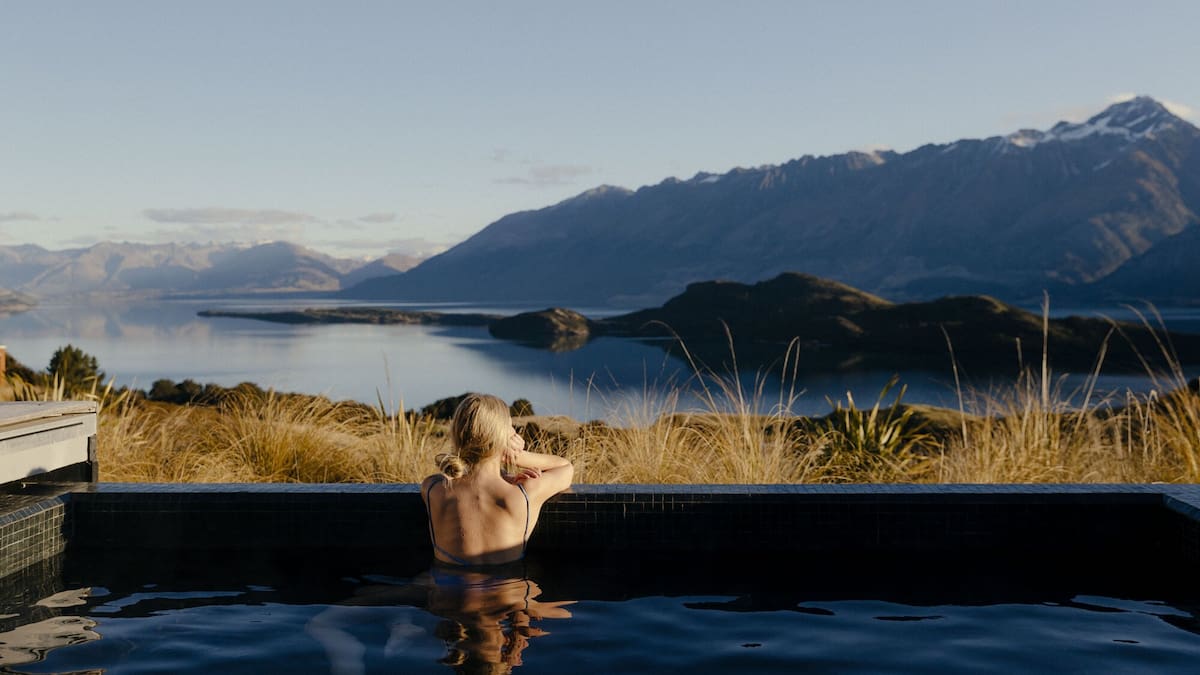
Framed by the Southern Alps, with views so mesmerising they barely seem real, Aro Hā Wellness Retreat feels deliberately removed from everyday life. Days unfold around yoga, meditation, guided hikes and plant-based cuisine, all designed to draw attention back to the body and breath.
Phones quickly lose relevance in this alpine setting. Architecture, routine and landscape work in tandem to create an experience that feels both grounding and expansive. Aro Hā is less about escape than recalibration – the kind that lingers long after you leave.
As founder Damian Chapparo says: “We check our phones an average of 58 times a day, often within minutes of the last glance. That’s fragmentation, not connection. At Aro Hā, digital detox isn’t deprivation – it’s the ultimate luxury of undivided attention.”
Aro Ha Wellness Retreat. Photo / Supplied
Gilberton Outback Retreat
Queensland, Australia
If digital detox is about distance – physical as much as psychological – Gilberton Outback Retreat sets the bar high. Located on a vast working cattle station in far-north Queensland, this off-grid retreat sits high above the Gilbert River, surrounded by an expanse of land so wide it recalibrates your sense of scale.
There’s no Wi-Fi and no phone reception. Days are shaped by the environment: buggy tours across rugged terrain, river swims, wildlife spotting, gold fossicking, and long shared meals beneath star-packed skies. Luxury here comes in the form of space, stillness, and perspective; the kind you don’t find scrolling.
Gilberton Outback Retreat. Photo / Supplied
Unyoked
New Zealand & Australia
Unyoked is a network of tiny cabins scattered across Australia and New Zealand, and more recently, the UK, designed to make disconnection feel achievable rather than extreme.
The brainchild of twin brothers Cam and Chris, each cabin is deliberately simple: no Wi-Fi, no television, minimal distractions beyond the landscape outside. You even have to grind your own coffee beans. Guests arrive with books, notebooks, good food, and little else to do but walk, cook, read, sleep and think.
It’s an antidote to over-programmed travel, ideal for anyone craving a reset without committing to a full retreat schedule. This year, they’ve partnered with Brick, a small physical device designed to disable distracting apps with a single tap. Every Unyoked cabin is now equipped with a Brick, giving guests the option to lock away social media and notifications during their stay.
Unyoked cabins. Photo / Supplied
Tarata Eco Retreat
Waikato, New Zealand
Overlooking Kāwhia Harbour on the Waikato coast, Tarata Eco Retreat offers a more intimate version of unplugging. Founded by a psychologist and an engineer, the retreat is built around the idea that wellbeing is shaped as much by environment as intention.
Accommodation ranges from safari-style tents to simple cabins, all designed for outdoor living and free from wifi. Evenings are spent soaking in wood-fired hot tubs, watching the light change over the harbour, or sharing conversation uninterrupted by screens. It’s less about escape, more about ease – the kind of place where disconnection feels natural rather than imposed.
Tarata Eco Retreat. Photo / Supplied
Billabong Retreat
New South Wales, Australia
For those who want to unplug without venturing too far from the city, Billabong Retreat is nestled amid bushland just over an hour from Sydney. It offers yoga, meditation and nourishing food with a gentle but effective approach to digital overload.
Phones aren’t confiscated, but between yoga, nature walks and long breaks for reflection, many guests find they have little reason to use them. It’s well-suited to first-time detoxers – a place where stepping back from screens feels supported rather than severe.
Matakana Eco Retreat
Auckland, New Zealand
North of Auckland, Matakana Eco Retreat is designed for couples and small groups seeking privacy and immersion in nature. Its handcrafted chalets, built from sustainable materials, are intentionally screen-free, encouraging a slower rhythm from the moment you arrive.
With outdoor baths, fireplaces and wide decks overlooking rolling countryside, the retreat invites long afternoons spent reading, walking or doing very little at all. Close enough to civilisation to feel comfortable, yet removed enough to feel distinct, it’s a reminder that meaningful disconnection doesn’t require extreme remoteness.
Aerial view of Gwinganna Lifestyle Retreat. Photo / Supplied
Gwinganna Lifestyle Retreat
Queensland, Australia
Set in the Gold Coast hinterland, Gwinganna Lifestyle Retreat has long been a leader in holistic wellbeing and its approach to digital overload is no exception. Programs focus on movement, nutrition, mindfulness and rest, naturally displacing screen time without heavy-handed rules.
The environment does much of the work: bush walks, spa treatments, communal meals and expansive views create a sense of absorption that makes constant connectivity feel unnecessary.
Sal Salis Ningaloo Reef
Western Australia, Australia
For travellers drawn to elemental landscapes, Sal Salis Ningaloo Reef offers one of Australia’s most immersive digital-free experiences. Located within Cape Range National Park, this safari-style camp has no mobile coverage and no Wi-Fi. Thankfully, there’s little need for either.
Days revolve around snorkelling, guided walks and encounters with marine life, including the chance to swim alongside whale sharks. Evenings are spent under vast skies, sharing stories and meals by lantern light. It’s a place where attention is drawn away from screens and towards the landscape itself.
Into the Wild
Western Australia, Australia
Part of a broader shift towards intentional simplicity, Into the Wild offers thoughtfully designed cabins located close enough to cities to be accessible, yet far enough to feel removed. These small, secluded stays are dotted across Australia — from South Australia’s Barossa Valley to the south coast of New South Wales — and prioritise comfort and landscape over convenience.
With limited connectivity and no digital distractions, guests are encouraged to slow down and engage with their surroundings – whether that means walking, reading, or simply resting. It’s proof that digital detox doesn’t have to be dramatic to be effective.