
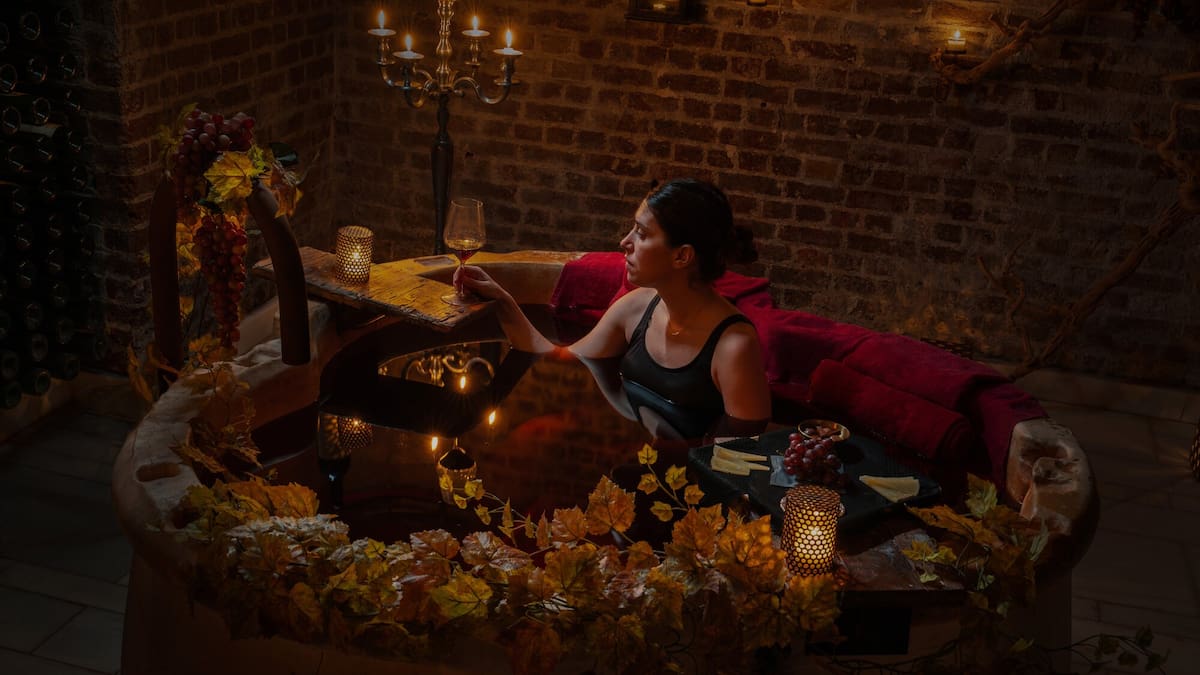
At Aire Ancient Baths in Seville, Spain, travellers can soak in a red wine bath. Photo / Supplied
The three-hour experience in Seville begins well before any wine appears. After moving through a circuit of thermal pools inspired by Roman and Arabic bathing traditions, alternating between warm and cool temperatures to stimulate circulation and calm the nervous system, I’m led to a heated marble slab for an exfoliating body scrub. The warmth of the marble relaxes muscles and encourages blood flow, while the exfoliation prepares the skin for what follows. Each step is purposeful, ensuring the body is ready for the main event, as opposed to simply filling time until the clock runs out.
Next comes a full-body massage using grapeseed oil, another by-product of winemaking. Lightweight, easily absorbed and high in vitamin E and linoleic acid, the oil supports skin barrier function while massage improves circulation and lymphatic drainage. By the time the massage ends, my body feels pliable and unguarded, primed for stillness rather than stimulation.
Only then, downstairs behind a heavy curtain, does the wine bath appear. Impressively, the tub is filled in front of me from a tap that runs a steaming, violet wine concoction. A glass of Tempranillo is poured, and the rest of the bottle is swirled into the bath. Stepping in, the experience is unexpectedly restrained. The liquid is buoyant and faintly aromatic, evoking a warm cellar rather than a bar at closing time.
There’s no sharp alcoholic smell, no stinging sensation and, amazingly, no staining. Instead, the skin tingles lightly as circulation increases, while buoyancy relieves pressure on joints and muscles. It feels closer to settling into an oversized heated decanter than taking a conventional bath.
The soak comes with a glass of red wine and a plate of local Spanish cheeses, for further happiness benefits. Whether it was the wine, the massage or simply three hours with nowhere to be, those 45 minutes in the bath were among the most relaxing I’ve experienced in years.
From a wellness perspective, the sequencing matters. Warm immersion promotes vasodilation, allowing antioxidant compounds such as resveratrol to interact more effectively with the skin. While transdermal absorption has its limits, it’s widely recognised that topical antioxidants can support skin health when paired with heat and massage.
After the bath, I’m led upstairs to the terrace, where the Giralda rises above the surrounding rooftops, close enough to feel part of the scene, not a distant landmark. Wrapped in a robe, glass of red wine in hand, the irony of now enjoying it as a drink is hard to miss.
Aire Ancient Baths is located in Seville, Spain. Photo / Supplied
Does vinotherapy work? That depends on expectations. My skin felt silky smooth and hydrated, though exfoliation and massage undoubtedly played their part. What prevailed more noticeably was the after-effect. That night, sleep came easily and deeply. The following day felt calmer, as if the volume of the city had been turned down a few decibels.
Ultimately, stress reduction is where vinotherapy earns its keep. Warm water immersion is known to lower cortisol levels and encourage deep relaxation. A head massage during the soak amplifies the effect, quieting mental chatter and reinforcing physical calm. It feels indulgent, certainly, but also methodical, more science-adjacent than theatrical.
At €550 per couple (about NZ$950), this isn’t a treatment booked on a whim. It costs more than a decent case of Rioja and less than a month of therapy. But as wellness travel shifts toward experiences grounded in tradition and measurable benefit, vinotherapy feels less like a novelty and more like a thoughtful reuse of something already valued.
I may still order white wine at dinner. When it comes to bathing, though, red wins by a splash.