
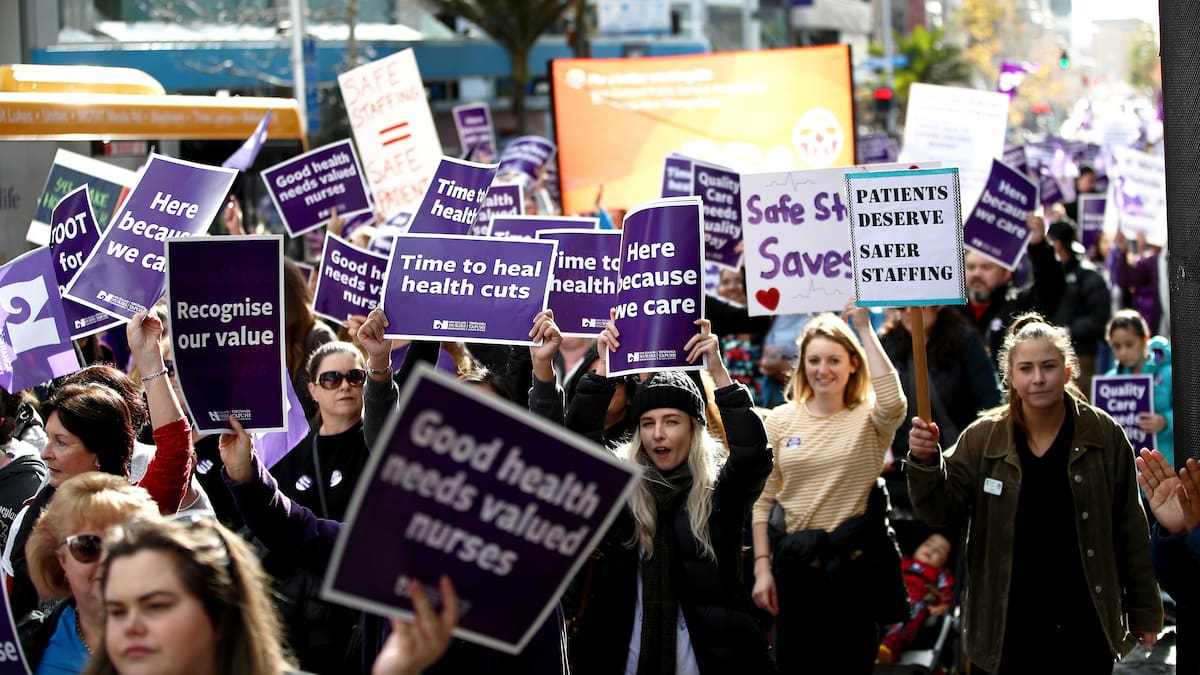
Health leaders, economists and unionists have founded Kaitiaki Hauora – Together for Public Health to make retention of the public health system the country’s top election priority.
Once upon a time, on a ward round at South Auckland’s Middlemore Hospital intensive care unit, I had a conversation with a patient
recovering from a life-threatening condition. It started in the usual way, with me introducing myself and speaking briefly about where he was and what had happened to him, before asking him what he did when he was not in hospital.
During the years, that opening had successfully allowed me to ease into potentially tricky conversations with someone already made vulnerable by being a patient in our health service, and especially so in ICU.
“I grow watercress,” he said, “but not for you.” By “not for you” he meant not for the district health board that, some years earlier, had been dragged into a national contract to save money by buying inpatient meals from the company that is now the main supplier of the school lunch programme.
After the ward round we talked more. He was an ordinary guy, surprised that an organisation like ours, spending a billion dollars a year to treat illness, seemed so uninterested in ensuring patients in its care received nutritious, tasty food while in hospital, and so blasé that the national food contract prevented his small business and other local suppliers of fresh food from benefiting from the economy created by the biggest employer in the region; a means he saw as a way of improving the overall health and wellbeing of the community. I agreed.
Our conversation continued but with him doing most of the talking. How odd it was to set up such an expensive system of care when so much of that is spent treating complications of preventable disease, he said.
Again, he was right. Nearly one-third of the overall preventable health loss in New Zealand is caused by unhealthy diets, high body mass index, tobacco and alcohol. Treatment of obesity-related illnesses, diabetes with all its complications, smoking and alcohol-related illnesses and the violence that accompanies so much of our warped drinking culture consume a considerable part of that precious resource. The price tag of the consequences of poor dental care alone is in the billions of dollars.
“Imagine if that was available to do other things,” he said.
“You mean like new cancer drugs and other treatments our people so desperately need,” I chimed in. He threw his arms up into the air, then put his head in his hands and said, “Somehow we have this so wrong.” I agreed.
David Galler: Aghast that funding is being diverted from strengthening public hospitals. Photo / Supplied
A tipping point
Although the conversation took place years ago, we, like other countries, have shied away from addressing this drag on society. But perhaps now more attention is being forced on the issue, highlighted by a recent report in the UK, “The shift to prevention: A new ecosystem of health promotion and protection”, that focuses on the social and economic imperative and benefit of doing exactly that.
Today, our health services are under much more pressure, increasingly overwhelmed by unchecked demand, hobbled by intermittent funding, short-term planning and our choice to prioritise cost containment over investment. Now, 12 years shy of its 100th birthday, publicly provided healthcare’s survival is in real doubt.
The steady demise of the service has reached a tipping point where all of us are affected by its inadequacies and failings. These are now glaringly obvious, more so perhaps because of the current government’s overt disregard for the value public health services create and the people working hard to keep those services afloat.
As a result many in the health workforce feel undermined. They have much to offer but are seen more as a problem than part of the solution to the difficult issues we face and now feel so intimidated they are fearful to speak out.
Many of us who have long been part of the health system are aghast that, instead of investing in our services to meet growing need, those services are being privatised – and much of that is funded from the public purse. That is not the right solution for the problems we are facing.
Nothing brings people together more than the imminent destruction of something they truly treasure.
David Galler
It does not add capacity to the health system. Instead it diverts public money away from strengthening public hospitals and services and draws clinicians out of the public system, worsening wait lists and service gaps. As a result, patients will face longer delays or will be forced into private care they cannot afford.
In short, public money combined with private delivery weakens the public system and increases costs for users, particularly those already waiting.
Worse still, policies like these come with enormous costs to trust across the system between patients, the public, health workers, politicians and policymakers.
That loss of trust is self-evident in the large numbers of young New Zealanders, many of them our future health workforce, leaving the country. Now more than ever we need that trust restored, because it lies at the heart of good relationships between those needed to improve the health of our people. And it is key to recruiting and retaining the young people we need for our health service. Yes, we have this so wrong.
Learning from the fallout from the Treaty Principles Bill, we know nothing brings people together more powerfully than the imminent destruction of something they truly treasure. In this case, it’s universal access to the publicly funded healthcare services that are essential for all of us to live a decent life, to be socially and economically active and to contribute to the success of our families, communities and nation.
Many organisations representing health workers have been forced into fighting their own battles to recruit and retain the talent we need. But they, along with public and patient groups, are unified in the belief that publicly provided healthcare should be accessible to everyone regardless of income or where they live.
Former Te Whatu Ora chair and AUT chancellor Rob Campbell has also joined Kaitiaki Hauora. Photo / NZME
Guardians of health
That is why Kaitiaki Hauora – Together for Public Health – has been formed. If you support what we stand for, please visit our website. It’s a national group of patients, health workers, Māori health representatives, unions, advocacy organisations and community groups, with backing from a growing number of organisations across the health sector united in that shared belief.
I’m a founding member, as is former Te Whatu Ora chair and AUT chancellor Rob Campbell, economist and academic Bill Rosenberg, economist and former Public Health Association co-president Gail Duncan and union leader James Ritchie. Patient Voice Aotearoa, headed by Malcolm Mulholland, has joined. Patient Voice led a hīkoi for health around the country gathering 90,000 signatures for a petition presented to Parliament late last year to fix the broken health system.
We’re an umbrella group of organisations with a pre-election agenda to campaign against the privatisation of our health system. Our group is grounded in a commitment to Te Tiriti o Waitangi, fairness, equity, transparency and in supporting health workers so they can meet the needs of the diverse communities they serve.
The health system belongs to us but it has become politicised over time. If we care about publicly provided healthcare, we need to fight for it and make health the No 1 election issue for 2026.
Dr David Galler was an intensive care specialist at Middlemore Hospital from 1990-2021. Go to kaitiakihauora.nz for more.
SaveShare this article
Reminder, this is a Premium article and requires a subscription to read.
Copy LinkEmailFacebookTwitter/XLinkedInReddit