
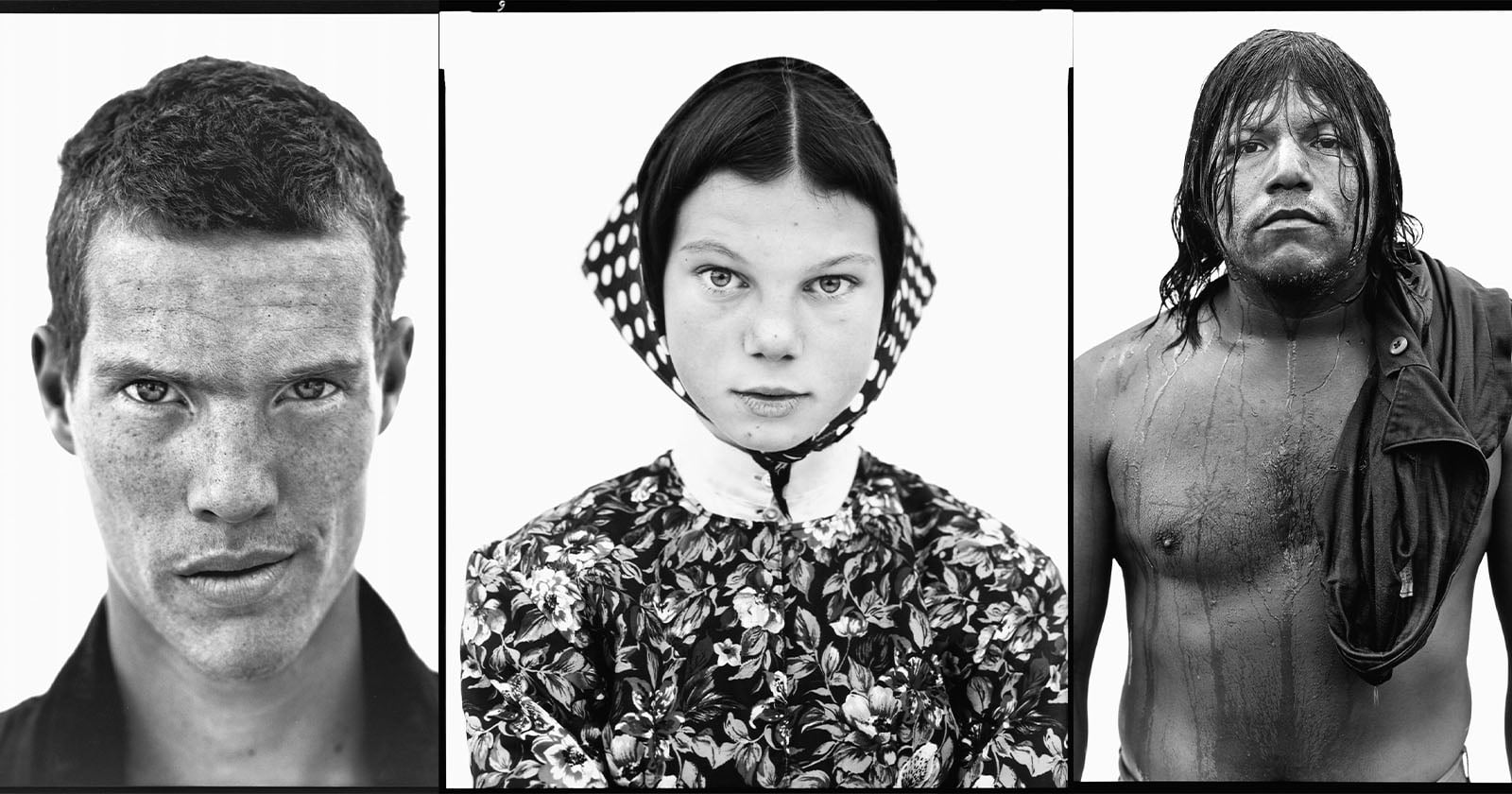
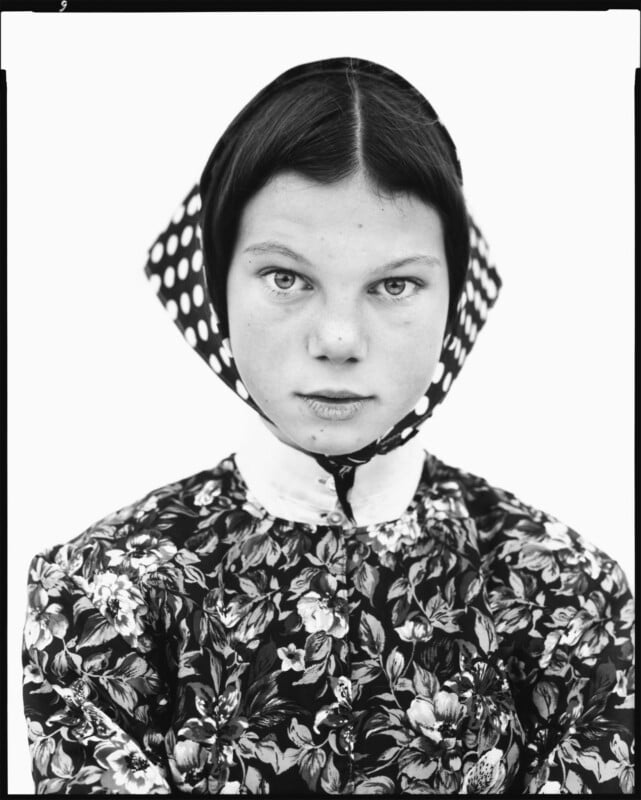
 Freida Kleinsasser, thirteen year old, Hutterite colony, Harlowton, Montana, June 23, 1983. Photograph by Richard Avedon © The Richard Avedon Foundation
From 1979 to 1984, famed fashion photographer Richard Avedon traveled to 21 states with an 8 x 10 large format Deardorff camera and a white backdrop to capture the portraits of working-class America.
Using natural light only, Avedon sought to make his subjects as comfortable as possible by standing next to the camera and in front of it so he could engage with the sitters.
A selection from In the American West, a series commissioned by and first exhibited at the Amon Carter Museum in Fort Worth, Texas, is now on display at the Gagosian Grosvenor Hill Gallery in London.
Curated by Caroline Avedon, the photographer’s granddaughter, Facing West picks out 21 rare prints, including works that have not been shown since their debut in 1985.
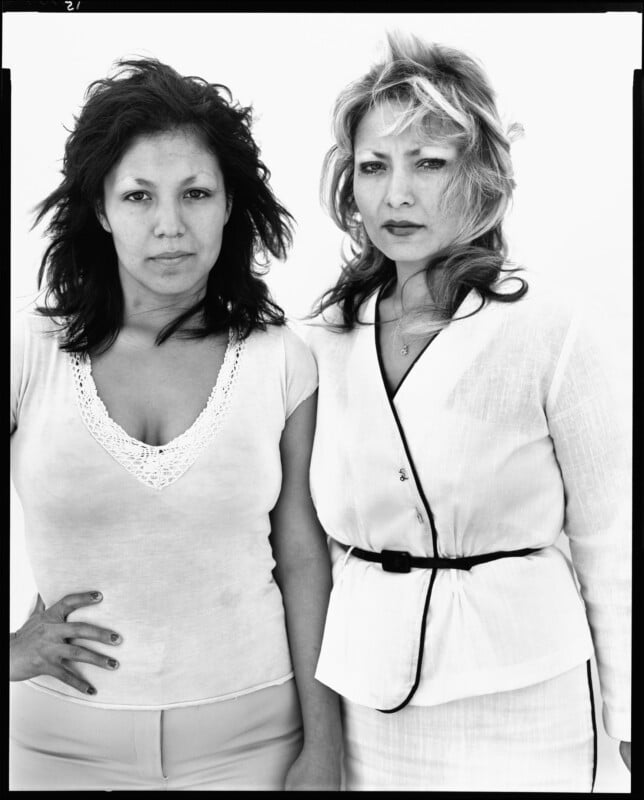 Annette Gonzales, housewife, and her sister Lydia Ranck, secretary, Santuario de Chimayo, New Mexico, Easter Sunday, April 6, 1980. Photograph by Richard Avedon © The Richard Avedon Foundation
 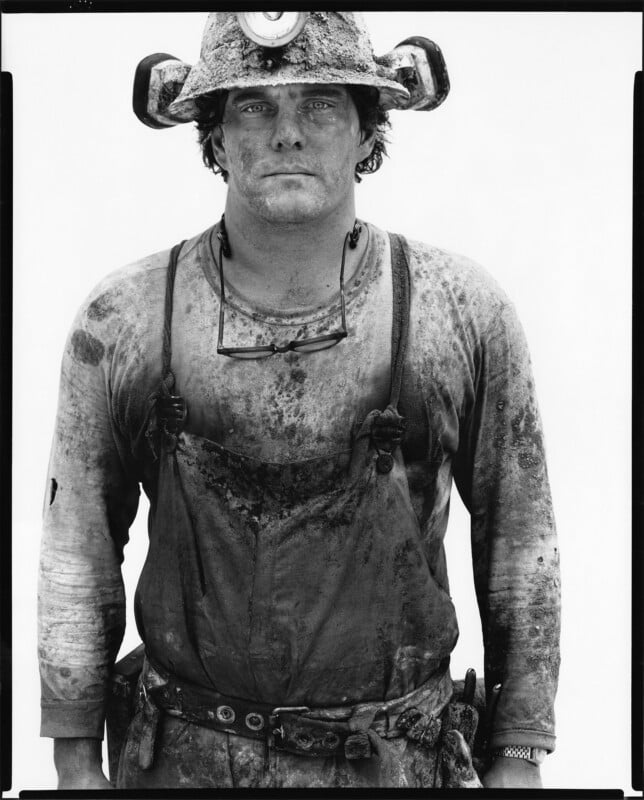 Joe Dobosz, uranium miner, Church Rock, New Mexico, June 13, 1979. Photograph by Richard Avedon © The Richard Avedon Foundation
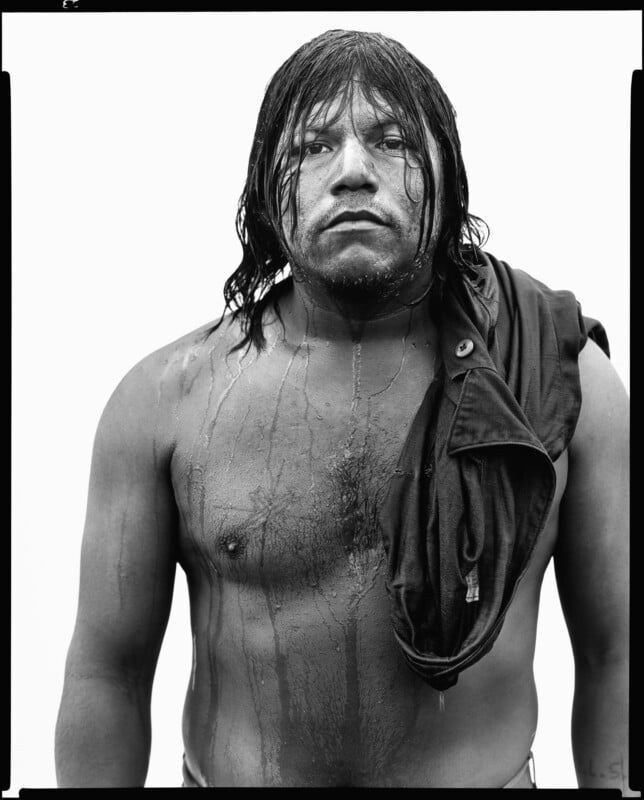 Unidentified migrant worker, Eagle Pass, Texas, December 10, 1979. Photograph by Richard Avedon © The Richard Avedon Foundation
Avedon shot more than 1,000 portraits for the project. Meeting people with the help of his assistant Laura Wilson, he selected a wide variety of people to photograph, representing a range of professions and rural pastimes, and depicting often-overlooked subjects from drifters to coal miners.
According to AnOther Magazine, Avedon said the portraits represented “a fictional West,” adding, “I don’t think the West of these portraits is any more conclusive than the West of John Wayne.”
Nevertheless, the simplicity of Avedon’s photos is extremely powerful. Avedon left the black border on the film negative edge to emphasize the absence of manipulation. He also explored new methods of presentation, mounting the prints on aluminum. Caroline Avedon’s selection of images moves from darkness to light — from hardship and labor to youth and hope — and highlights some lesser-known shots to emphasize a diversity of experience for a new generation.
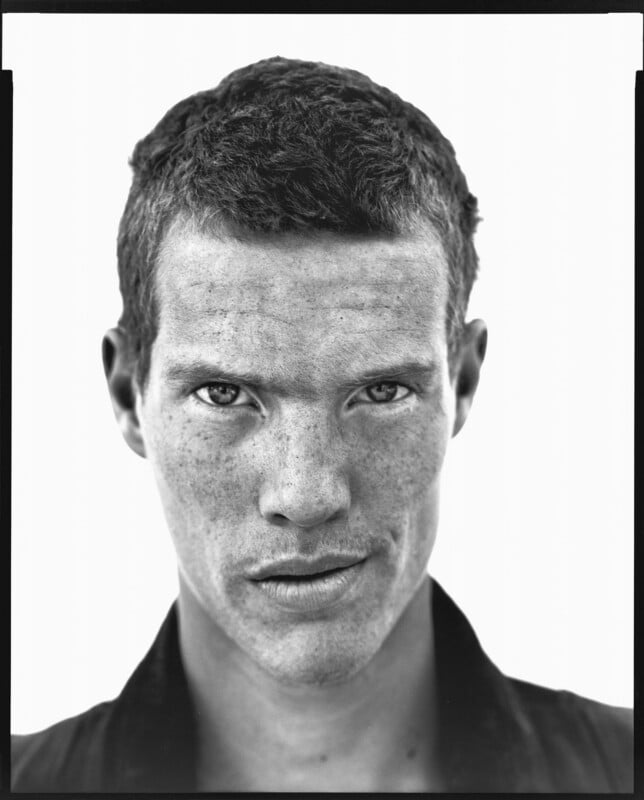 Robert Dixon, meat packer, Aurora, Colorado, June 15, 1983. Photograph by Richard Avedon © The Richard Avedon Foundation
 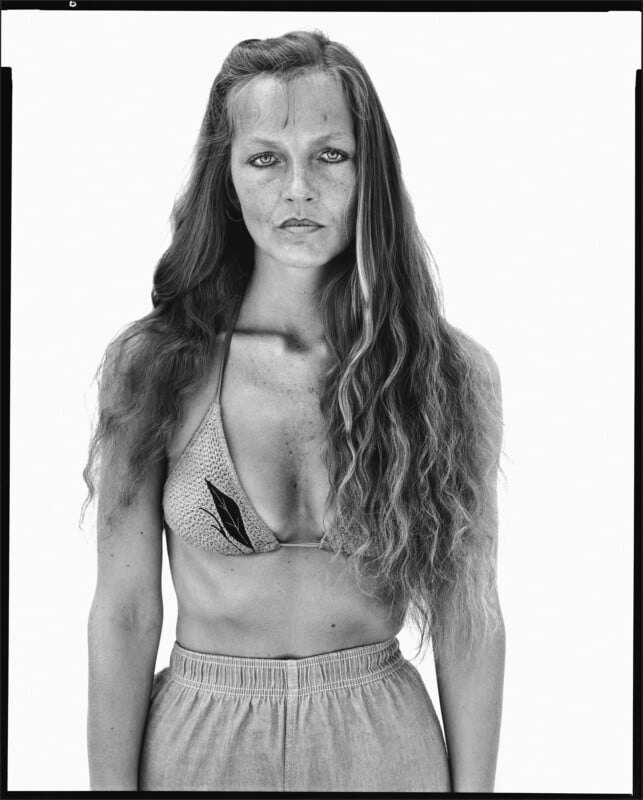 Charlene Van Tighem, physical therapist, Augusta, Montana, June 26, 1983. Photograph by Richard Avedon © The Richard Avedon Foundation
Among the works’ subjects are coal miner James Story, whom Avedon compared to Saint Sebastian for his embodiment of both strength and innocence, and Richard Wheatcroft, a rancher from Jordan, Montana, whom Avedon photographed twice (in 1981 and 1983), and with whom he developed a friendship.
Facing West is on at the Grosvenor Hill Gallery in London until March 14.
Image credits: Photographs by Richard Avedon © The Richard Avedon Foundation