
US Republican administrations and lawmakers have long criticised the UN as wasteful, liberal and ineffective – and in some years have reduced or temporarily withheld partial payments.
The Trump Administration has refused to pay at all, although it has not officially informed the UN whether it intends to make any future or overdue payments.
Although annual payments are usually due in January, many countries pay in tranches throughout the year. The Biden administration left office last January with its second-half of 2024 assessment unpaid.
The US mission at the UN, where US President Donald Trump’s former national security adviser Mike Waltz serves as ambassador, did not respond to queries on the budget.
Trump has said the UN has great “potential” but is not living up to its promise to keep world peace.
In an executive order signed in January, he ordered US withdrawal from 66 international organisations, agencies and commissions, nearly half of them at the UN, because, he said, they “undermine America’s independence and waste taxpayer dollars on ineffective or hostile agendas”.
Trump’s recently announced Board of Peace, originally designed as the supervisory board for implementing his Gaza peace plan, has led to concerns that he aims to replace the UN altogether.
In a letter sent to 60 world leaders invited to join (25 have officially signed up so far, none of them major US allies), Trump said the board would “embark on a bold new approach to resolving Global Conflict”.
Trump appointed himself board chair, with personal veto power over membership and virtually every action it might take.
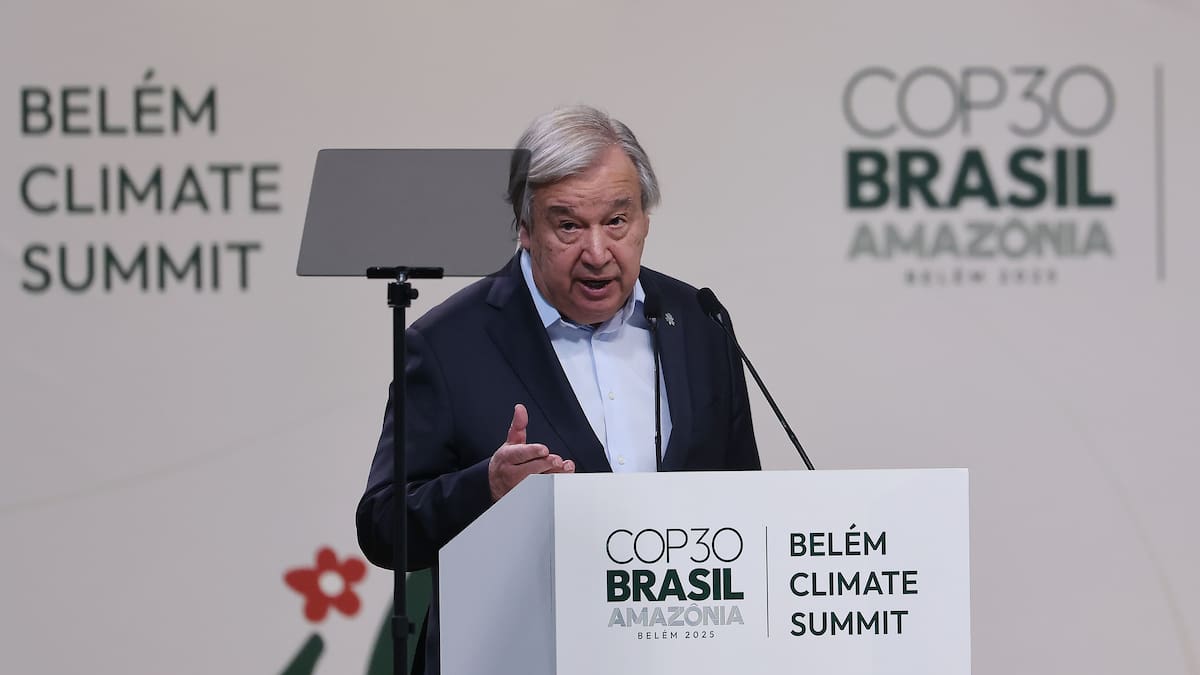
Responding to reporters who asked whether he thought the board was a UN competitor, Guterres said: “In my opinion, the basic responsibility for international peace and security lies with UN, lies with the Security Council … No other body or other coalition can legally be required to have all member states to comply with decisions on peace and security.
“Global problems will not be solved by one power,” Guterres said.
Trump has also withdrawn US participation from other UN agencies whose budgets are separate and voluntary, including the World Health Organisation.
Other voluntary humanitarian programmes include refugee and natural disaster aid, to which the administration last month pledged US$2b, a fraction of what Washington has contributed in the past.
In addition to the problem of unpaid dues, Guterres in his letter called on the General Assembly to revise a system in which any budgeted money that is unspent at year’s end is returned to member governments, whether or not they have paid their dues.
“We are suffering a double blow: on one side, unpaid contributions; and on the other side, an obligation to return funds that were never received in the first place,” he wrote.
“In other words, we are trapped in a Kafkaesque cycle; expected to give back cash that does not exist.”
UN officials expect this problem, if left unaddressed, to increase exponentially by 2027, as the amount of money that must be returned cuts into each new year’s available funds.
The UN could run out of cash as early as July, by some accounts, if neither the dues nor the financial system is addressed.
Guterres, whose term expires at the end of this year, sounded the alarm last year and proposed cutting the regular operating budget by as much as 20% via staff cuts, streamlining, building sales and relocation of some offices from expensive locations such as Geneva to less costly regions.
The General Assembly finally approved a 2026 regular budget that was 7.6% lower than last year.
In an interview with the New York Post last month, Waltz claimed US credit for forcing the UN to accept “actual real cuts for the first time in its modern history … They’ve never seen anything like it”.
Saying he was now pushing to revamp pension and compensation plans, Waltz stressed the importance of the UN to international diplomacy.
“There needs to be one place in the world where everyone can talk,” he told the New York Post.
“We want that one place in the world to be in the United States, not in Brussels or Beijing.”