
The Act leader gave that away on Ryan Bridge TODAY this morning.
“I’ve not seen the framework. I’ve seen a summary of it as we’ve discussed it through Cabinet … I don’t talk about what’s done in Cabinet, except for that minor slip-up.”
Luxon has been critical of media reporting on the discussions, calling it “frothy” and “speculative”, despite two Government ministries confirming to the Herald they are undertaking work related to a framework.
Yesterday, the head of New Zealand’s Ministry of Foreign Affairs and Trade and a senior official from US President Donald Trump’s Administration agreed to “explore further opportunities to expand co-operation on critical minerals”.
The Prime Minister repeated on Wednesday that no decisions had been made by Cabinet, but the Government wants to “develop a critical mineral sector” and any deal would be made “in our brutal national interest”.
“We have got discussions going on, but there’s nothing as advanced as a signable contract or deal at this point in time.”
He wouldn’t commit to publicly releasing the summary mentioned by Seymour.
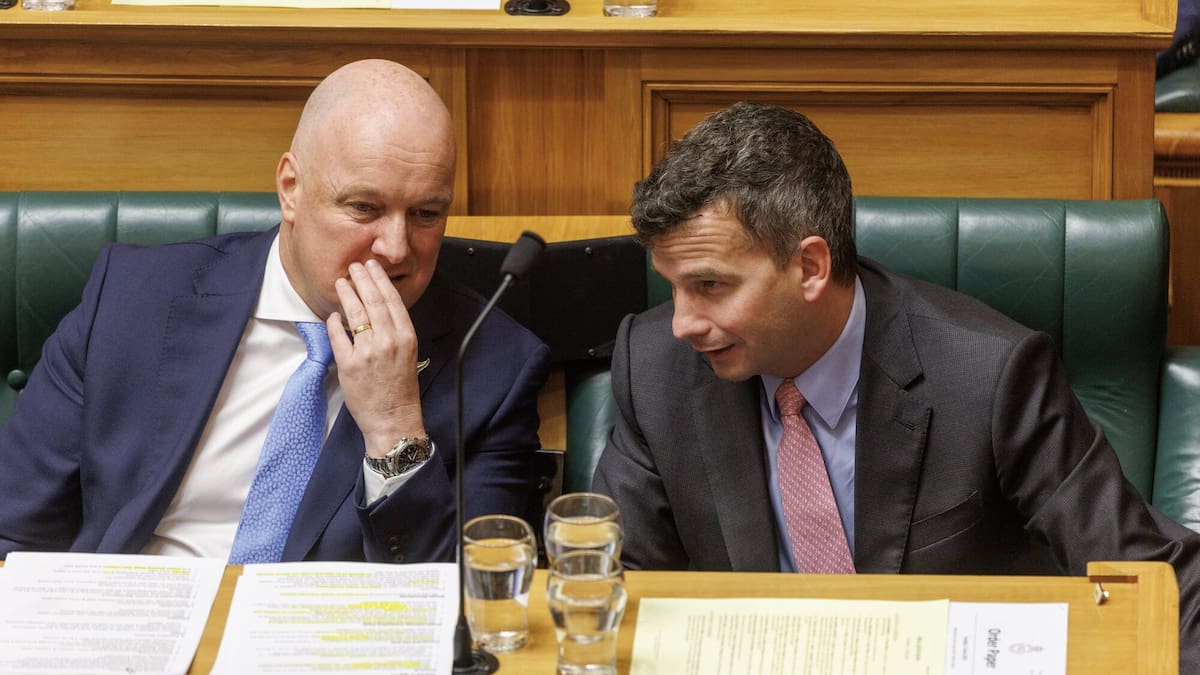
Prime Minister Christopher Luxon said discussions were at any early stage. Photo / Jason Dorday
There isn’t always public consultation on agreements, declarations or the like between countries. For example, ministers often announce them without fanfare while on overseas trips.
But there have been calls for New Zealanders to be involved in a discussion about the potential consequences of a partnership with the United States on critical minerals, which are becoming increasingly geopolitically significant.
The US’ ongoing attempt to bolster its access to the minerals, which China is the largest refiner of and which are important to many energy and defence technologies, was alluded to by the Prime Minister on Wednesday.
“The Americans are looking for a supply chain of critical minerals. The Chinese have a very good supply chain. The Americans don’t,” Luxon said.
Jane Kelsey, an Emeritus Professor of Law at the University of Auckland, wrote earlier this month, prior to confirmation of the intergovernmental talks, that more information was needed.
“To date, we have heard nothing from the Government about any demands from the Trump Administration, and it is following a softly-softly foreign policy approach to the US,” she said.
“But if New Zealand is a target of the latest Trump directive, there needs to be a full discussion about the implications – before, not after the fact.”
A memorandum filed to the Waitangi Tribunal last week also raised concerns that an agreement could “be finalised and signed without Māori, or anyone else in Aotearoa, being aware” and may “breach the principles of rangatiratanga and kāwanatanga” (right to exercise authority and governorship).
Those parties sought the tribunal “to seek information urgently from the Crown to establish whether the United States Government has sought such an agreement and if so, the process for its development, the likely content, the role of Māori in that process, and the protections for Māori responsibilities, duties and interests and the Crown’s obligations under Te Tiriti o Waitangi”.
Greenpeace executive director, and former Green MP, Russel Norman said New Zealand was being “used as a pawn in Trump’s game”.
“Now we hear that the NZ Government is in closed-room conversations with Trump to supply minerals … Is the NZ Government going to allow the waters of the west coast to be trashed, fish stocks impacted, indigenous rights violated – to fuel the US’s dreams?”
Green Party co-leader Chlöe Swarbrick also said yesterday it was a “secret deal”.
“When exactly did New Zealanders decide to be in Trump’s corner? Luxon didn’t campaign on this and he sure as anything hasn’t been upfront or transparent about the process so far.”
Deputy Prime Minister David Seymour gave away that the framework had been discussed at Cabinet. Photo / Mark Mitchell
That was rejected by Seymour this morning.
“If you have an arrangement or any kind of negotiation between two governments, it could be some sort of UN declaration on saving the whales, always there is a discussion between the officials from the two governments that goes on, and sometimes it goes nowhere and sometimes it’s never talked about. That’s not secretive. That’s just diplomacy.”
He said critical minerals are very important for economic and military applications.
“It’s also important that countries that are broadly our allies have access to those,” Seymour said.
“Having this agreement, which is non-binding, it is simply a set of guidelines that if we’re going to do business with American firms, mining to get these very valuable minerals that create very high-paid jobs, then this is how we would do it.”
Jamie Ensor is the NZ Herald’s chief political reporter, based in the press gallery at Parliament. He was previously a TV reporter and digital producer in the Newshub press gallery office. He was a finalist in 2025 for Political Journalist of the Year at the Voyager Media Awards.