
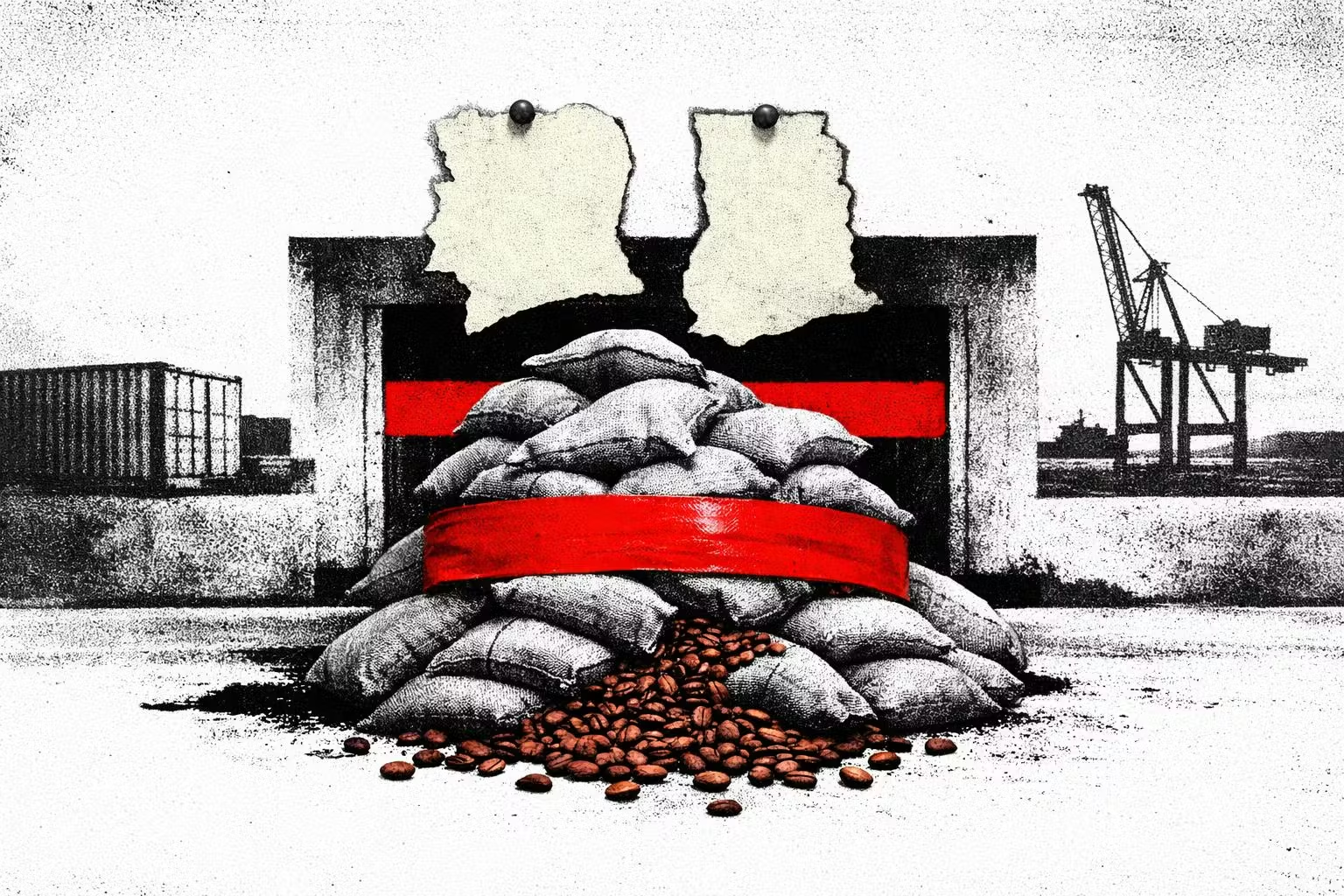
olate makers’ demand is currently soft, so extra supply could keep futures pressured. If Ghana’s cheaper beans win market share, Ivory Coast may feel nudged to lower its own farmgate price to stay competitive.
Why should I care?
For markets: More beans, fewer buyers, weaker pricing power.
Cocoa can sell off quickly when inventories build and end buyers step back. If lower farmgate prices lead to a faster export flow out of Ghana – and possibly Ivory Coast – traders may mark up expectations for near-term supply, which tends to weigh on futures. That matters beyond commodities desks: cheaper cocoa can ease input costs for chocolate makers and some consumer staples firms, while sudden policy shifts can still jolt hedging plans and margins.
The bigger picture: Soft commodities still trade on local decisions.
This is a reminder that “softs” often move on country-by-country supply signals, not just global growth and rates. Cocoa is being driven by West African logistics and pricing policy, while other crops can hinge on separate domestic factors like harvest forecasts and export rules. When those local signals change fast, global benchmark prices can follow – even if the broader macro backdrop hasn’t.