

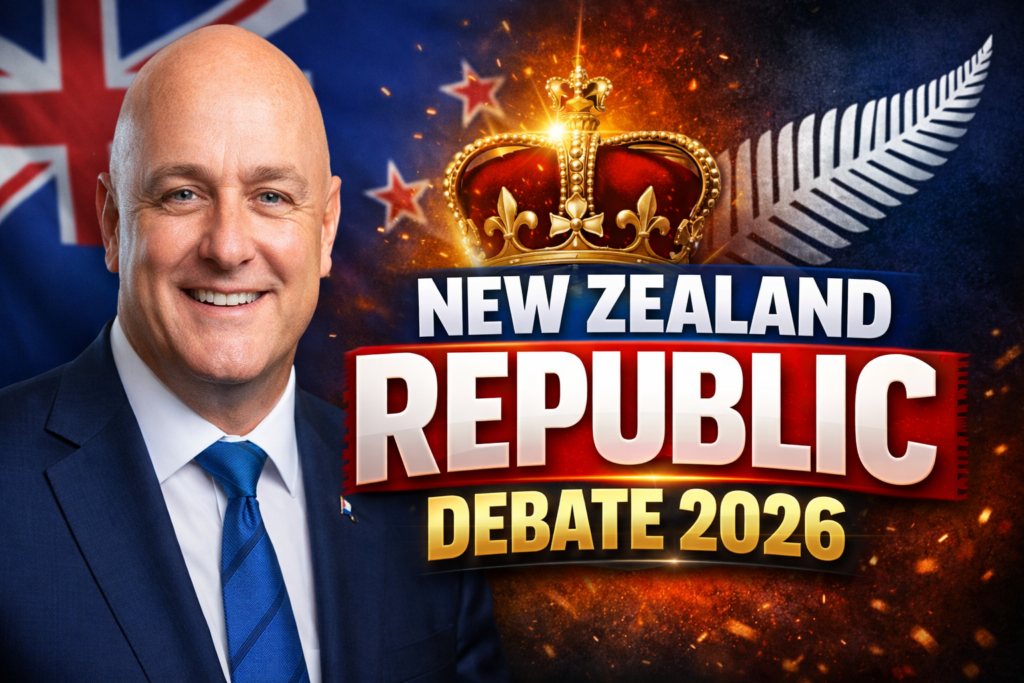
King Charles III’s recent health challenges and the looming prospect of royal succession to Prince William have reignited New Zealand’s long-simmering debate over becoming a republic. With polls showing support hovering around 45 percent, politicians, Māori leaders, and constitutional experts grapple with whether to sever ties with the British Crown amid the 2026 general election campaign. This resurgence questions New Zealand’s identity, the Treaty of Waitangi’s role, and practicalities of constitutional change.
Historical Context of the Monarchy in New Zealand
New Zealand’s constitutional monarchy traces to the Treaty of Waitangi in 1840, positioning the Crown as partner to Māori iwi. Queen Victoria’s representative symbolized protection and governance, evolving into today’s shared sovereign with the UK. Elizabeth II’s 70-year reign fostered stability, but Charles III’s ascension in 2022 prompted murmurs.
Republicanism gained traction post-1990s, with PMs like Helen Clark and John Key acknowledging inevitability yet delaying action. Polls fluctuated: 30 percent favored republic under Elizabeth, rising to 43 percent for Charles. No referendum materialized, stalled by MMP politics and Treaty sensitivities.
Triggering Event: Royal Succession and Health Concerns
Speculation over Charles’s fitness—amid cancer treatment—has spotlighted succession. Counsellors of State like William and Camilla handle duties, but realms like New Zealand require local proclamation. Recent moves to exclude Prince Andrew from succession, backed by PM Christopher Luxon, highlight reform momentum.
William’s popularity—bolstered by 2011 tours—contrasts Charles’s lower approval (33 percent in 2010 polls). Experts note automatic accession: Charles’s incapacity triggers regency under William. This fluidity prompts Kiwis to question relevance of an overseas head, especially with Governor-General Cindy Kiro exercising most powers.
Current Polling and Public Opinion
A Horizon poll in January 2026 shows 42 percent support republic now, 35 percent retain monarchy, 23 percent undecided—up from 2023’s 38-40 split. Younger voters (18-34) favor change at 55 percent, urban areas higher. Māori support dips to 35 percent, prioritizing Treaty protections.
Election timing amplifies: Luxon’s National trails Labour in republic leanings. Social media buzzes with #RepublicNZ, memes contrasting William’s modernity with Charles’s gaffes. Yet, apathy reigns—60 percent see it low-priority amid cost-of-living woes.
Political Stances Across the Spectrum
Prime Minister Luxon (National) treads cautiously: “Monarchy stable, focus on economy.” Coalition partners ACT (David Seymour) push republicanism—”NZ head for NZ”—while NZ First eyes referendums. Labour’s Chris Hipkins calls it “ideal future,” bundling with four-year terms.
Greens advocate elected head, Te Pāti Māori warns of Treaty risks. Deputy PM Seymour dismisses Andrew saga as “not pressing.” Luxon hints no election referendum, citing timelines.
Party Positions Table
PartyStance on RepublicKey Figure QuoteNationalStatus quo, gradual if needed“Stable institution for now” – LuxonACTStrong support, constitutional reform“Time for Kiwi head” – SeymourNZ FirstReferendum, pragmatic“People decide” – JonesLabourSupports long-term, no rush“Ideal one day” – HipkinsGreensFull republic, elected president“Democratic head” – DavidsonTe Pāti MāoriCautious, Treaty-first“Crown partnership sacred” – Waititi
Constitutional Hurdles to Becoming a Republic
Uncodi uncodified constitution demands multi-step change. Head of State Bill proposes president elected by Parliament, but requires referendum (50%+ support) and Upper House approval. Realm coordination—Australia, Canada—complicates; NZ can’t unilaterally alter shared monarch.
Key issues: Governor-General’s reserve powers, oaths to monarch, military allegiance. Simplest model: minimal change, president ceremonial.
Treaty of Waitangi and Māori Perspectives
Treaty binds Māori to Crown, settlements totaling $2 billion hinge on it. Iwi fear republic severs partnership; some view monarch as eternal guarantor. Kingitanga movement parallels monarchy, fostering dual loyalty.
Yet, younger Māori question relevance, seeing republic as decolonization. Co-design needed: Treaty Clause in constitution ensures continuity. Waitangi Tribunal could review changes.
Arguments For and Against Republic
Proponents cite sovereignty: “NZ flag, anthem, leader.” Cost savings minimal ($10 million/year), but symbolism huge. William’s reign might delay, Charles accelerates.
Opponents stress stability: no crisis, why risk? Treaty, Commonwealth ties at stake. Polls show majority prefer evolution over revolution.
International Comparisons and Lessons
Australia’s 1999 referendum failed 55-45 despite PM Howard’s support. Barbados transitioned smoothly 2021, appointing Sandra Mason president. Canada debates quietly. NZ could hybrid: head elected by Māori/pākehā caucus.
Potential Pathways Forward
Options: binding referendum post-election, select committee inquiry, or constitutional convention. Luxon rules out 2026 ballot; Hipkins floats if Labour wins November 7.
Civil society—Republic NZ, Monarchy NZ—ramps campaigns. William visit could sway, as 2011 boosted support.
Implications for 2026 Election and Beyond
Republic wedges election: National-ACT rift exposes coalition strains. Labour leverages youth vote. Win-win for debate normalization.
Long-term, William’s reign tests relevance; his children dilute dynastic appeal. By 2040, republic likelier amid generational shift.
NZ stands at crossroads: cling to imperial past or embrace independent future? Succession sparks urgency, but Treaty wisdom demands care. Debate enriches democracy, whatever path chosen.

Emma Brooks is a contributing writer at richlittleragdolls.co.nz, covering news, community updates, and trending stories across New Zealand and Australia. Her work focuses on delivering clear, accurate, and reader-friendly reporting that helps audiences stay informed about regional and national developments.