
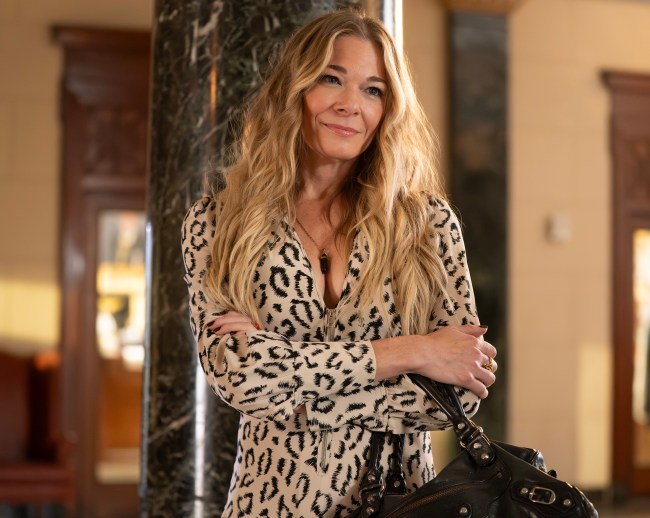
Former Boy Wonder Chris O’Donnell famously exited the Batcave before Christopher Nolan’s franchise-rebooting Batman Begins. But the retired Robin finally gets the origin story treatment courtesy of tonight’s 9-1-1: Nashville installment, appropriately entitled “Don Begins.” Written by Jamie Kessler, the 11th episode of the latest offshoot in Ryan Murphy’s hit ABC franchise rewinds the clock to reveal how O’Donnell’s alter ego, Don Hart, became the firefighting dynamo he is today… and the sacrifices that were required along the way.
One of those sacrifices was extinguishing his hot-and-heavy romance with former flame, Dixie Bennings, the fictional country star played by the very real country star LeAnn Rimes. “I didn’t know any of that backstory before this episode,” Rimes tells Gold Derby with a laugh. “That’s how TV works, but I wish we had known all this when we started the show!”
There’s certainly a lot of Don & Dixie backstory packed into 43 minutes. As “Don Begins” reveals, the duo have been in each other’s lives since they were children, with their first meeting happening at a Nashville hospital hours after an arsonist-set fire claimed the lives of Don’s entire family. Years later, they cross paths again as hopelessly-in-love young adults seeking to build their futures around each other. And they do — for a little while.
Inevitably, though, Don’s firefighting career clashes with Dixie’s country music dreams, and she’s actually the one who puts an end to their romance by embarking on a global tour as a backup singer. While she’s gone, Don finds new love with Blythe (Jessica Capshaw), the woman he ends up marrying. Dixie learns that he’s moved on the hard way — coming home from her tour early to find the lovebirds canoodling in the apartment she used to share with Don. Still, their tangled past has left her with one unshakable belief that serves as her mantra: “The universe always brings us back together.”
The centerpiece sequence of “Don Begins” is a montage illustrating how young Don and Dixie — played in flashbacks by Ben Winchell and Noa Bess Solomon, respectively — grow apart as Dixie creates the song that launches her to stardom. And Rimes convinced showrunner Rashad Raisani that she had to be the one to pen the tuen that accompanies that key part of their shared story. The result is “Wild Things Run,” which Rimes wrote in a mere eight weeks with her regular collaborator, Darrell Brown. She also performs the version heard in the episode, and the studio cut that will be released separately.
“We have great music writers on the show, but I told Rashad, ‘Look, I have some insider information on the emotional point of view of this character,'” Rimes recalls. “‘Also, this is what I actually do for a job, so please let me take a crack at it.’ And he said, ‘Absolutely.'”
Already a two-time Grammy winner — in addition to a number of other prominent music awards — “Wild Things Run” is Rimes’ path towards her first Primetime Emmy nomination in the original music categories. And she confirms that ABC will be submitting the song for consideration. “I’ve had songs that have been featured in films like Coyote Ugly, but to be able write songs for myself as an actress is a whole other layer of fun,” she says. “It’s not something I can do all the time, but if we get another season, I think it’ll be something that pops up again.”
We spoke with Rimes about the origin story revelations in “Don Begins,” why she gets a kick out of playing a Dynasty-style villain and the 30th anniversary of her breakout album, Blue, which won her the 1997 Grammy for Best New Artist over such fierce competitors as Jewel, Garbage, and No Doubt. And just wait until you hear what Gwen Stefani told her after she won.
Gold Derby: How much information were you given about the “growing apart” montage before writing “Wild Things Run”?
LeAnn Rimes: After I heard this episode was happening, Rashad sent me the rough draft of the montage. I knew that they needed the song that Dixie would be discovered for, and I was excited to do that for a character that I know in and out so well. I was lying on a massage table in Hawaii and the title “Wild Things Run” just came to me. It encapsulated Don and Dixie’s relationship — these two wild souls that ran to each other and then away from each other.
When Rashad and I started talking about the song, he said that they needed something with tempo, but it didn’t need to be uptempo. It also had to be a hit song since it gets Dixie discovered. When I write songs, I never think to myself: “Is this a hit?” [Laughs] So I had to put myself in that mindset of ensuring that it sounded like a hit song with tempo and also capture all of these emotional moments in the montage.
One of the lyrics that really captures Don and Dixie’s relationship for me is: “Now we hum the tune, but we forgot the song.” I imagine that’s a key lyric for you as well.
Absolutely. They were so locked into one another and then it fell apart. They’ll always have a connection, and she’s always going to be in love with this man. They have a history that he and Blythe don’t have. They both started singing different tunes at some point, but that is still very much between them. I feel like the song is very cinematic and writing it was very different from writing for myself on my own time. Usually I live with music for months and months, but in TV you have a deadline — I only had about eight weeks to write something that sounded like a hit song and put it out! It was kind of nice, actually; it was stressful, but it worked.
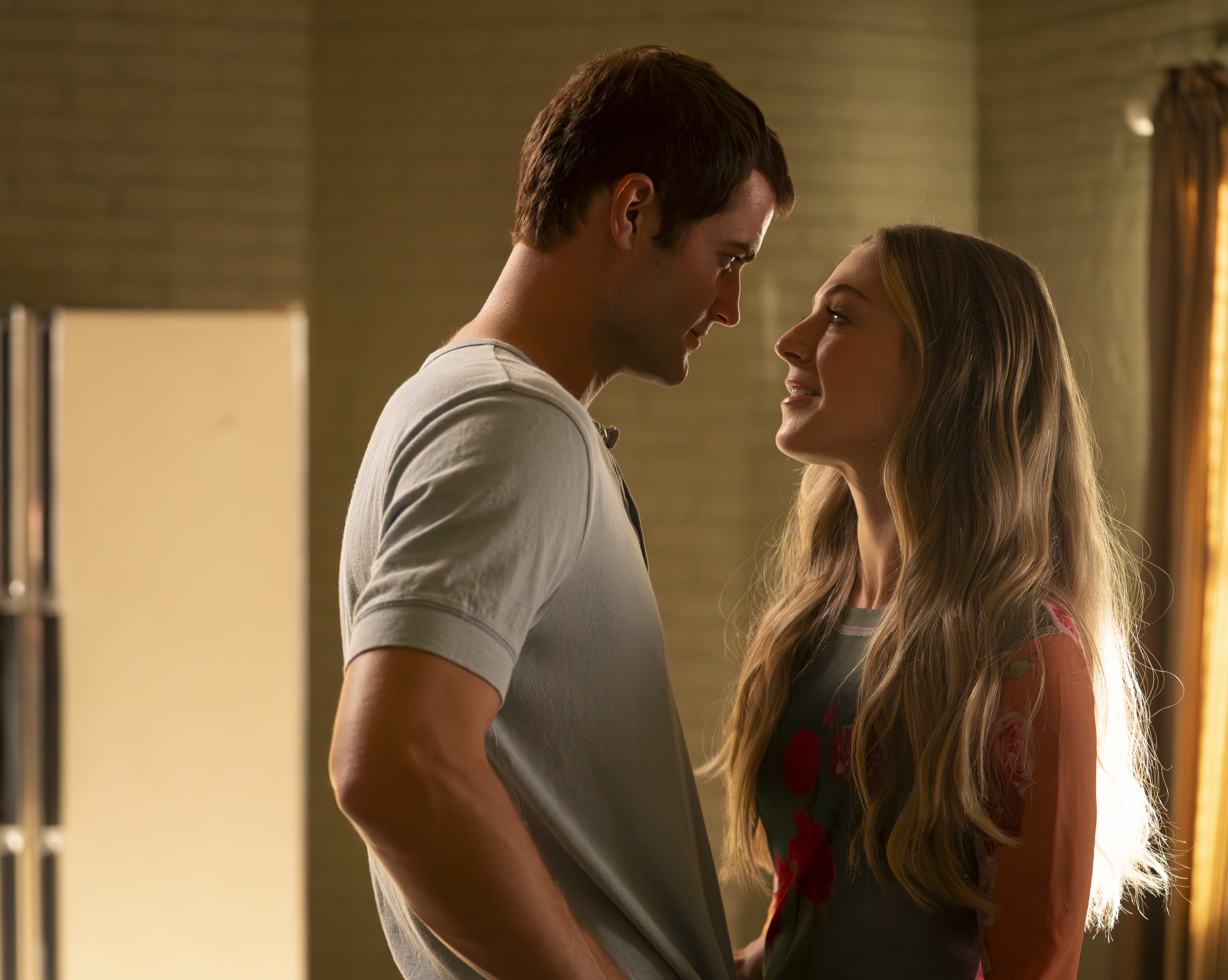 Ben Winchell as Don and Noa Bess Solomon as DixieJake Giles Netter/Disney
Were you able to watch any of the montage while you were recording the song?
I wasn’t on set those days, but the crew sent me videos and told me that it was going well. The way it worked was Darrell and I first wrote the song over Zoom and I recorded the original vocals on my phone in a closet in my house. I sent it to Darrell and he put piano under it. Then we sent it to Rashad and the writers so they could hear it.
We didn’t have time to record new vocals that they could film with, so they used my cell phone recording for Noa to sing along to while they were shooting the scene. It was only a couple of weeks ago that I recorded the vocals you hear in the episode. I also had to make myself sound 20 years younger so I took out the bottom end of my voice and made the resonance smaller and more nasally. And then I did another version that sounds completely different from what’s on the show. I love being able to play around in both of those worlds, TV and music.
Did you spend any time with the younger versions of Dixie?
I met little bitty Dixie — she was so cute. I never got a chance to meet Noa, but it was her birthday when she was filming, so I sent her a video wishing her happy birthday. She did a great job, and did Dixie justice for sure. I feel like people are going to be a little more “Team Dixie” after this episode. You get to see her as a young woman before the industry and the world got to her. She’s someone who has had to learn to survive in this crazy business and this crazy world, but there’s a really soft, beautiful heart underneath all her manipluation.
Back in the present day, you have a big scene with Chris where Dixie convinces Don to address the parole board that’s deciding to set his family’s killer free.
That’s one of the first scenes [during the series] that Chris and I have filmed as just the two of us. You get to see that it takes both of these women — Dixie and Blythe — to make him whole. And Dixie being there in that pivotal moment helped him show his anger, rage and grief and let that flow onto the paper. There’s a centering that has to come to be able to conjure up emotions like that in order to film a scene, and that’s been new for me. I haven’t acted on a show like this, so I learn something new every time I shoot something. There have been a lot of emotional scenes where I’ll listen to music beforehand then all of a sudden they’ll yell, “Roll camera,” and I’ll pop my earbud out and start the scene.
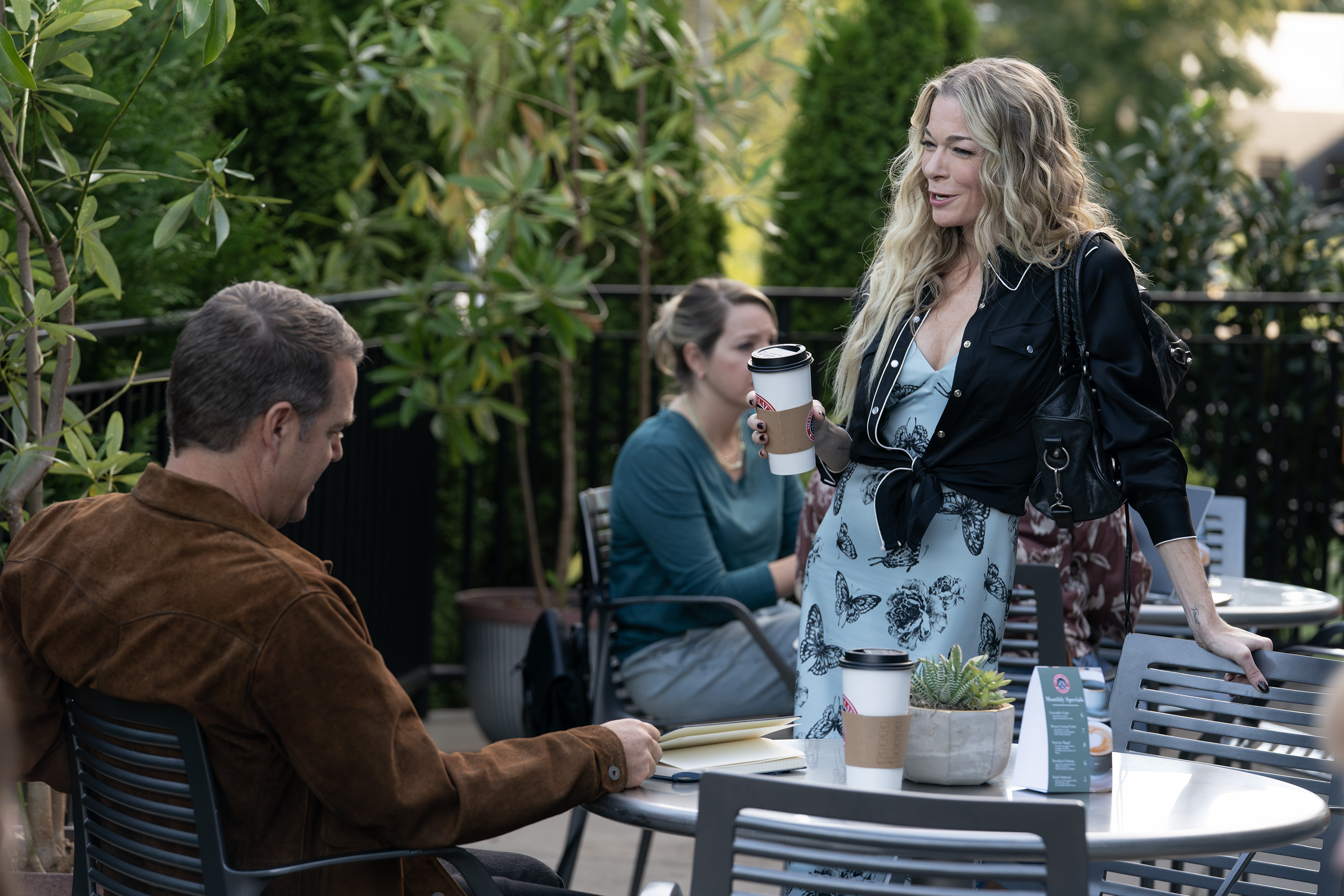 Chris O’Donnell and RimesJake Giles Netter/Disney
You also have one of those Dixie and Blythe confrontation scenes with Jessica. How do you approach those moments so that Dixie doesn’t seem like…
The biggest bitch ever? [Laughs] The thing is, there’s so many layers to her, and when you’re playing a villain, you have to have those layers revealed because people have to fall in love with her at least some of the time. In that scene specifically, Dixie can’t accept a simple “Thank you” from Blythe. She doesn’t know how to take it. It’s so fun working with Jess — we’re so friendly off-camera and then we get to claw each other’s eyes out onscreen.
So you do consider Dixie to be the show’s villain then? There’s definitely a Dynasty tone to that relationship with Blythe.
She’s definitely the villain! [Laughs] But there are a lot of redeeming qualities about her. She’s so sweet with her son, Blue [Hunter McVey], for example. She’s a good mom, even though she’ll use him to get what she needs. Sometimes I look at a script and think, “Why would she make that decision?” But at the same time, I’m like, “That’ll be so much fun to play!”
And Jess and I definitely know what we’re doing with our dynamic. It’s played out on TV many, many times before our show! 9-1-1 Nashville is different from 9-1-1 because of that storyline and the soapiness of it. It took us a second to figure out how to weave the rescues together with the family drama. But now that we’ve reached the midseason, we’ve really hit our stride and it’s all blending beautifully. People love Jess and I onscreen together and those are some of my favorite scenes to shoot, too.
What can you tease about the rest of the season?
Dixie does get her vocal polyp surgery — that’s been a storyline that started at the beginning of the series — so there’s going to be a little more singing in these next few episodes. And you start to see Blythe and Dixie maybe start to befriend each other, because that cord unravels immediately. And Episode 12 is our crossover episode with 9-1-1 where there’s a little rivalry between the two firehouses. And, of course, there’s lots of hot guys together in one room and Dixie has her fun with that!
We’re coming up on the 30th anniversary of your breakout album, Blue, which was released in the summer of 1996. Bill Mack wrote and performed the title track in 1958. What are your memories about working with him?
I recorded that when I was 11 and Bill was so supportive. It’s funny, Bill pitched that song to my dad and my dad threw it in the trash! But if you heard that early demo, you’d understand why. It sounded awful. But I was so defiant as a kid; after my father threw it in the trash, I pulled it out again and put that whole yodel thing on it by the time he got home. That’s what’s so great about being a kid at that age — you have no reservations about your own creativity. And who knew it would be this song that would last forever?
I play “Blue” live all the time, and it never gets old for me. I’m revisiting the whole record right now, which I haven’t done in a long time. It’s been interesting, because there is a bit of trauma from that time in my life, and it’s almost like going to therapy when I revisit all those songs from an adult point of view. WhatI love as an artist is being able to reinvent the wheel at certain times. So when you come and see these songs live now, they’ll be remnants of the older versions, but twisted into something that feels more aligned with this moment. It’s a whole process that’s been really interesting.
Did Bill ever talk to you about the Patsy Cline connection to that song? It’s long been assumed that he had written it for her to record.
From what I was told, he wrote the song with her in mind and she was ready to record it, but then passed away in that plane crash [in 1963]. I’ve always so inspired by her; she was one of the very first singers I remember listening to, and it was very much aligned with what I was influenced by as an artist. I love classic country music; it’s such a lost art and such a beautiful art, and I try to bring it back whenever I can. I perform a lot of it in my shows, and it always gets such a beautiful reception, because people do miss it.
I went back and looked at who you beat for Best New Artist at the 1997 Grammys, and it was a crazy lineup — Jewel, Garbage, and No Doubt.
Also Tony Rich! I was so into him at the time. It’s really funny — I didn’t know who No Doubt was at that time, but I remember Gwen Stefani walking by me afterwards and saying: “That’s the little girl that just kicked our ass.” And I was just like, “Hi!” Of course, I became the biggest No Doubt fan after that. There was some incredible talent in the category that year. I remember my publicist telling me, “You don’t have to think about [an acceptance speech] because no country artist has ever won that award.” The rest is history! [Laughs]
This interview has been edited and condensed for length and clarity