
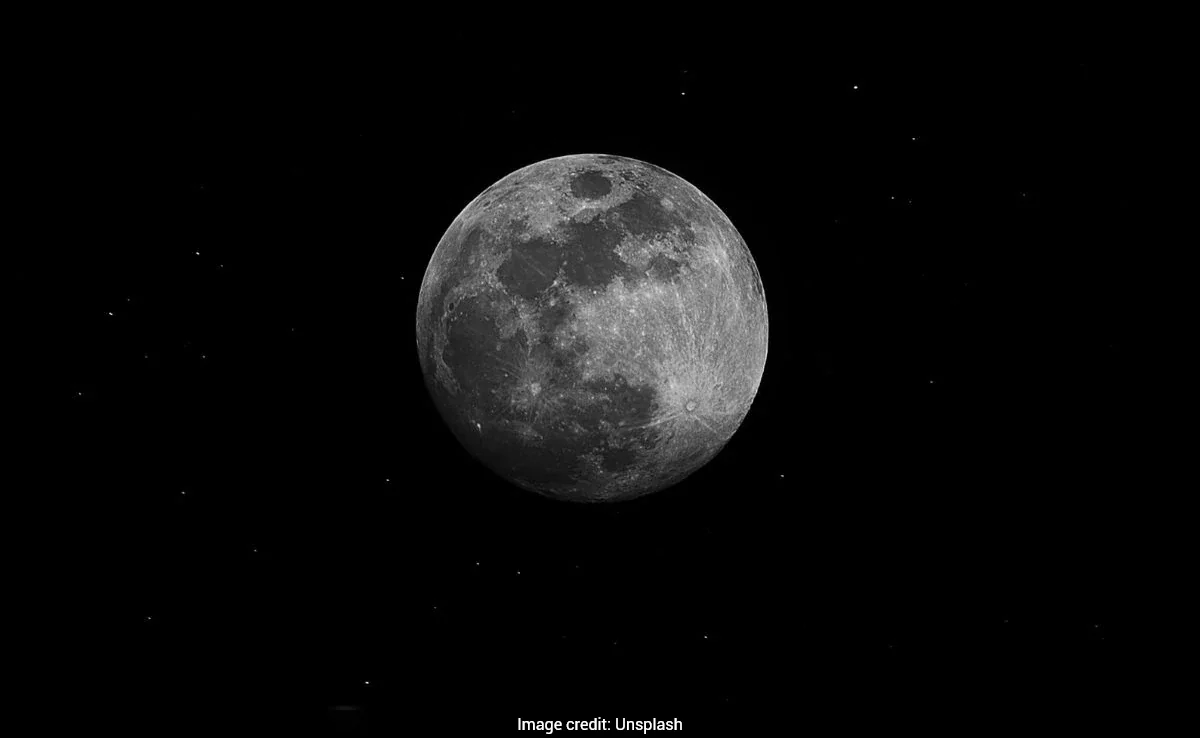
The Moon, Earth’s closest celestial neighbour, is shrinking at a faster rate than previously thought. According to scientists at the National Air and Space Museum’s Center for Earth and Planetary Studies, this phenomenon is caused by the Moon’s cooling interior, which is leading to a gradual contraction of its surface. The process has been ongoing for billions of years, but recent research suggests it’s happening more rapidly than estimated. For the first time in 2010, Tom Watters, a senior scientist emeritus at the Center for Earth and Planetary Studies, found evidence that the Moon is gradually shrinking.
How does Moon shrink?
The lunar surface shrinks as the Moon cools and its crust contracts, creating tectonic features such as lobate scarps and small mare ridges (SMRs), which are signs of the Moon’s geological activity. The SMRs are relatively young and widespread, indicating that the Moon is still changing. With the understanding of SMRs, the scientists have identified new potential sources of moonquakes that could influence where future lunar missions choose to land. They also tried to understand how the shrinking would impact Earth.
“Since the Apollo era, we’ve known about the prevalence of lobate scarps throughout the lunar highlands, but this is the first time scientists have documented the widespread prevalence of similar features throughout the lunar mare,” Cole Nypaver, the first author on the paper, said as quoted by Science Daily. “This work helps us gain a globally complete perspective on recent lunar tectonism on the moon, which will lead to a greater understanding of its interior and its thermal and seismic history, and the potential for future moonquakes.”
Also read | NASA’s Curiosity Rover Probes “Spiderwebs” On Mars. Here’s What It Means
What does it mean for humans?
The Moon’s shrinking has significant implications for future lunar missions. The contraction could lead to moonquakes, posing seismic risks for astronauts and equipment. NASA’s Artemis programme, aiming to land humans on the Moon by 2028, will need to consider these risks when selecting landing sites and designing infrastructure.
According to NASA, the moonquakes caused by the Moon shrinking as it cools “originate at the moderately shallow depths of 20-30 km, can register up to a startling 5.5 on the Richter scale, and can last for over 10 minutes.”
Also read | Experts Reveal How Our Atmosphere Is Becoming “Crematorium For Satellites”
“We are in a very exciting time for lunar science and exploration,” Nypaver said. “Upcoming lunar exploration programs, such as Artemis, will provide a wealth of new information about our moon. A better understanding of lunar tectonics and seismic activity will directly benefit the safety and scientific success of those and future missions.”
Researchers are working to understand the Moon’s internal dynamics and how its shrinking will impact future exploration. By studying the Moon’s tectonic activity, scientists hope to gain insights into its history and evolution.
“Our detection of young, small ridges in the maria, and our discovery of their cause, completes a global picture of a dynamic, contracting moon,” said Watters as quoted.