
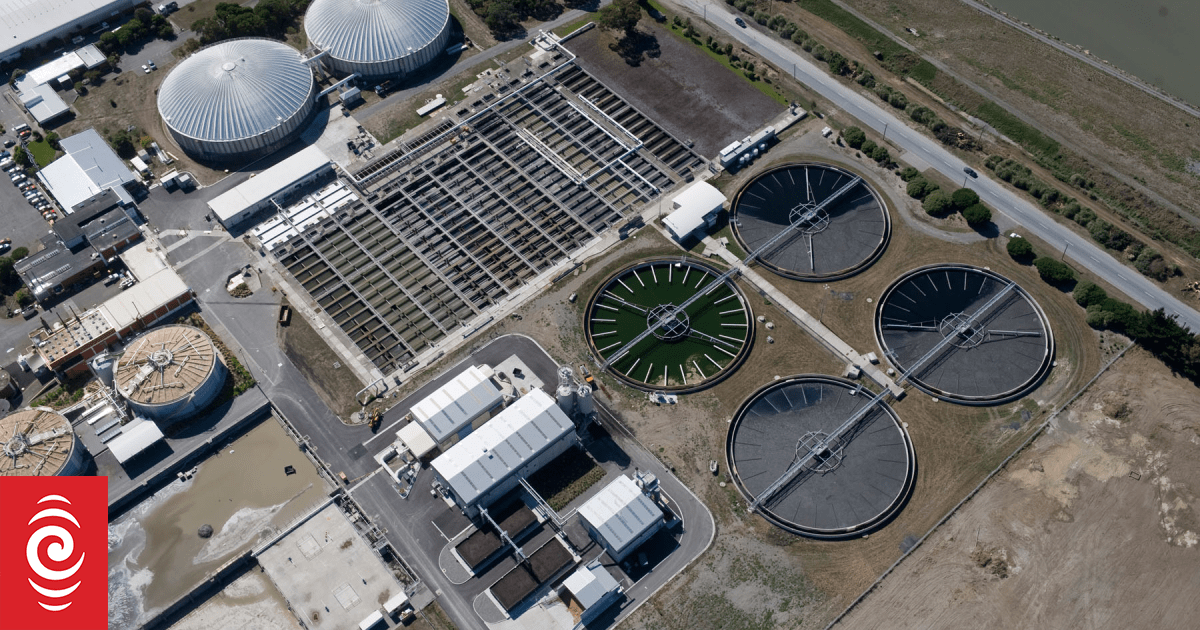
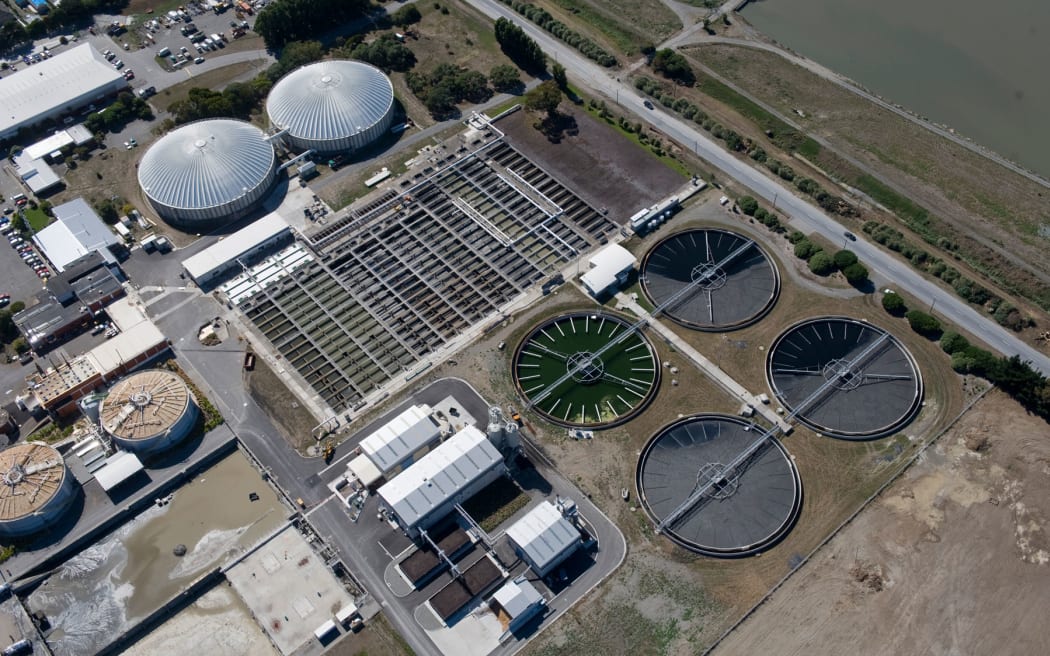
The scent from the damaged plant has been plaguing much of Christchurch for years.
Photo: New Zealand Defence Force from Wellington, New Zealand, CC BY 2.0
The Christchurch City Council is yet to clarify how sewage will be treated before being pumped into the ocean under a new plan designed to mitigate the putrid stench coming from Bromley’s damaged sewage treatment plant.
Mayor Phil Mauger confirmed yesterday the council was investigating pumping tens of millions of litres of partially treated and chlorinated sewage into the ocean each day in an effort to combat the smell of the damaged plant.
The council was last week hit with an abatement notice after Canterbury Regional Council received more than 4500 complaints about the odour in the past month.
The plant was damaged by fire in 2021 and eastern suburbs have since been plagued by the foul odour. But other parts of the city have also been hit as it has got markedly worse this year.
RNZ had requested interviews with Mauger, city council staff and councillors representing affected areas, but none had responded.
Christchurch City Council was yet to answer questions on how the sewage would be treated before being pumped to the ocean and how long such a measure would be in effect.
Community leaders and Canterbury Regional Council have been caught on the hop by Mauger’s announcement yesterday.
Local community board deputy chair Jackie Simons only heard of the proposal yesterday.
“This isn’t unusual,” she said.
“It’s not good enough. I should have known that this was in the winds weeks ago.
“I have people asking me questions about this before I have the information and as the elected representative that’s not a good thing. But at the same time, I do respect my council colleagues and council staff and what they are trying to do. I know that they are pulling out everything they can to try and resolve the situation.
“It’s uncomfortable for everyone and the fact that I don’t get information ahead of time – it’s frustrating.”
Simons said she was cautiously optimistic about the plan, but she had concerns.
“There’s a lot of gaps. There’s a lot of information that hasn’t come through because it’ll be very detailed and very complex,” Simons said.
“I’ve said I’m cautiously optimistic. I have concerns about it being discharged into our ocean because our ocean is literally not for that purpose. So I’m concerned about any harmful repercussions from discharging it to the ocean and I’m well aware that it has the potential to create problems along our coastline for people and for marine life.
“At the same time I’m also dealing with a situation that has gone on for many years in the suburb of Bromley where our people are traumatised by ongoing odour.
“There’s also younger people, and adults of course, who are having some fairly severe health impacts and it’s a very fine line to actually balance out doing something for the people without destroying our marine life. So cautiously optimistic is the word because I want our people to be better and to be able to get on and start living their lives.
“It’s not an ideal solution by any means. But at this state in time what else do we have? I can’t see that we have any other solution.”
Canterbury Regional Council director operations Brett Aldridge said he had many unanswered questions about the plan.
“We had some very high level discussions around what the mayor proposed but only in a conceptual sense and so we were pretty surprised yesterday with the city coming out saying they were in consultation with us,” he said.
“In saying that we do have a planned meeting and we will sit down and work through the proposal in a lot more detail. But at this stage we really don’t have much more detail than what the mayor announced yesterday.”
Among the regional council’s unanswered questions was what partially treating the sewage meant.
Aldridge said they were very interested in finding out what that process would look like.
However he was certain it would not result in Christchurch facing a similar situation to Wellington, where about 70 million litres of wastewater was pumped into the ocean off the capital daily after its Moa Point wastewater treatment plant failed.
“That would be a categoric no – I don’t think so at all,” Aldridge said.
“We are not in the same emergency situation that Wellington is and we really would work through what’s being proposed and what are the mitigations that are going to be required to get it out there in a state that the effects are going to be well managed and mitigated.”
Canterbury Regional Council would meet with Christchurch City Council on Wednesday to discuss the proposal.
Sign up for Ngā Pitopito Kōrero, a daily newsletter curated by our editors and delivered straight to your inbox every weekday.