
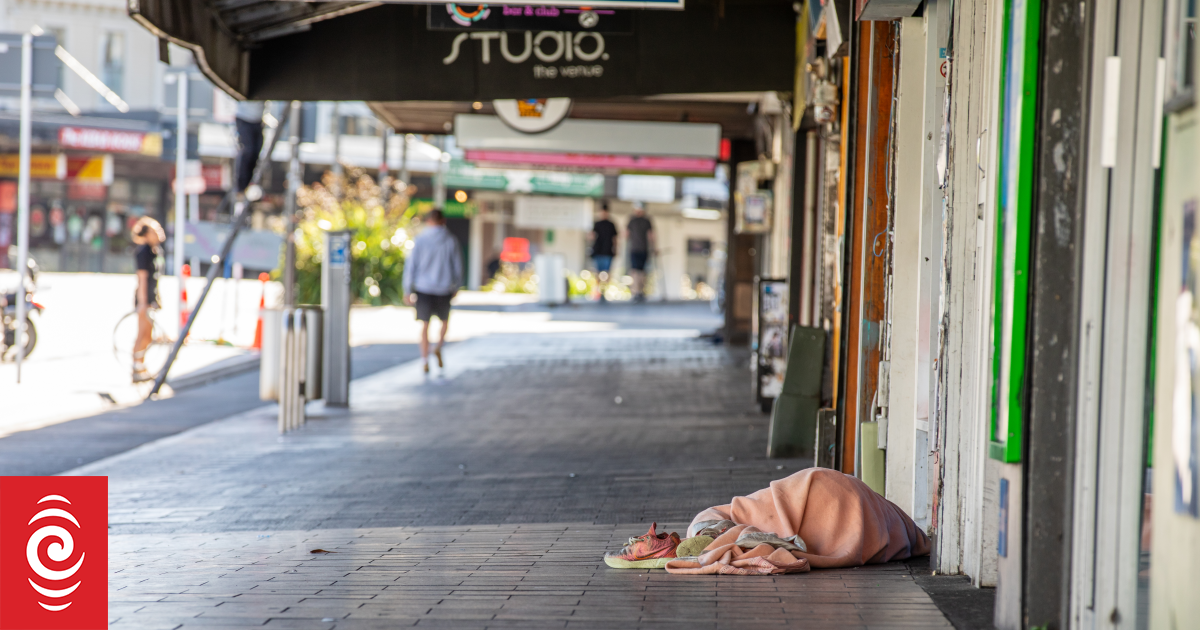
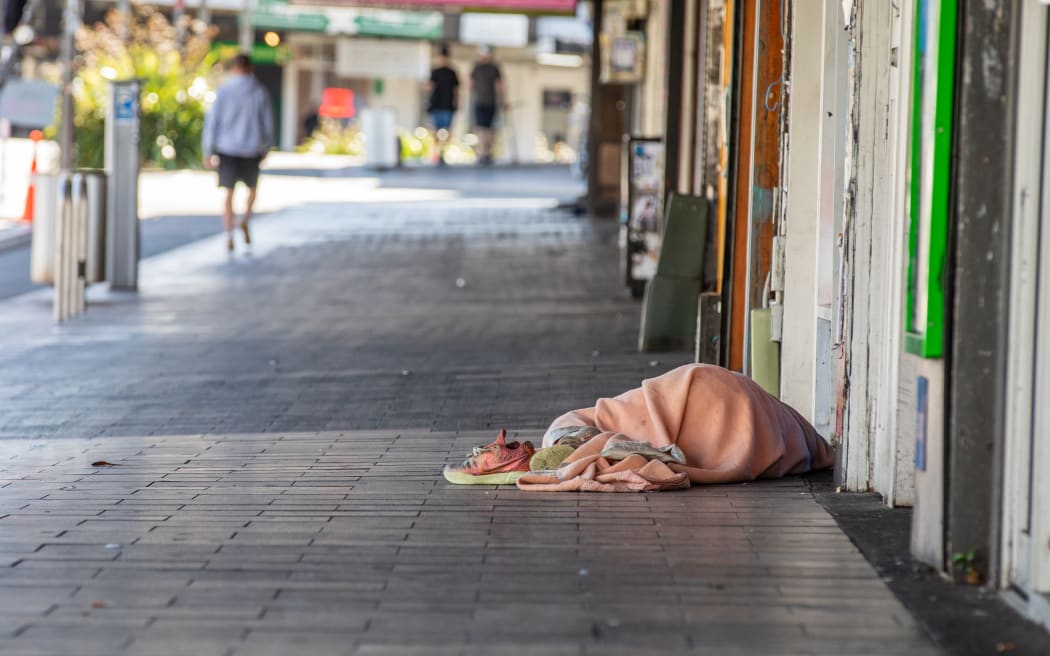
A ‘move-on’ law will provide police with the power to issue ‘move-on’ orders against people who display disorderly, disruptive, threatening or intimidatory behaviour; obstructing or impeding someone entering a business; breaching the peace; all forms of begging; rough sleeping; and behaviour “indicating an intent to inhabit a public place”.
Photo: Nick Monro
The government’s move-on orders didn’t receive the backing of key ministries, the Housing and Justice Ministers confirmed on Tuesday.
Chris Bishop says the Housing Ministry wasn’t supportive of the government’s move on orders, and Paul Goldsmith says the Justice Ministry hasn’t “enthusiastically embraced” most of the law and order policies put forward by the government.
“But that’s not who was elected. We were elected, and that’s why we’re pushing on with what we’ve done,” Goldsmith said.
The powers announced in February will mean police can move on rough sleepers or people displaying disorderly behaviour as young as 14-years-old.
Housing Minister Chris Bishop said the Ministry of Housing and Urban Development (MHUD) was consulted on the move-on orders, but “it won’t surprise you to learn they weren’t supportive” he confirmed.
“But ultimately, officials provide their views, and government takes the advice and makes decisions.
“You don’t necessarily need to agree.”

Chris Bishop says the ministry doesn’t have to need to agree with the government.
Photo: RNZ/Marika Khabazi
MHUD was concerned around a “housing instability point of view” said Bishop, and that was a “completely legitimate viewpoint”.
Bishop said it was legitimate that people questioned where people would be moved on to, but he wanted people who were in unstable housing situations, who were sleeping rough, or “causing a bit of mischief in the CBD” to go somewhere and get the support that was required.
“We’ve made that support available. And if we need to do more, we can.”
Goldsmith was asked about the Justice Ministry’s advice to the government on the move-on orders, and said he couldn’t remember the “preferred option” off the top of his head.
“They pointed out a range of opinions, and the government had its view that it wanted to progress these move on orders, and that’s what we’re doing.
“We’ve got a clear mandate to restore law and order,” he said, referencing the gang patch ban, tougher sentencing provisions and ending Section 27 cultural reports.
“None of these things the ministry was enthusiastic about, but that’s what we’ve got an obligation to do.”
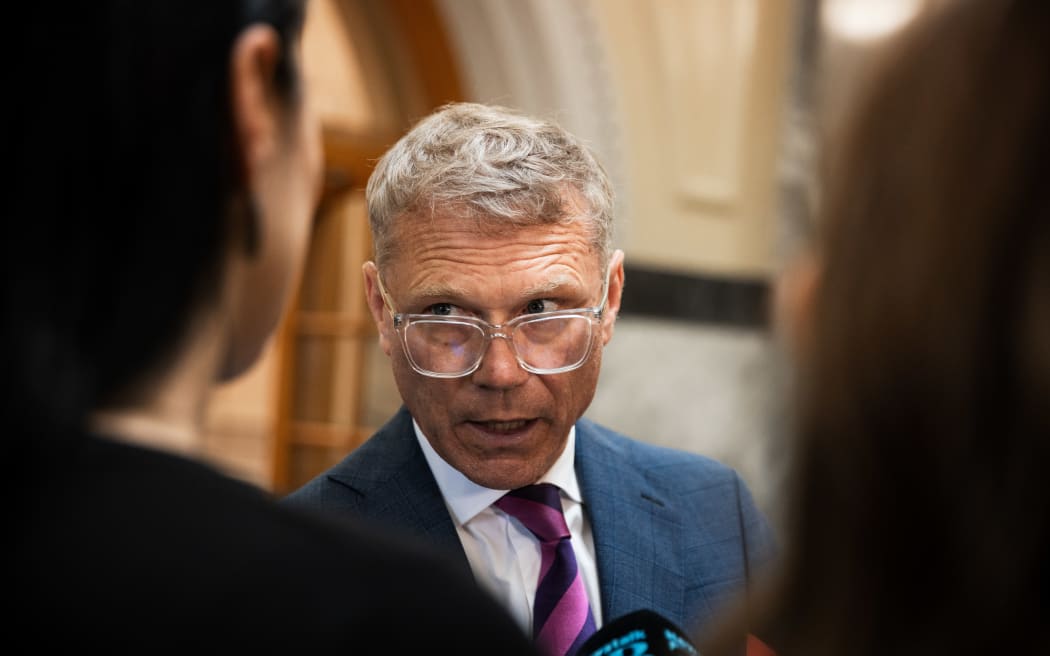
Paul Goldsmith says the ministry was not enthusiastic about law and order changes.
Photo: RNZ / Samuel Rillstone
He said official advice was still worthy to receive, but the government considered their views and opinions, and in the light of “other information that we receive”, such as from the Ministerial Advisory Group on Retail Crime.
Asked if Sunny Kaushal was more qualified than Ministry of Justice officials, Goldsmith said it wasn’t a question of qualifications, but about understanding the issues facing New Zealanders who want to feel safe in their community and retailers who want to feel safe going about their business.
He rejected the notion officials were “out of touch”.
“I’m just saying that we don’t always agree with the advice that we get from officials.”
Sign up for Ngā Pitopito Kōrero, a daily newsletter curated by our editors and delivered straight to your inbox every weekday.