
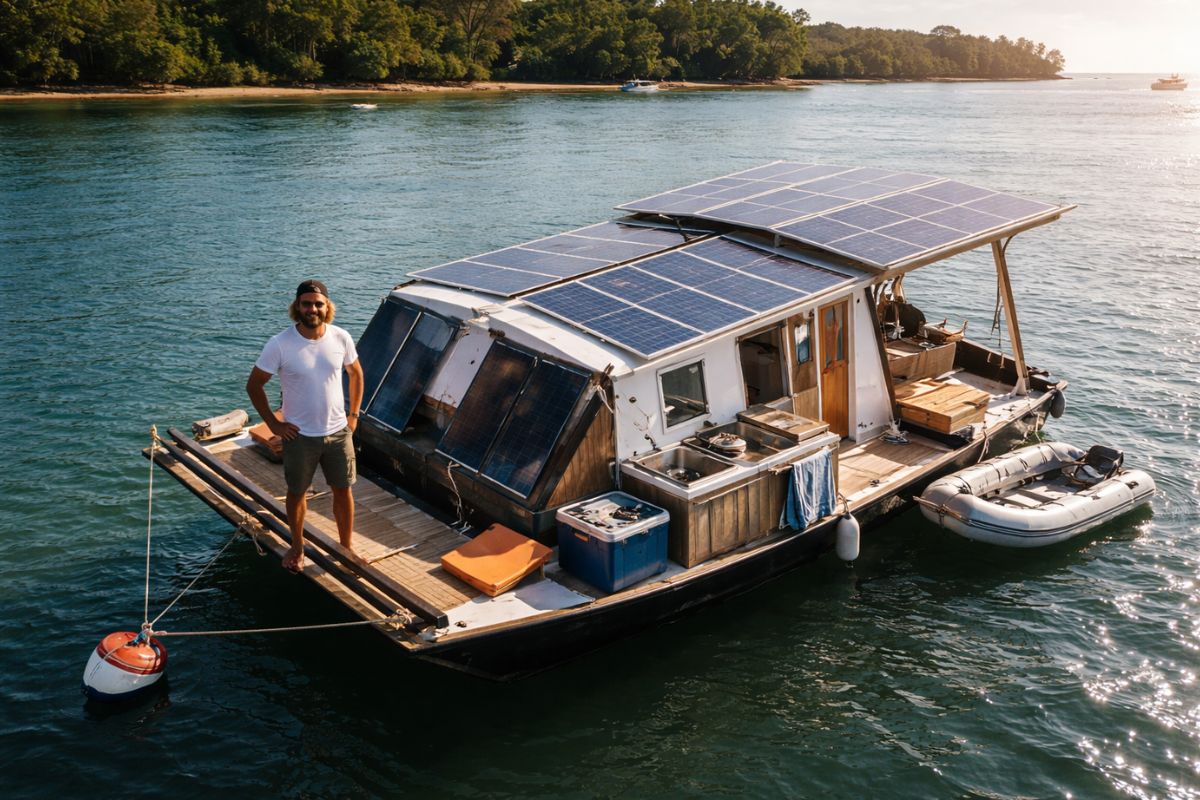
Simon bought a 1976 Oro 47 catamaran for 5.000 Canadian dollars, undertook years of renovations, and installed 16 330-watt solar panels, 20 kWh batteries, and a 12 kW electric motor to cook, wash, desalinate, and navigate without diesel around Gabriela Island, where tides and wind decide everything.
The catamaran became Simon’s most concrete option for living off the power grid without sacrificing the basics. Instead of seeking “easy ways out,” he packed his entire routine into a single shell. and began to measure comfort, autonomy and displacement by the energy input, by what the system can handle and by what the sea allows.
The decision didn’t come out of nowhere: before, he spent two years traveling through North America in a van and almost a year traveling the world by motorcycle. Then he bought the catamaran. Without realizing it, he crossed the country and took on a project that combines drastic reform, technical training, and a clear goal of diesel-free navigation.
A catamaran that became headquarters and changed the way we think about the day.
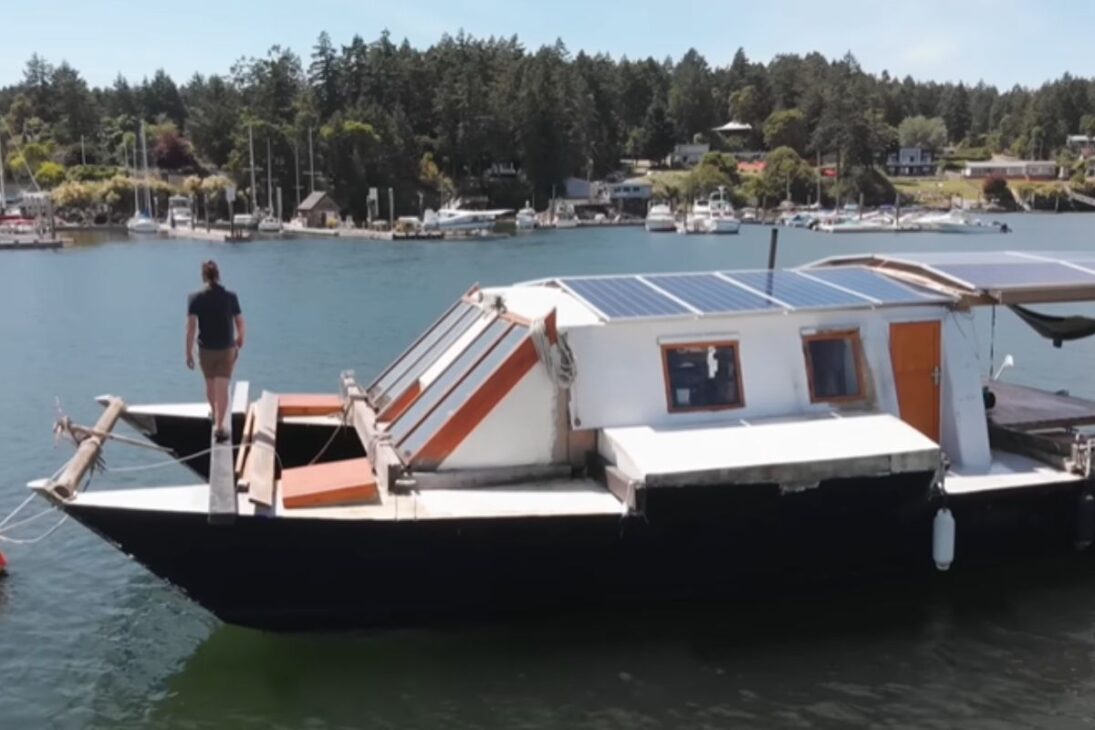
Simon describes the catamaran as his adventure headquarters, but the term is anything but figurative when you look at the tasks he focused on aboard. The house, the workshop, and the engine room became one and the same place.This forces every decision to be practical, from the kitchen layout to the type of energy available for the rest of the day.
ARTICLE CONTINUES BELOW
See also other features
Construction workers find giant cannon weighing over 1.000 kg buried during construction work.
China’s new motorhome breaks the mold with a glass elevator, retractable second floor, hydraulic garage for a Bugatti, self-sufficient solar system, rooftop jacuzzi, and even a functional helipad, transforming roads, water, and sky into private territory.
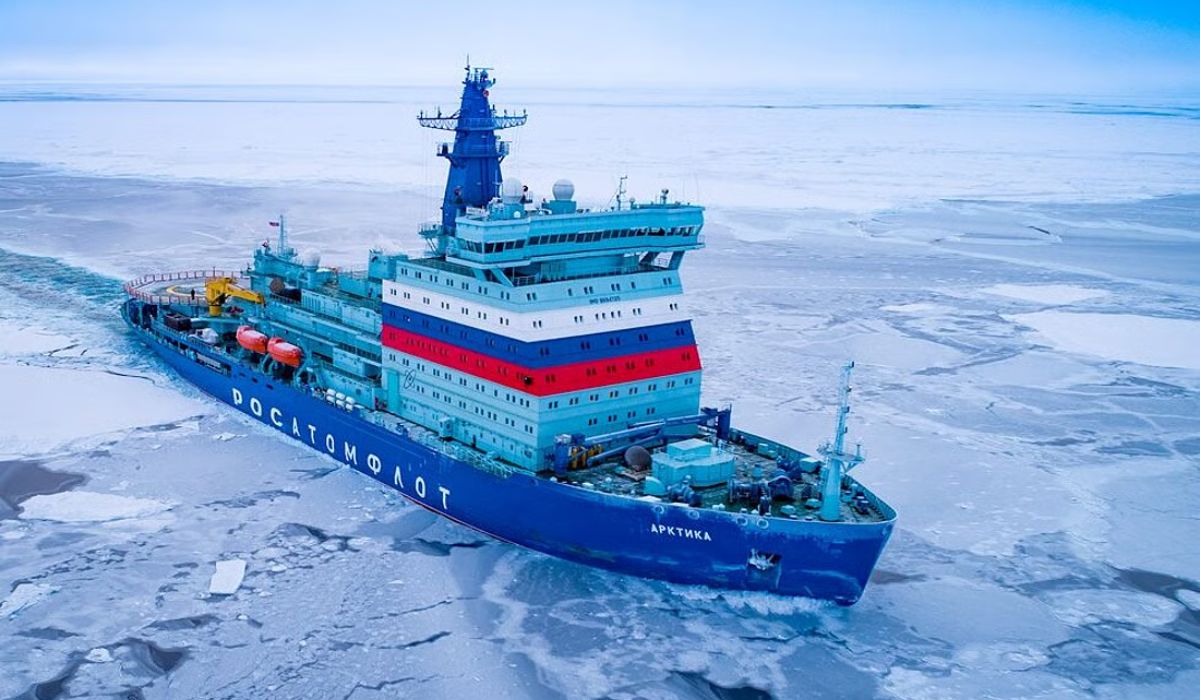
A nuclear giant designed to blaze a trail at the end of the world: the Russian icebreaker, weighing 33 tons, capable of breaking through 3 meters of ice, escorting gas tankers through the Arctic, and becoming Moscow’s secret weapon in the battle for the Northern Sea Route.
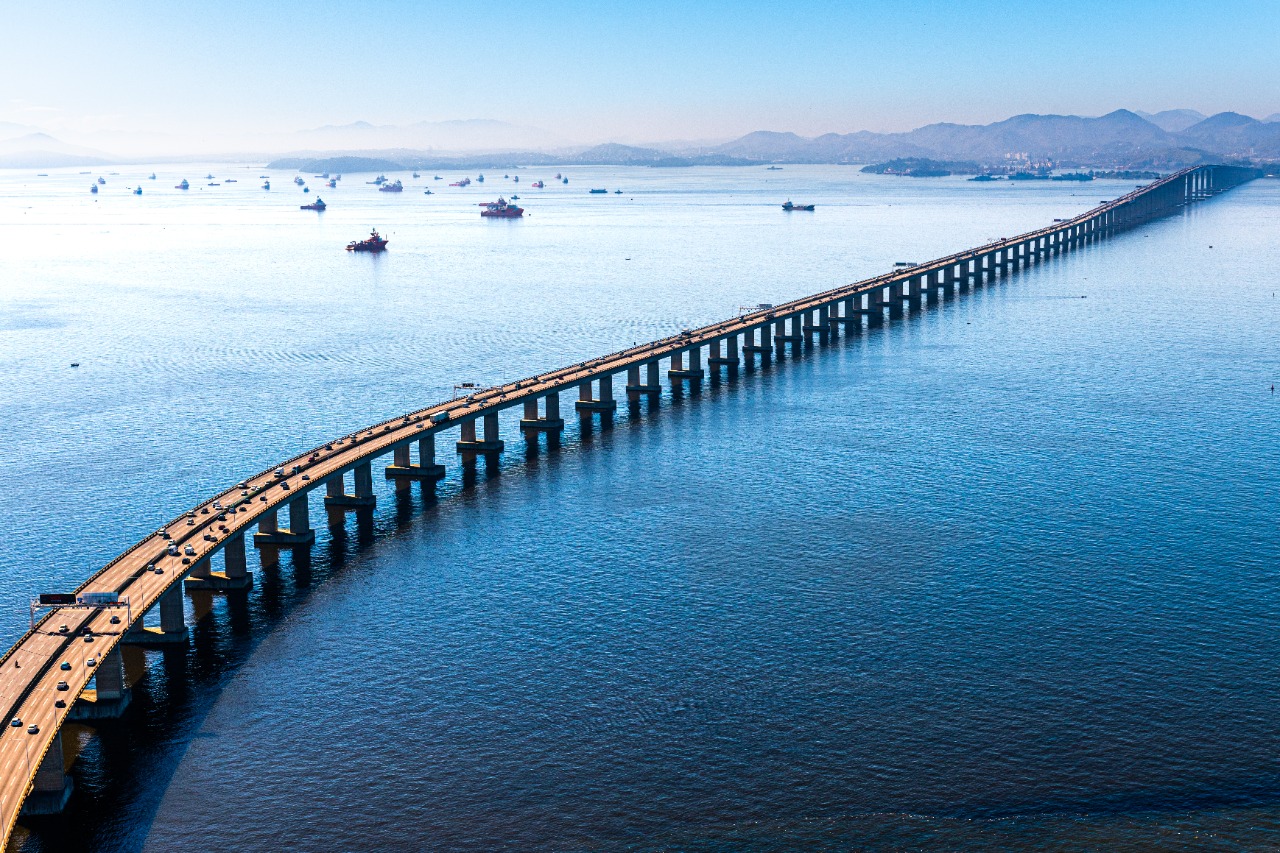
While the world marvels at China’s megastructures, a Brazilian bridge built in 1974 quietly continues to hold a world record: 13 km over the sea, the longest continuous straight beam span on the planet, and a title that no one has managed to take for 50 years.
Recommended for you

Fairs and events
A major event for the oil, gas, and energy sector will take place in Brazil: Macaé Energy will bring together Petrobras, Equinor, Prio, and other suppliers and executives from the energy sector for business, networking, and job opportunities.
The technical agenda and trade fair in the city of Macaé should boost discussions about investments, energy transition, and the development of the oil, gas, and energy supply chain in the national context. The city…
The daily experience unfolds in simple details, which end up being the true “luxury” of living on a catamaran: waking up to the sea, seeing otters in the dinghy, having seals coming close to the boat, stopping for a few seconds, going to beautiful reefs and fishing for your own dinner. It’s not a permanent state of tranquility, but rather a routine that alternates between work, maintenance, and rare moments of reward.
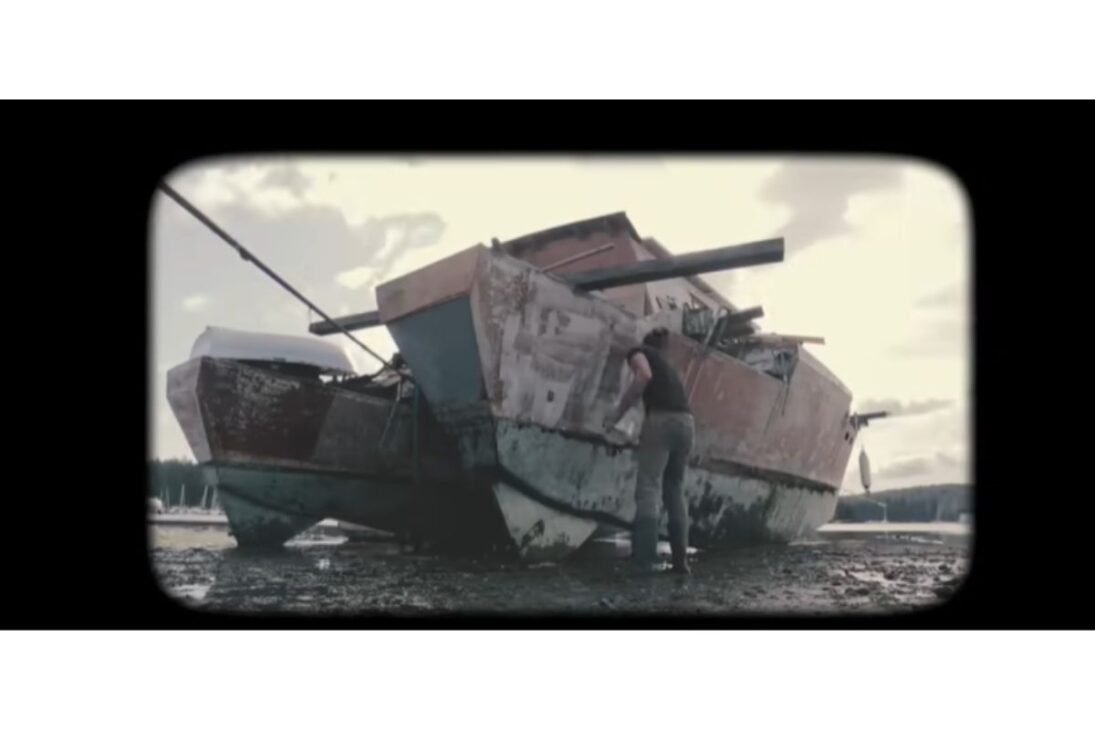
The catamaran is a 1976 Oro 47, 47 feet long, about 14 meters. When Simon bought it, the vessel had been in the same spot for 12 years and he described it as abandoned. He paid 5.000 Canadian dollars, acknowledging that it was more than the boat’s condition suggested, but he still closed the deal and only went to see it for the first time afterwards.
The initial shock was direct: “it looks awful,” he says, but his assessment changed when he went inside, touched the structures, and felt that, despite appearances, there was solidity. It was the confidence in what doesn’t appear in the photo that paved the way for the rest.From that point on, he assumed that this “ugly duckling” could bring something good, provided he rebuilt what was necessary.
Complete overhaul: fins replaced, paint removed, and every inch rebuilt.
The catamaran’s refurbishment wasn’t just a touch-up. Simon recounts replacing the keels, removing hundreds of pounds of paint, and replacing virtually every square inch of the deck. He describes the feeling as if the boat was “built when it was rebuilt” and then “rebuilt again,” a way of saying that the catamaran ended up carrying more of his work than the original shipyard’s.
The materials and methods follow a logic that prioritizes ease of maintenance. According to him, the catamaran is made of nautical materials: quality plywood, cedar, all encased in epoxy and fiberglass to increase strength. He summarizes the concept with a concrete image: if a problem arises in the hull, it can be cut, another sheet of plywood can be bought, and repaired. Less reliance on “magic solutions” and a greater ability to fix things when needed..
Why phase out diesel: the bet on electricity and the leap from “it works” to “it makes sense”
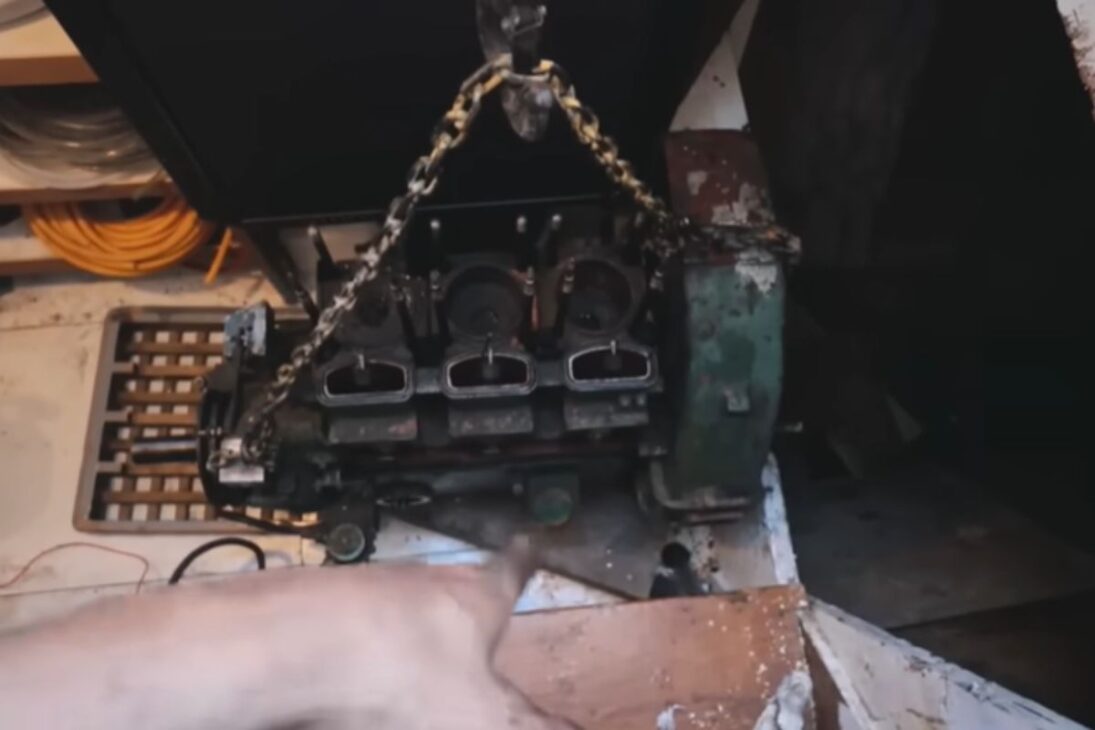
When he bought the catamaran, it had a working diesel engine. Even so, Simon decided to get rid of it, something that, according to him, generated the inevitable question from many people: why remove a ready-made system? His answer is twofold: there is environmental motivation, yes, but there is also convenience. With electricity, he doesn’t want to be limited by a fuel tank and logistics, especially when thinking about long crossings.
The technical reasoning is evident in the chosen hull shape. To produce enough energy to move a boat consistently, he explains that surface area is needed, and this favors multihulls such as trimarans and, especially, catamarans. The catamaran becomes an energy platform before becoming an “engine”.Because the roof and exposed areas shelter the generation that sustains the house and, in part, its movement.
16 panels, 5.280 watts, and what that really delivers in a catamaran.
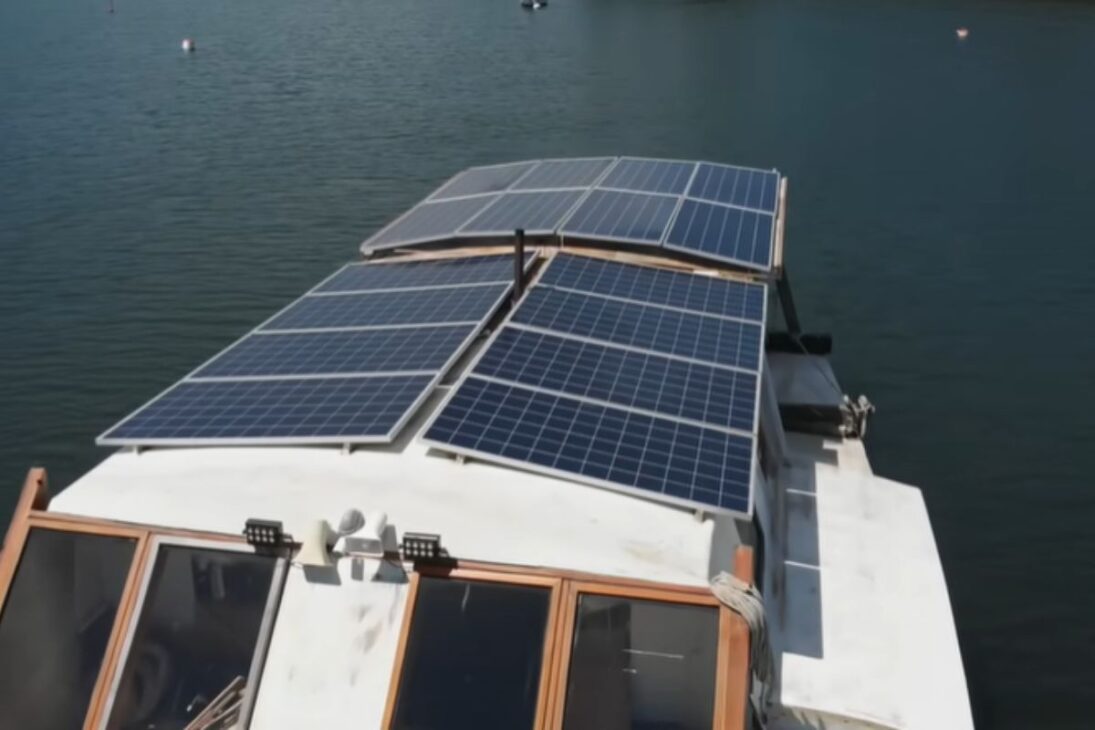
The system is described with well-defined numbers: 16 solar panels of 330 watts each, manufactured in Canada, totaling 5.280 watts of solar energy.
In addition, Simon uses 20 kWh batteries and a 12 kW HP EV AC motor. For domestic use, he considers this ample power, enough to run induction cooktops and ovens, a washing machine, and water production equipment.
But propulsion is where the catamaran honestly reveals its limitations. He says that, to push the boat, this equates to about seven or eight horsepower, which doesn’t generate high speed.
From 3,5 to 4 knots, the batteries begin to be put to greater strain. The catamaran offers autonomy, but demands discipline in terms of speed and expectation..
A concrete example of performance: the day the sun “paid for” the crossing.
Even with limitations, Simon describes situations where the numbers add up in a surprising way. In the summer, he claims to generate enough energy to weigh anchor in the morning, travel 50 kilometers across the Strait of Georgia to Vancouver, and arrive before sunset without touching the batteries, using only the energy coming in through the panels that day.
This type of report helps to answer the questions “how much” and “where” in a practical way: how much the system can handle depends on the season and the weather, and where it tests this is on real routes, with urban destinations.
The catamaran doesn’t become a “concept,” it becomes displacement measured in kilometers, hours of daylight, and safety margin. Autonomy ceases to be a promise when it becomes an arrival before the end of the day..
Drinking water, food, and functional comfort: what energy sustains beyond navigation.
The catamaran’s self-sufficiency isn’t limited to “moving.” Simon says he produces his own drinking water with a desalination system, and that, with the available power, it’s easy to make fresh water. This changes the burden of daily life: there’s no need to treat water as a constant obstacle, and the system becomes part of everyday life, like turning on a tap, only with a technical chain behind it.
The kitchen is another central point. He describes himself as someone who really enjoys cooking, so the kitchen occupies a large space in the middle of the catamaran.
In return, the rest is more compact: there are four beds, but designed as small, private nooks, intended for sleeping and relaxing. The rear cockpit wasn’t even built yet, reinforcing that the catamaran is a living project. Comfort here is what works every day, not what impresses on a quick visit..
Sunshine is no guarantee: rainfall decreases, wind compensates, and winter changes the strategy.
Simon doesn’t treat solar energy as a perfect solution. He acknowledges disadvantages: with rain, production drops. At the same time, he points out that rain often comes with wind, and therefore he plans to use wind turbines to balance generation.
He says he is investing a similar amount in the turbines as he did in solar panels, hoping that the two systems will complement each other and prevent days of severe low voltage.
In winter, the challenge increases because it gets darker and solar production drops. To heat the catamaran, he built a stainless steel wood-burning stove, but he intends to switch to electric heating and even build his own heat pump for practicality.
The logic is simple: turn it on and adjust the temperature without depending on a stock of firewood on board. Technology doesn’t eliminate climate change, but it can reduce the invisible work of keeping everything running..
Safety and routine on the water: mooring buoy, storms, and the cost of going back and forth.
Simon says he is on Gabriela Island, in the South Gulf, a place that captivated him and which he describes as beautiful and good for learning.
The catamaran is tethered to a mooring buoy, not anchored, which provides safety: there is a huge concrete block and a heavy chain that keep the vessel in place.
Still, the routine has risks and logistical challenges. He mentions that, in storms, even if his own catamaran is well secured, another vessel could break free, and he usually sails downwind of most of the boats in the bay, which requires attention.
Furthermore, everyday mathematics appears in small things: on a buoy, there are constant movements between the boat and land, and the extra time always weighs heavily when something is forgotten and it’s necessary to go back. Freedom on the water comes with an agenda that tides and currents also write..
What he learned and why it matters for the future of catamarans.
Living on a catamaran has become a continuous skills training course for Simon. He reports that he is being mentored by a sailmaker, is learning TIG welding, does woodworking and shipbuilding, and works in a shipyard doing fiberglass work.
The rationale is straightforward: there isn’t always a shop available to “fix it for you,” so the ability to repair becomes part of the system itself.
The project also connects to work and documentation. He says he works at the shipyard, helps out at a food bank, goes scuba diving, takes on welding and repair jobs on boats, and frequently installs solar panels on vessels. In parallel, he maintains a YouTube channel and claims to have documented the construction in about 200 episodes.
And when they talk about destinations, he admits that he still doesn’t know exactly where he wants to go, because the catamaran is still being tested for everything he imagines doing. The ambition is there, but the proof comes in open waters, with numbers and performance, not with talk..
The 47-foot catamaran that Simon bought for 5.000 Canadian dollars has become a real off-grid living platform, with 16 solar panels, 20 kWh batteries, a 12 kW electric motor, and a suite of choices that swap fuel for generated and stored energy.
There’s no magic bullet: there are speed limits, weather dependence, habit adjustments, and a renovation that required time and technical expertise. but the result is a routine in which cooking, Washing and producing drinking water are now integrated into the same system that powers the boat.
If you had a catamaran like this, what would be your real priority: more speed, more interior comfort, or more energy autonomy?
And, considering the decision to remove a running diesel engine, would you do the same, or would you maintain a “plan B” even with 5.280 watts of solar and wind turbines in the project?