
Emirates services out of major hub Dubai have been on and off since the war started on February 28.
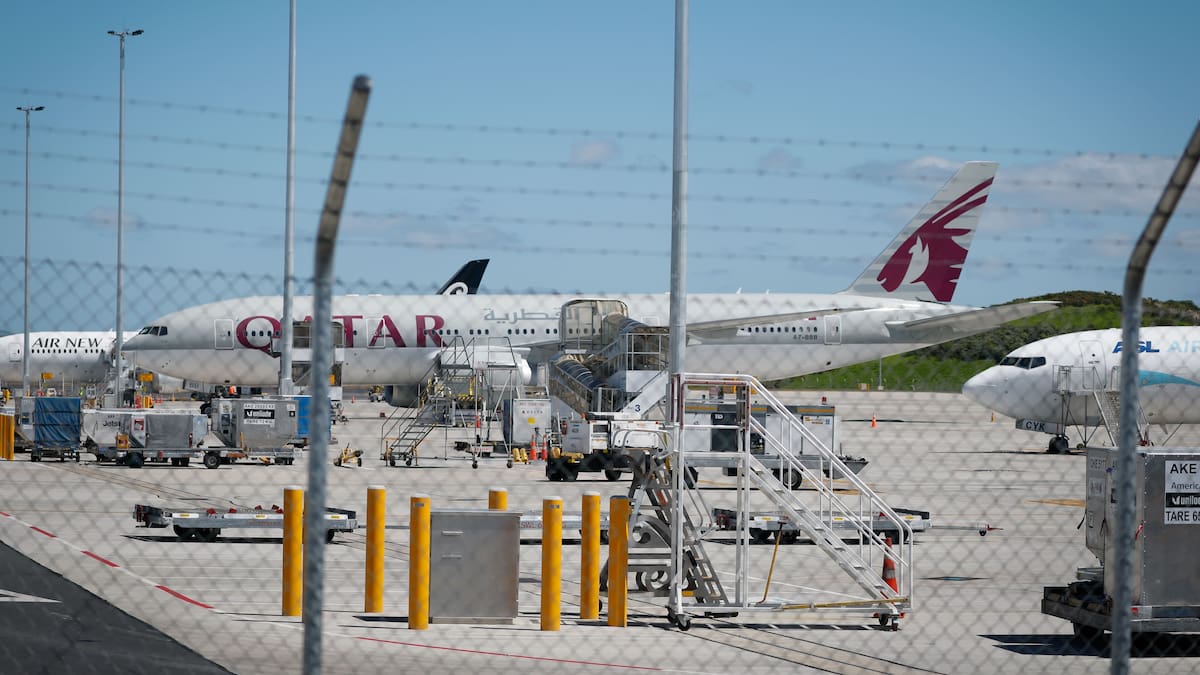
For a few days last week, two Emirates Airbus A380s were parked up at Auckland Airport, as was a Qatar Boeing 777.
Between them, those three aircraft could seat more than 1350 people.
The Qatar 777 was still parked at Auckland Airport today.
“If you take out some of the Middle Eastern carriers then that’s putting more demand onto other airlines,” Wallace said.
He said there would inevitably be some domestic fare price increases.
Air New Zealand and regional airlines were already under major pressure before the war broke out, he said.
“They all struggle to absorb those costs.”
He said high fuel prices would impact the whole general aviation system, including flight training schools and helicopter operators.
“They all depend on fuel.”
The Qatar Airways 777 parked at Auckland Airport. Photo / Michael Craig
He said some airlines would be hedging but even if the oil price fell, it would take a while for lower crude oil prices to manifest in cheaper jet fuel.
“There’s not going to be a sudden decrease in prices as soon as the Middle East war stops.”
Routes from New Zealand to Europe via North America were operating normally.
United Airlines chief executive Scott Kirby late last week said demand was surging from people wanting an alternative route to Europe.
“Each day this week, we have booked over 1000 people from Australia and New Zealand to Europe. Last year, we booked less than one a day,” he said in comments CNBC reported.
Routes through major Southeast Asian or East Asian hubs were operating mostly as normal but taking longer to track south or north to Europe.
“That is increasing flight time and that’s extra fuel costs,” Wallace told the Herald.
“We’ve been through shocks before, clearly the pandemic. Aviation, believe it or not, is resilient. We’ll get through it … but we’re also an industry that works on very slim margins.”
Air New Zealand has been approached for comment about fuel prices and whether it might cut routes.
The airline’s share price was down 9.8% at one point today but partially recovered to be down 7.8% shortly before 4pm.
“The reality with airlines generally is, if profitability on particular routes declines to an unsustainable level then they generally pull back on supply,” said Andy Bowley, head of research at Forsyth Barr.
“Air New Zealand could reduce the number of routes or services it provides to manage that capacity,” he added.
“There’s a broad range of things that they will be thinking about, not least ‘how long do we have this jet fuel price challenge in front of us?’”
On when cheaper crude oil might result in cheaper jet fuel, he said: “It depends on what supply disruption there’s been. I’m aware of one or more refineries in the Middle East being targeted by missiles.”
That kind of damage could have a more lasting impact on jet fuel supply and prices, he said.
Bowley said the jet fuel price had at least come down since late last week.
On Monday afternoon he said it was hovering around US$150 a barrel.
Brent crude was at US$109.9.
The premium or “crack spread” for jet fuel was about US$40, still higher than historical averages or what the global airline industry had expected this year.
John Weekes is a business journalist covering aviation and court. He has previously covered consumer affairs, crime, politics and courts.
Stay ahead with the latest market moves, corporate updates, and economic insights by subscribing to our Business newsletter – your essential weekly round-up of all the business news you need.