
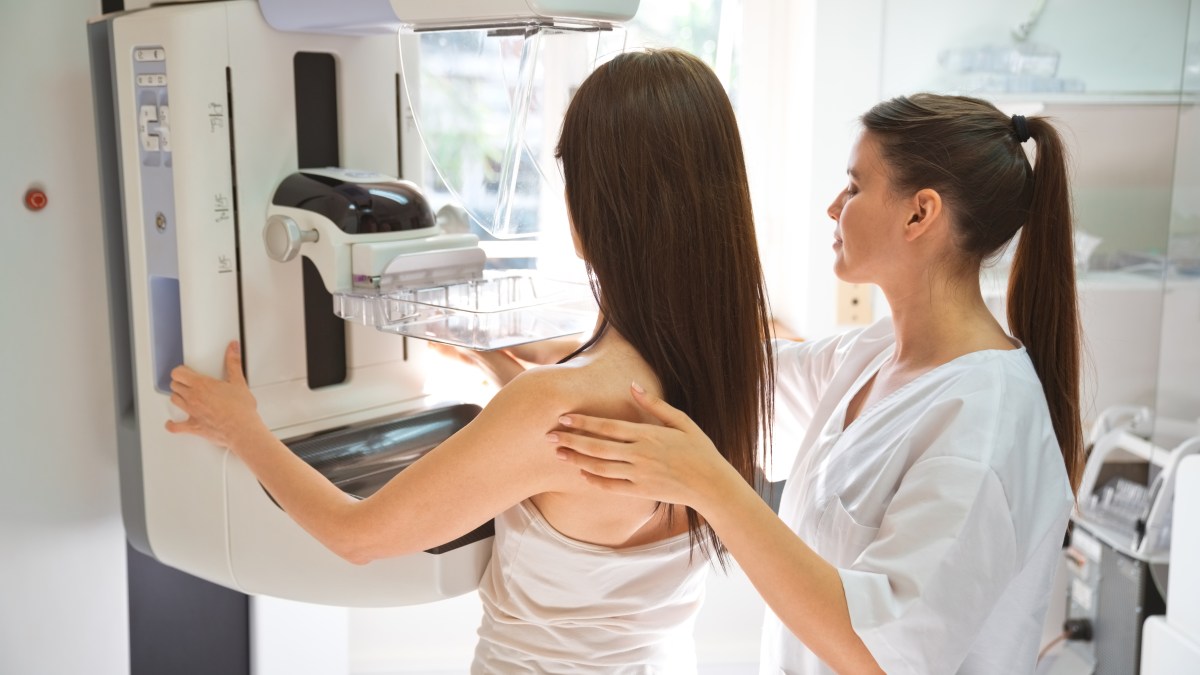
A large study using NHS breast screening data suggests that artificial intelligence could detect a quarter of breast cancers that human specialists initially miss on mammograms, a breakthrough researchers say could mark a turning point in the battle against the disease.
Scientists say the technology could also make breast screening doctors roughly twice as effective by dramatically reducing the number of scans they need to review, potentially helping address chronic staff shortages in the NHS.
Breast cancer is the most common cancer in women, affecting about one in eight during their lifetime. Early detection is crucial: tumours found through screening are typically easier to treat, and survival rates are far higher when the disease is caught before it spreads.
The findings, published in Nature Cancer, come from a large study analysing mammograms from about 150,000 women in the NHS breast-screening programme. In the UK system, every scan is normally reviewed independently by two trained specialists, with disputed cases referred to senior clinicians for arbitration.
Researchers examined what would happen if one of the two human readers were replaced by an AI system trained to analyse mammograms for subtle signs of cancer.
One of the most striking findings was the system’s ability to identify “interval cancers” — tumours that are not detected during screening but are diagnosed later, before the next routine mammogram after three years. In retrospective analysis, the AI flagged about a quarter of these cancers on earlier scans, where they had initially been missed.
In the analysis, the AI system detected 9.3 cancers per 1,000 women screened, compared with 7.5 detected by a single human reader, about a 24 per cent improvement.
• One in four breast cancer deaths linked to lifestyle factors such as diet
“These cancers are very subtle,” said Susan Thomas, a researcher at Google Health, who worked on the study. “If we can increase the chances of detecting them earlier, that has the potential to make a real difference for patients.”
The technology also performed particularly well among women attending screening for the first time, detecting cancers more sensitively while recalling fewer women for further testing — an outcome that could reduce unnecessary anxiety for patients.
Thomas said the study highlighted how AI could strengthen screening programmes while supporting overstretched clinicians. “Detecting cancers on mammograms is a very nuanced task,” she said. “The reason we have two readers and arbitration is that the signs can be extremely subtle.”
Using AI as a second reader could significantly reduce the workload involved in screening programmes. Because each scan requires two specialists to review it, replacing one reader with AI could cut the number of scans doctors must examine by about 40 per cent.
That would not necessarily mean doctors working fewer hours, Thomas said, but could allow scans to be read more quickly and patients to receive results sooner. “Radiologists are not suddenly going to be sitting around with nothing to do,” she said. “But it could help scans be read faster and cancers identified more quickly.”
• Will ditching red meat help you to avoid getting breast cancer?
The research also examined whether the AI system performed differently across demographic groups including age, ethnicity, breast density and socioeconomic background. The team found similar performance across the groups studied, although some smaller sub-groups require further investigation.
However, the researchers say the technology is not yet ready for nationwide deployment. In a smaller real-world feasibility study, the AI initially recalled more patients than expected because it was being used with newer imaging machines than those it had originally been trained on, requiring the system to be recalibrated.
Thomas said this was not unusual when introducing new technologies into healthcare systems. “Being thoughtful about how you deploy technology is the way to make it work better for the NHS,” she said.
Further large-scale prospective trials are expected before the technology could be introduced routinely in breast screening programmes.
Separate research involving 175,000 women — the largest NHS study to date on the use of AI in breast cancer screening — found that it detected more cancers overall, produced fewer false positives and recalled fewer women attending screening for the first time.
• Victoria Derbyshire: I had a mastectomy like Angelina Jolie. I’m glad she’s shown her scars
Hutan Ashrafian, from the Institute of Global Health Innovation (IGHI) at Imperial College London and an author on both papers, said: “This is the closest AI has ever come to helping reduce breast cancer deaths within the NHS so the potential for the service to take this forward is significant, particularly in light of the National Cancer Plan for England’s recognition that ‘there are few clearer signs of the failure of the status quo than our inadequate cancer outcomes’, and its appetite to embrace new technologies to address that.”
Baron Darzi of Denham, the director of IGHI, an author on both papers and of the influential Independent Investigation of the NHS in England (2024), said: “AI has the potential to transform how the NHS prevents, detects and treats diseases like cancer. These findings highlight how AI can support clinicians to identify more cancers earlier, reduce errors and deliver higher-quality care to patients.”
Thomas added: “Early detection is our most powerful tool in the fight against breast cancer, and these findings mark a genuine turning point. This is the first time that we’ve been able to rigorously test doctors and AI working alongside each other in a clinical setting.
“These findings have the potential to support the transformation of the NHS and the experiences of the people on both sides of the scan, bringing us one step closer to a future where this technology strengthens entire healthcare systems and, ultimately, saves lives.”