
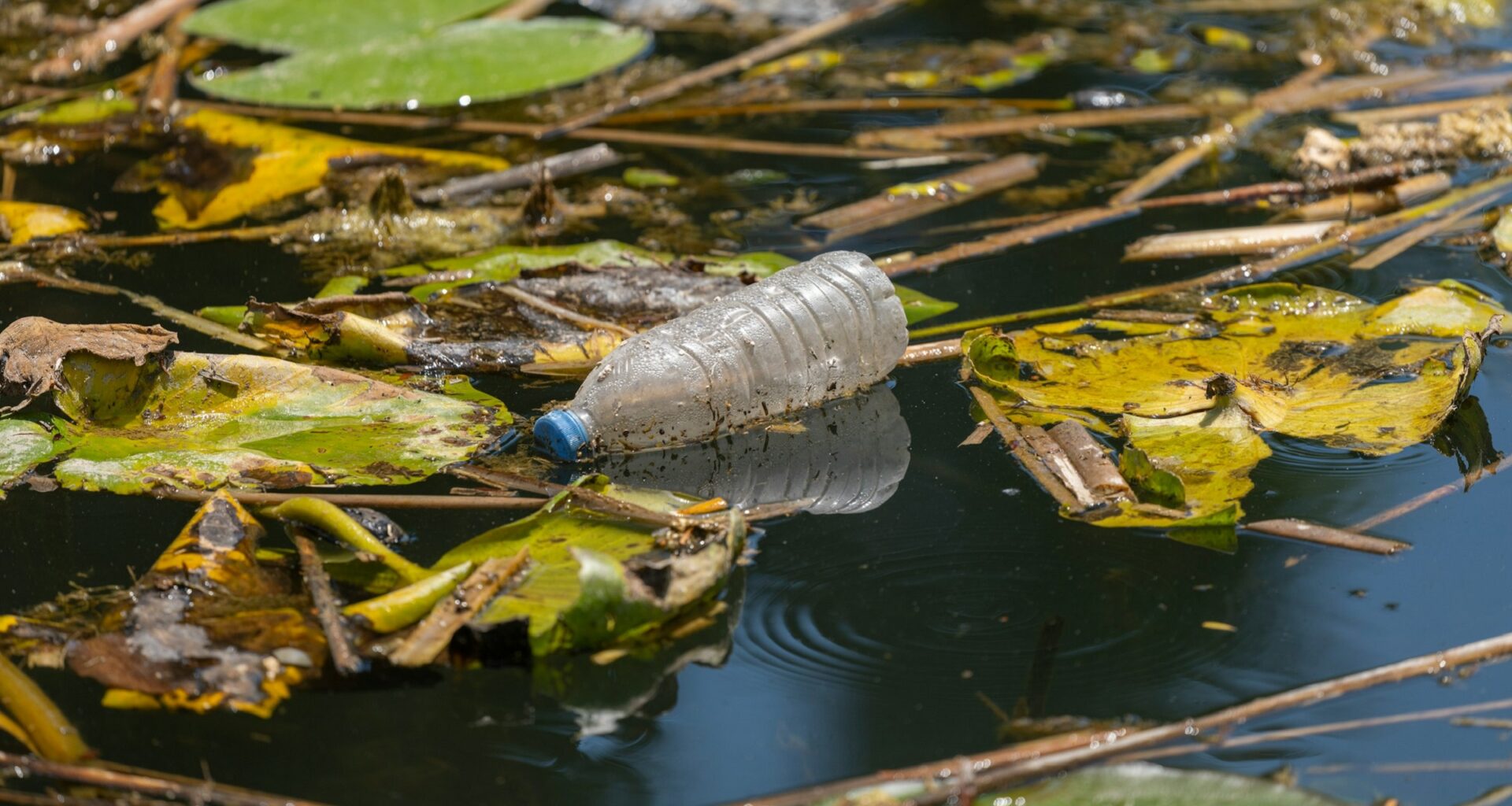
Plastic pollution is an evolving global environmental crisis. More than 90% of all plastics manufactured end up polluting the environment, where they can harm ecosystems and impact human health. This “take-make-waste” linear manufacturing model stands in contrast to the circularity of natural systems.Inspired by the natural, timely breakdown of organic materials like proteins and DNA, chemists at Rutgers University in the U.S. have now modified existing plastics so that they can be programmed to break down into their molecular components at the end of a specific period of time, or in response to a trigger, such as sunlight.Historically, plastics manufacturers have faced a trade-off between material strength and degradability, but this innovation could offer the best of both worlds: plastics that retain their strength and durability for exactly as long as their use requires, and then automatically self-deconstruct for disposal or reuse.Global plastics treaty talks remain in limbo, but if a final accord places cradle-to-grave responsibility for plastics on manufacturers, then they would have a financial incentive to invest in self-deconstructing technologies, even though such techniques would likely be more costly than current manufacturing methods.
See All Key Ideas
Plastics have a gigantic built-in problem: They’re tenacious, which is very good for a milk jug or a car bumper. But they don’t easily break down, which is bad for the environment.
From the 1950s, when plastics were first produced in significant amounts, through 2017, the petrochemical industry churned out more than 8.3 billion metric tons of the nearly indestructible stuff, the vast majority of which is still with us today, polluting the natural world, contaminating wildlife and ourselves.
Add to this an estimated 25 billion metric tons of plastic expected to be produced by 2050, and the agonizingly intractable nature of this mega-pollution crisis becomes clear.
Humanity’s take-make-waste linear manufacturing economic model for plastics stands in stark contrast to natural systems. Over billions of years of evolution, living organisms developed strong, durable materials (think bone, shell and silk) that self-deconstruct back into harmless components after use.
Inspired by the circularity of natural materials, chemists at Rutgers University in the U.S. set out to design plastics that could do the same. And they think they have found a breakthrough solution to the circularity problem, or at least may have taken a big step toward a solution.
In a paper published last November, they report that they’ve developed a new molecular structure for plastic, inspired by nature, that allows it to self-deconstruct at the end of a product’s lifespan. In fact, researchers say that a timely programmable breakdown date can even be built into future plastic products.
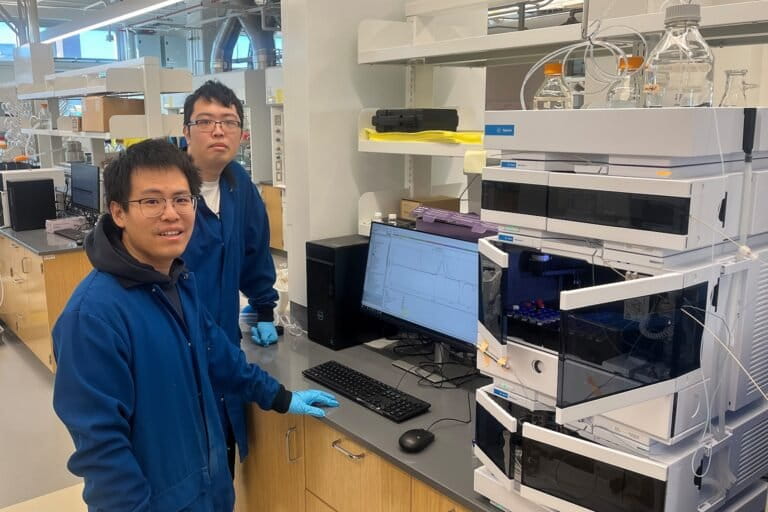 Chemist Yuwei Gu (left) and graduate student Shaozheng Yin used a technique called gel permeation chromatography to track the breakdown of their synthetic polymers during the study. Image courtesy of Gu Lab/Rutgers University.
Taking inspiration from natural materials
Plastics are made up of long chains of molecules called polymers, with the units in the chain held together by very strong chemical bonds, which act like glue. It’s these bonds that endow plastics with the strength and durability that make them so useful. Unfortunately, those bonds also make plastics difficult to break down at the end of a product’s life.
Polymers also exist in nature: DNA, RNA, proteins and cellulose are all naturally occurring polymers. But unlike plastics, these biopolymers break down easily when their function is no longer needed. That’s because nature has embedded the tools for degradation right into their molecular structure.
Natural polymers like proteins contain structures called nucleophilic groups, which break the polymer chain at its weakest points. A team of researchers, led by Yuwei Gu, took inspiration from this mechanism to design self-deconstructing plastics. “Nature has programmed its own degradation of polymers … and we are basically borrowing this chemistry to apply to our synthetic polymers,” says Gu.
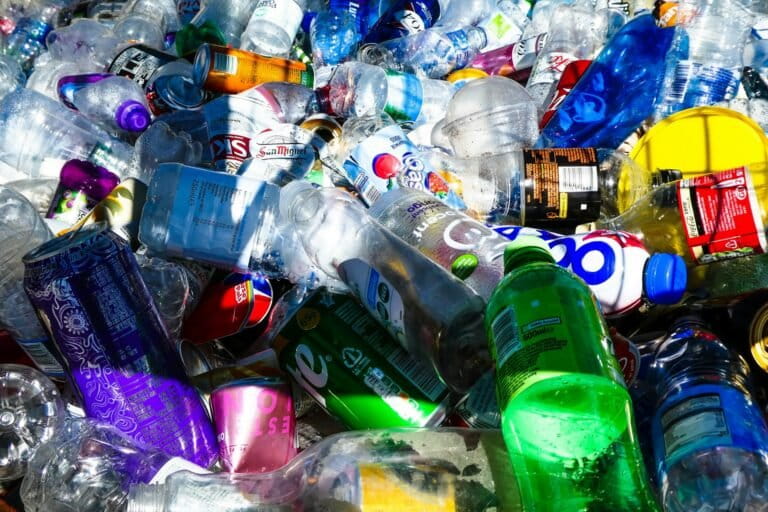 Less than 10% of all plastics are currently recycled. The rest end up polluting the environment, where they cause harm to ecosystems, wildlife and human health. Scientists are hopeful that new forms of self-deconstructing plastics could make recycling and reuse far easier. Image by Nick Fewings via Unsplash.
Programmed self-deconstruction
The scientists modified the structure of existing plastic polymers by adding molecular cutting tools — just like the nucleophilic groups in natural polymers — at weak points along the polymer chain.
At a designated desired moment, these cutting tools can sever the chemical bonds that hold the synthetic plastic polymer together, breaking it down into its individual components. The result is a kind of molecular soup made up of the building blocks (called monomers) that were used to create the plastic polymer in the first place.
“This allows us to … maintain the good mechanical strength and usability of our polymers [and] make our synthetic polymers self-degradable,” Gu explains.
This mechanism is quite different from the slow degradation of synthetic plastic waste in the environment: Today’s plastics don’t truly break down, but merely fragment into smaller and smaller polymer chains — microplastics and nanoplastics — another huge environmental problem. In nature, organic polymer chains break down chemically, severing the chemical bonds and leaving behind individual monomers, rather than tiny, fragmented polymer shreds.
The exact positioning of the cutting tool relative to the synthetic polymer chain determines how long the plastic will retain its structure, meaning that future plastics could be preprogrammed at the factory to self-deconstruct after a certain amount of time. “We can create a series of polymers [that] have very similar composition, similar mechanical strengths, but we can program how fast they will degrade by themselves,” Gu says.
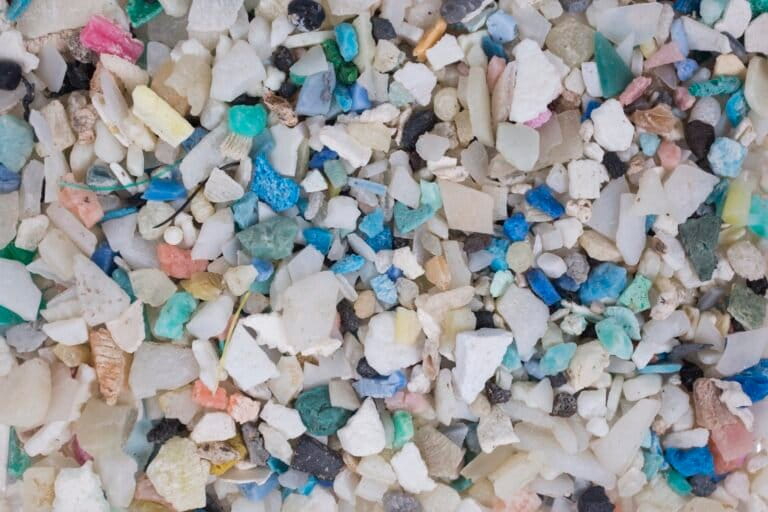 Traditional synthetic plastics don’t truly break down; they degrade into smaller and smaller pieces, known as micro- and nano plastics. These tiny plastic fragments cause myriad problems in the environment, potentially putting wildlife and human health at risk. Image by Florida Sea Grant via Flickr (CC BY-NC-ND 2.0).
Plastic deconstruction on demand
While plastic that completely breaks down is a revelation, scientists don’t want a milk jug or car bumper that deconstructs randomly before its usefulness is complete. But it’s not always possible to predict in advance when you’ll want plastic to break down. So, the researchers have also designed mechanisms into the new plastics to trigger self-deconstruction on demand.
They achieved this by adding a protective gate that prevents the cutting tool from accessing the synthetic polymer chain until the gate is opened by a specific trigger — such as exposure to UV light. This means that “you can protect the polymer in a stable form, and then when you are ready to degrade it, you just open that trigger and the tool will do this cutting job,” Gu explains.
But there’s another problem: Plastic waste often ends up in places where sunlight isn’t available, so the researchers also designed a way to trigger self-deconstruction in the absence of UV light.
In nature, protein degradation is often facilitated by a polymer’s shape. Proteins fold into complex three-dimensional structures and their specific shape determines how they interact with other molecules to perform their given function. The folded shape of functional proteins also keeps the nucleophilic groups far from the bonds they’re designed to cut. Then, when the protein is no longer needed, signals within the cell trigger it to fold into a new shape, bringing the nucleophilic groups into position to break down the protein.
Inspired by this natural mechanism, the study team designed synthetic plastic polymers that react to metal ions by folding into a new molecular shape, positioning the cutting tool close to the desired cutting points. Metal ions are common in the environment — they are abundant in seawater, for example — so self-deconstruction can be triggered under various normal environmental conditions. This shape-dependent mechanism is simpler and cheaper to synthesize than the protective gate, reducing production costs.
Together, this trifecta of chemical innovations — built-in synthetic polymer cutting tools, protective gates, and programmed shape changes — create an elegant system for plastic deconstruction, without the need to use large amounts of energy, high temperatures or harmful chemicals (as carried out today in controversial plastics pyrolysis, so called “advanced recycling”) to achieve breakdown.
Francisco Martin-Martinez, a computational chemist at King’s College London, U.K., who was not involved in the research, described the study as “fascinating,” adding that “It’s a beautiful demonstration that we can use the fundamental laws of physics and chemistry to solve modern engineering problems.”
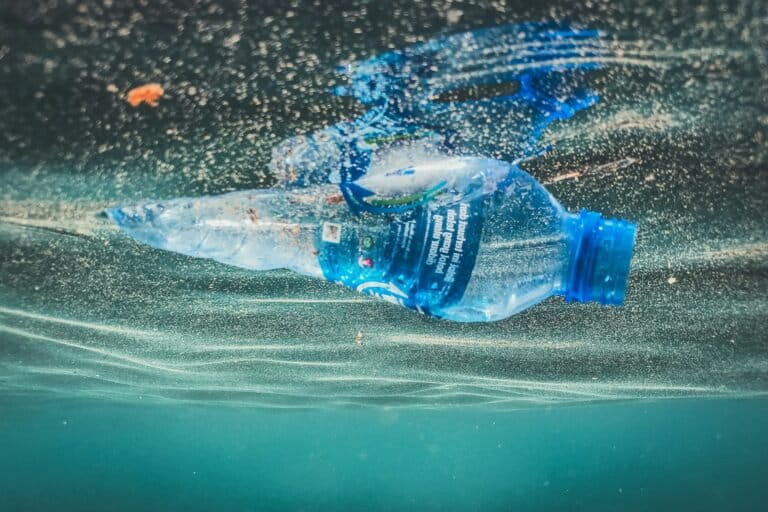 Rutgers University researchers programmed plastics that can self-deconstruct when exposed to metal ions, which are common in seawater. Image by Naja Bertolt Jensen via Unsplash.
One step closer to a circular economy
Historically, plastics manufacturers have faced a trade-off between material strength and degradability, but this innovation could offer the best of both worlds: plastics that retain strength, shape and durability for exactly as long as their use requires; then automatically self-deconstruct, readying them for proper disposal or recycling.
This chemical breakthrough “moves us closer to a future where materials are ‘designed to degrade’ at a specific time, which is essential for a sustainable economy,” says Martin-Martinez. For example, “by programming the degradation rate, we could design fishing nets that last exactly two years, or packaging that lasts two months. This precision could prevent microplastics from lingering in the environment for centuries.”
But hurdles lie ahead: “Synthesizing these [self-deconstructing plastics] is complex and likely expensive compared to making polyethylene or PET,” Martin-Martinez cautions. Many producers could be resistant to cutting into their profits to improve sustainability, potentially limiting the use of these new self-deconstructing plastics for now.
Global Plastics Treaty negotiations are currently at an impasse, but environmentalists say they hope a final binding accord will include provisions for extended producer responsibility (EPR), placing the financial burden on producers for the full life cycle of their products. Such a policy framework, if implemented, would give manufacturers a strong financial incentive to invest in technologies to ensure their products can be easily broken down.
Since self-deconstructing plastics would decay into their basic molecular components, Gu says these components could then be used to manufacture new plastics as part of a circular economy. Or if self-deconstructing plastics were discarded into the environment, they could simply break down in situ.
That’s far different than today’s reality, where less than 10% of all plastics are recycled; even then, the products made from recycled plastic have limited lifespans: Around 95% of the material value of plastic is lost after its first use, so most plastics makers still rely heavily on virgin plastic. Self-deconstructing plastic could solve that problem, experts say.
This rosy scenario assumes breakdown components are nontoxic, something Gu and his team are currently investigating. An added complexity: Depending on the type and use, today’s plastics vary widely in composition, and contain a range of chemical additives. More than 16,000 such chemicals have been identified, of which at least 4,200 are considered to be “highly hazardous” to human health and the environment. These toxic chemicals cause a host of pollution problems that would not be solved by self-deconstructing polymer technology.
Despite these obstacles, Rutgers researchers envisage self-deconstructing programmable plastics having wide-ranging applications in manufacturing, medicine and beyond. “I believe the answers to solve lots of demanding challenges in today’s society can come directly from nature,” Gu says.
Banner image: Synthetic polymers like plastics take centuries to fully decompose in the environment. In contrast, natural polymers like cellulose and DNA break down completely after use. Now, researchers have taken inspiration from nature to create strong, durable plastics that break down easily at the end of a product’s life. Image by engin akyurt via Unsplash.
Citations:
Yin, S., Zhang, R., Zhou, R., Murthy, N. S., Wang, L., & Gu, Y. (2025). Conformational preorganization of neighbouring groups modulates and expedites polymer self-deconstruction. Nature Chemistry, 18(2), 407-417. doi:10.1038/s41557-025-02007-3
Houssini, K., Li, J., & Tan, Q. (2025). Complexities of the global plastics supply chain revealed in a trade-linked material flow analysis. Communications Earth & Environment, 6(1). doi:10.1038/s43247-025-02169-5
FEEDBACK: Use this form to send a message to the author of this post. If you want to post a public comment, you can do that at the bottom of the page.
