
“The first six months in particular for me was relearning the business and the team. There had been a lot of change in the New Zealand economy, and customers were in a really different place as well.
“It’s just been an opportunity to get out and about and find out what’s been going on for our customers, our team and our suppliers.”
Since returning to New Zealand, Copland has visited several stores across the country, including an 800km road trip late last year.
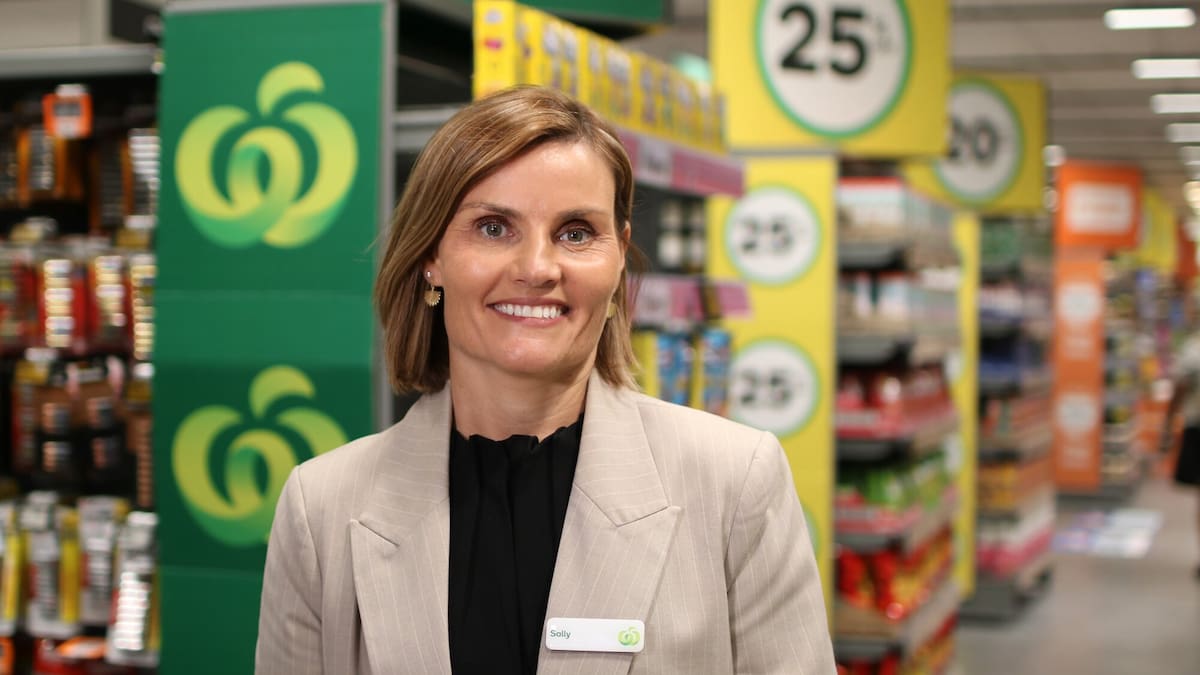
Woolworths New Zealand managing director Sally Copland at Woolworths Ponsonby. Photo / Woolworths NZ
But her return to New Zealand comes as the Government weighs stronger intervention in the grocery sector, with a request-for-information (RFI) from the sector offering several paths for Finance Minister Nicola Willis to consider.
Some options received by the RFI included structural separation or forced divestment, as well as tackling issues like land banking and supplier access to help drive competition in the New Zealand market.
While Woolworths’ submission was considered before Copland assumed her role, she argued that structural changes could have unintended consequences.
“One of the points we wanted to make is that if you do anything like that, there’s a high risk that the price of groceries could go up for New Zealanders.
“We did a lot of analysis around that. There is a reason why most low-margin, high-volume retailers globally are vertically integrated – it’s because it’s very hard to make money otherwise.”
She explained that Woolworths NZ takes 2.3c for every $1 spent in its stores, with the majority, 62c, being paid to suppliers for the product.
The remainder goes to paying wages, operational expenses and any upgrades needed in the stores.
Copland said there needed to be a greater understanding of the economics behind the supermarket industry before any decisions are made.
She also acknowledged that she had met with Willis to discuss Woolworths’ submission.
“She rightly wanted to understand a bit more about our business and how we view things, and I’m sure she wanted to understand that more broadly from everybody and was taking advice across the board.”
Iran conflict
Delivering value for customers partly relies on external factors, and the recent escalation of events in Iran and the Strait of Hormuz will be placing pressure on businesses across New Zealand.
The volatility of oil prices has caused market shock waves globally, notably to petrol prices, which are expected to remain over $3 a litre in some places for a period.
Logistics and freight transportation costs are set to feel this pressure most notably.
Copland said the company was keeping a close eye on the situation, from both an Australian and New Zealand perspective.
“There are lots of assessments being done right now, depending on the time frame in which that pressure extends.
“I think what we’re always cognisant of is that if fuel were the issue, we run an enormous supply chain across New Zealand and every community.
“At this stage, it really depends on what actually plays out.”
Copland declined to speculate on whether such pressures would inevitably lead to higher grocery prices.
“It depends on what the cost pressure is that ends up being in the system on a broader basis.”
Delivering value
Copland said now that she is in charge, her focus would be focused on offering competitive prices and convenience, while investing in long-term improvements to stores and supply chains.
“Certainly, my perspective is we always need to start with understanding where our customers are at, what’s going on for them and their household, and how do we make sure we are giving them a good offer.
“Part of that is convenience, and part of it is the other services that we want to build. I think we need to think about that quite broadly. But we’re also a low margin, high volume business, and making that work efficiently is always the perennial challenge in retail.”
She acknowledged the pressure that households are facing, and pointed to member pricing as an example of the business investing in prices in a way that’s relevant for customers.
“We really want to acknowledge where customers are at right now. Roughly 75% of customers are cross-shopping across the three main banners, and that’s hard work.”
Copland believed customers, most notably in Auckland, had a choice in who they purchased groceries from.
She also challenged the notion that New Zealand supermarkets are more expensive compared to international counterparts, arguing that the impact of GST is often ignored in those comparisons.
“Frankly, I grew up in a world where people make choices every day about the amount of money they can afford to spend in their household. I get it, it is tough.
“We want to be a business that is relevant and offering great prices, great shopping experiences and a team that serves customers well. I think the opportunity to do that is exciting.”
Tom Raynel is a multimedia business journalist for the Herald, covering small business, retail and tourism.
Stay ahead with the latest market moves, corporate updates, and economic insights by subscribing to our Business newsletter – your essential weekly round-up of all the business news you need.