
Since 2009, eight small children have died from getting caught in blind cords, mainly roman blind cords.
Simpson has told the Herald he has read the three most recent coroner’s reports.
“And in each of the three tragic cases, it’s very hard as a parent, and now a grandparent myself, to understand the impacts of the tragedies that occurred to those family members and the impacted wider family as well.
“So, any death of a child is a tragedy, no matter what the circumstances.”
The latest report, which received huge public attention, moved Simpson to ask for fresh advice.
Getting a report from MBIE officials should not take long. They have done a substantial amount of work on the subject since 2022, and have twice already recommended mandatory standards for blind cords be set, although at each step, their advice has become progressively weaker.
They undertook work for the last Labour Government, under two different ministers, David Clark and Duncan Webb, and then for the current National-led Government, initially under Andrew Bayly, and now Scott Simpson.
“I’ve asked them to update that and to give me some more advice,” he told the Herald. “So the issue is really around what is being done in other jurisdictions of our sort.”
Australia, Canada, Britain, the United States and the European Union have all introduced mandatory regulations for the supply and/or installation of corded blinds over the past 15 years.
Simpson said he was interested in whether the steps they had taken had actually been effective.
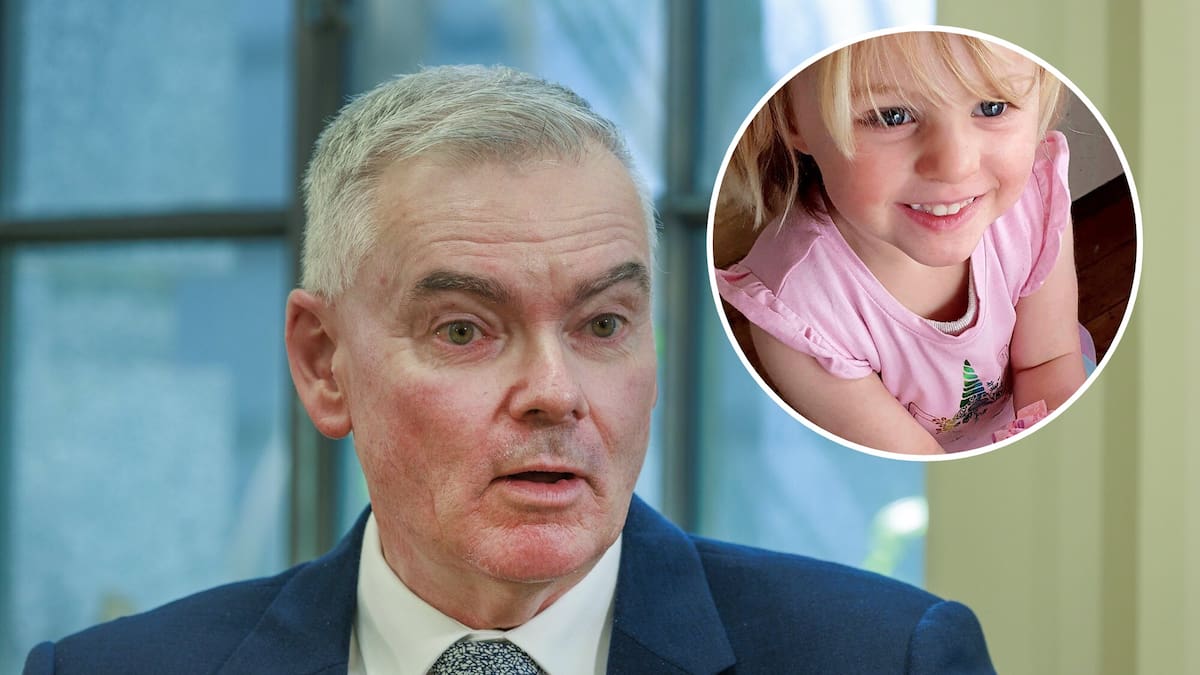
Three-year-old Tilly Cambie of Hāwera died after being accidentally strangled by a blind cord in the family lounge.
“It’s easy to create regulation,” he said.
“It’s easy to provide rules that potentially inhibit consumer choice, that have an impact on price and cost and all those sorts of things.
“But before even considering it, I’d like to know if the suggested solutions are actually effective, and so I’ve asked for some advice around those matters.”
The coroner’s report most widely referred to in New Zealand work to date has been that of Mary-Anne Borrowdale in a report published in April 2021. It was about the death in 2018 of a 19-month-old girl (her name was suppressed) whose head had become caught in the back of a roman blind.
Since the Borrowdale coroner’s report in 2021, two further coroners have called for regulation, Coroner Heather McKenzie reporting on the death of a 3-year-old boy in Christchurch in 2024 (whose name is also suppressed), and that of Tilly Mae Cambie.
Borrowdale looked at the standards operating at the time in other comparable countries and at the reduction in fatalities.
Quoting from an Australian report, it said the fatality rate had virtually halved since the standard was introduced, from 1.36 per annum before the standard to 0.67 since then. All comparable countries with regulation reported a reduction in fatalities apart from Britain. The increase there was put down to a likely increase in the use of blinds.
Coroner Mary-Anne Borrowdale who wrote a substantial report in 2021 into the hazards of blind cords on small children. Photo/ Ministry of Justice
Borrowdale also quoted from Ohio researchers who studied more than 17,000 emergency department admissions related to young children injured after being caught by blind cords, which said: “The dangers with blinds are evident as toddlers gain mobility and become curious about their surroundings.
“Although possessing the motor skills necessary to access blind cords, they lack the cognitive ability to understand the risk of strangulation or the developmental maturity to free themselves once entangled.
“Window blind strangulation incidents can be fatal within minutes and can occur silently … accessible window blind cords should be considered as hazardous to young children as standing bodies of water.”
She was highly critical that New Zealand had no regulation. “I recommend that MBIE includes as a priority in its policy planning the goal that the Minister of Commerce and Consumer Affairs will declare prescriptive mandatory regulations or standards designed to protect young New Zealanders from the hazards of corded blinds in domestic settings.”
So what work has been done?
David Clark got Cabinet’s approval in 2022 for MBIE to undertake a public consultation in early 2023 on various options.
In the Cabinet paper, MBIE strongly backed an option that required all future blinds manufactured or sold in New Zealand to be cordless, as well as an education campaign to highlight the hazards of existing blind cords.
“MBIE proposes to address the root cause of strangulation, i.e. uncovered cords, and to only allow window coverings that are cordless,” it said in its advice to Clark.
That was even stronger than the Australian standard, which regulates the design and installation of blinds to ensure the cords are out of reach of young children.
Based on a report by NZIER, commissioned by MBIE, it estimated that cordless designs would add 10% to 20% to the cost of the window coverings.
By the time the consultation document was published, the preferred option of the Government was still mandatory regulation but it was expressed as either requiring cordless blinds or the weaker design requirements for cords, like Australia.
The four options were: information and education only; remediation with government assistance; voluntary measures by businesses to improve the safety of window coverings; mandatory standards, being either regulating safety features on corded window coverings or removing exposed corded window coverings from the future market.
Duncan Webb replaced David Clark in 2023 in the Labour reshuffle after Jacinda Ardern resigned as Prime Minister and policy priorities changed.
While MBIE continued work on policy options for blind cords, it told Webb that following the consultation, there was no clear consensus on which of the two mandatory standards should be followed.
One reduced the risk of strangulation, the Australian option, while banning corded blinds, followed by Canada and the United States, eliminated the strangulation hazard.
Duncan Webb was the last Commerce and Consumer Affairs Minister before the coalition took power. Photo / Mark Mitchell
The project was given a low priority by MBIE and it advised Webb it was unlikely that regulations would be made before the 2023 election.
Andrew Bayly became Minister of Commerce and Consumer Affairs when the coalition formed the new Government in November 2023. MBIE had another go.
In May 2024, it recommended that New Zealand introduce a mandatory product safety standard, essentially based on the Australian standard.
It estimated the cost to business and consumers of introducing such a standard to be $10.1 million, and the cost of enforcement by the Commerce Commission to be $1.4 million over 30 years.
“Given the Treasury’s impact database value of a statistical life is currently $9.8 million, this initiative would only need to prevent 1.2 deaths over 30 years to have a neutral cost-benefit ratio.”
That is where the issue has sat for almost two years.
Simpson rejected a suggestion that this Government was instinctively averse to imposing new regulations.
He said he wanted more updated information.
Scott Simpson at Parliament being interviewed about standards for blind cords, possibly unaware that he was sitting in front of several sets of blind cords. Photo / Mark Mitchell
“Before making a hasty decision, I’ve wanted to carefully analyse and consider the coroner’s findings and reports and then I’ve asked for more updated information from MBIE officials which they’ve undertaken to give me.
“I can remember often saying in Opposition that the previous administration only had three policy settings, that was to ban it, make it compulsory, or tax it.
“So I instinctively, not so much taking a party view, but just as a minister responsible for Consumer and Commerce, I want to make decisions that are based on evidence, that are based on best practice, and that are based on effectiveness,” he said.
“I don’t think it’s fair to say that we have an instinctive dislike of those sorts of things.”
There are curtains and blinds in literally millions of homes and dwellings and offices in New Zealand, he said.
“So making a decision is quite impactful.”
Tags:
- 2009
- act
- advice
- affairs
- audrey
- australia
- been
- blind
- changing
- child
- Children
- Consumer
- cords
- coroners
- death
- deaths
- departments
- despite
- eight
- fresh
- from
- government
- halved
- have
- herald
- hes
- homes
- linked
- mandatory
- minister
- ministers
- New Zealand
- News
- NewZealand
- NZ
- on
- orders
- Plans
- problem
- rate
- recently
- recommendations
- regulations
- repeated
- reports
- scott
- simpson
- since
- slow
- strangled
- their
- to
- told
- tune
- uturn
- young
- zealand