
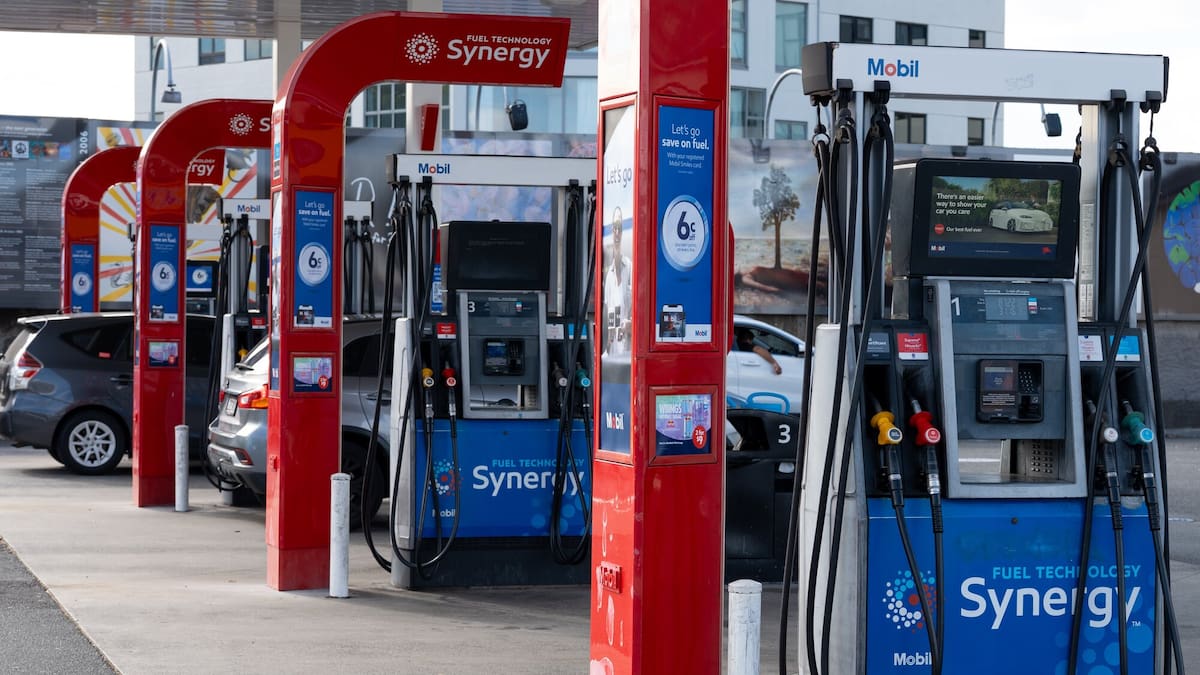
The average price of unleaded 91 petrol in New Zealand passed $3 a litre today for the first time since June 2022, according to fuel tracking app Gaspy.
The average price was $2.49 13 days ago.
How to safely and legally store petrol
Auto stores across Auckland have been selling out of their petrol containers as drivers try to lock in cheaper fuel.
A worker at the Westgate location said their store had new stock come in a few days ago, but it was all sold out within the same day. One person bought five of the 20-litre diesel canisters.
When asked why people were buying the canisters, the workers reported that shoppers said they wanted to get fuel at a lower price.
According to WorkSafe, there are some basic principles and restrictions for managing the storage of petrol safely.
WorkSafe said storing petrol poses a significant hazard because it emits extremely flammable vapours.
Kiwis must only use approved petrol containers because they have undergone a range of tests to make sure they won’t leak or explode and are hard for children to open.
Approved portable containers are fitted with a screw-cap or closure to prevent leakage and have a maximum capacity of 25 litres.
Petrol runs out at Gull, Kumeu. Photo / Corey Fleming
“When transporting containers, be sure they are secured in the vehicle. Fill containers to no more than 95% of the container to allow room for thermal expansion,” WorkSafe said.
People are advised to make sure their containers have secure lids and to never leave containers in direct sunlight or in the boot of a car.
WorkSafe said people should never store petrol containers or equipment with petrol tanks near a flame, for example, natural gas water heaters or heating systems.
The Environmental Protection Authority (EPA) advised people to never store petrol inside their homes.
“Petrol is highly flammable, so it’s safer to store it in a shed or garage that is not attached to your house.”
The EPA said you should only store an amount of petrol you know you will use soon.
What to do if you want to store large quantities
If people want to store more than 50 litres, they would have to engage a compliance certifier to approve the storage location.
“The compliance certifier will visit your site to confirm that the substance is stored safely, consistent with the hazardous substances legislation,” WorkSafe said.
If approved, the compliance certifier will issue a location compliance certificate.
Sign up to The Daily H, a free newsletter curated by our editors and delivered straight to your inbox every weekday.