
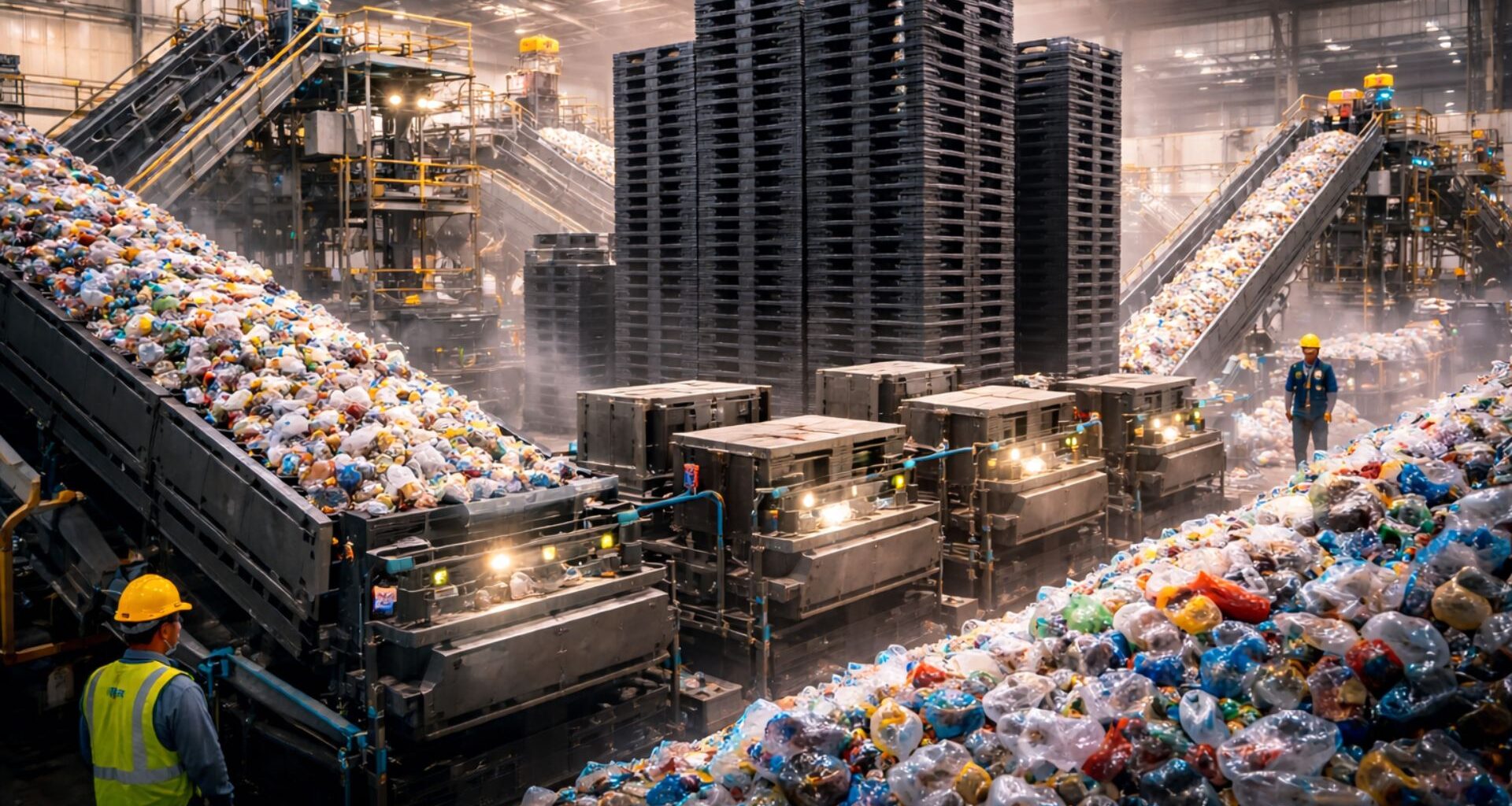
A Japanese recycling model combines sorting, industrial cleaning, and reuse of plastic to manufacture pallets used in logistics, within a chain that depends on selective collection, removal of contaminants, and separation by resin type.
Nagoya, Japan, has consolidated a model for sorting and recycling plastics that combines… Municipal selective collection, intermediate processing to remove contaminants, and industrial recycling aimed at manufacturing pallets..
The system integrates the separation done by residents, the preparation of the material by the public authorities, and the work of registered recyclers to transform post-consumer plastic packaging into new products for logistical use.
In practice, the process begins with the collection of plastics discarded by the public and continues to units that perform the initial cleaning of the material.
Recommended for you
Fairs and events
A major event for the oil, gas, and energy sector will take place in Brazil: Macaé Energy will bring together Petrobras, Equinor, Prio, and other suppliers and executives from the energy sector for business, networking, and job opportunities.
The technical agenda and trade fair in the city of Macaé should boost discussions about investments, energy transition, and the development of the oil, gas, and energy supply chain in the national context. The city…
At this stage, waste that cannot be recycled, such as metals, small electronics, batteries, and other improperly mixed items, needs to be removed before the plastic is compacted and sent to recycling plants.
The logic is simple: The lower the contamination, the greater the chance of industrial reuse..
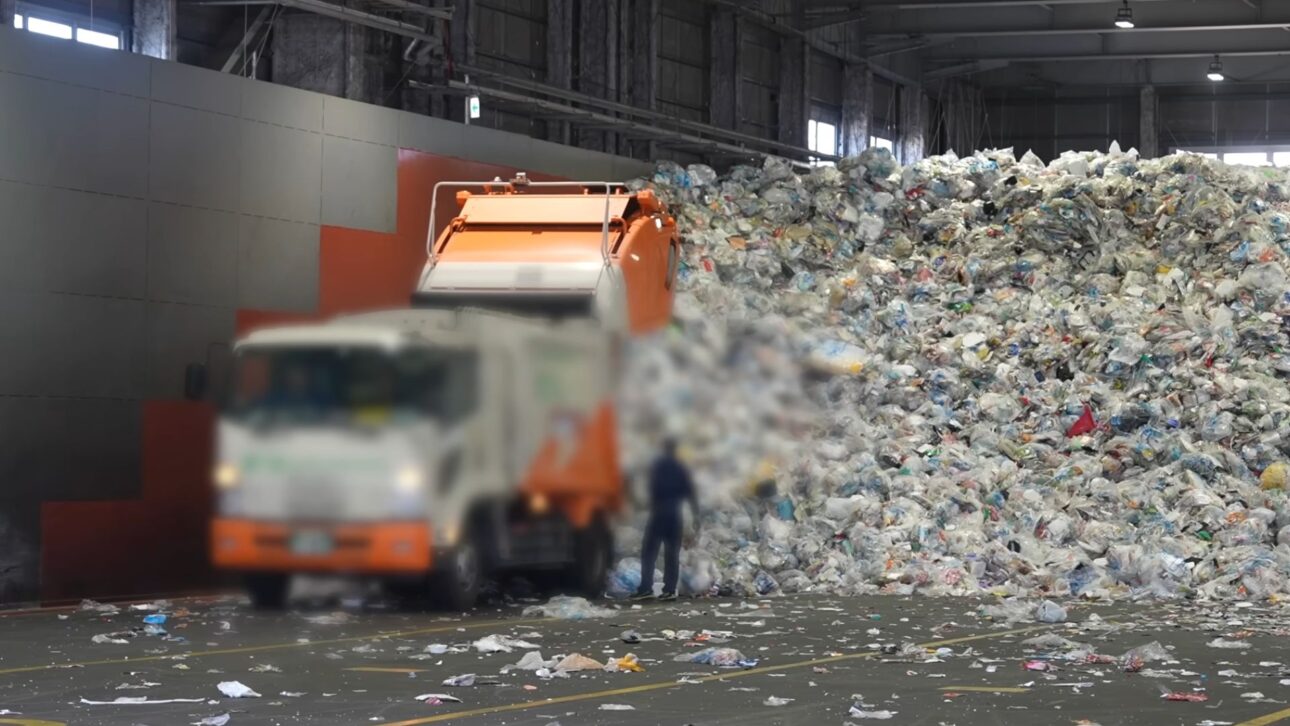 A Japanese city is transforming waste into pallets using advanced recycling technology that separates PP and PE and reduces plastic contamination.
This diagram helps explain why Nagoya is often cited in discussions about the circular economy.
The city already experienced a waste crisis in the late 1990s, when pressure on landfills led to what was called a “garbage emergency declaration.”
Since then, it has expanded selective waste collection and structured policies to reduce waste and increase the recovery of materials, including plastics.
The most recent figures from the city hall show that, in the fiscal year of 2024, households in the city generated 36,7 tons of waste and 10,0 tons of recyclable materials, but the municipality itself acknowledges that… more than half of recyclable plastic It is still mixed in with regular trash.
This indicates that the system’s performance depends not only on industrial technology, but also on… quality of the separation done at the source.
Selective collection and sorting of plastic in Nagoya
After being collected, the material undergoes an initial sorting process to remove anything that shouldn’t be there.
Rotating equipment, conveyor belts, and manual inspection help to separate objects that could damage the line or compromise the quality of the final product.
Next, the plastic is pressed to gain density, which improves transport between the intermediate unit and the recycling plant.
At the recycling plant, the compacted waste is broken down and sent back for further sorting.
The company Eco Pallet Shiga, registered in the Japanese packaging recycling system, reports that it receives separated and pressed plastics from municipalities and carries out the following steps: selection, crushing, washing and thermal compression to convert them into raw material and then into plastic pallets.
Optical sensors, PP and PE separation, and industrial washing.
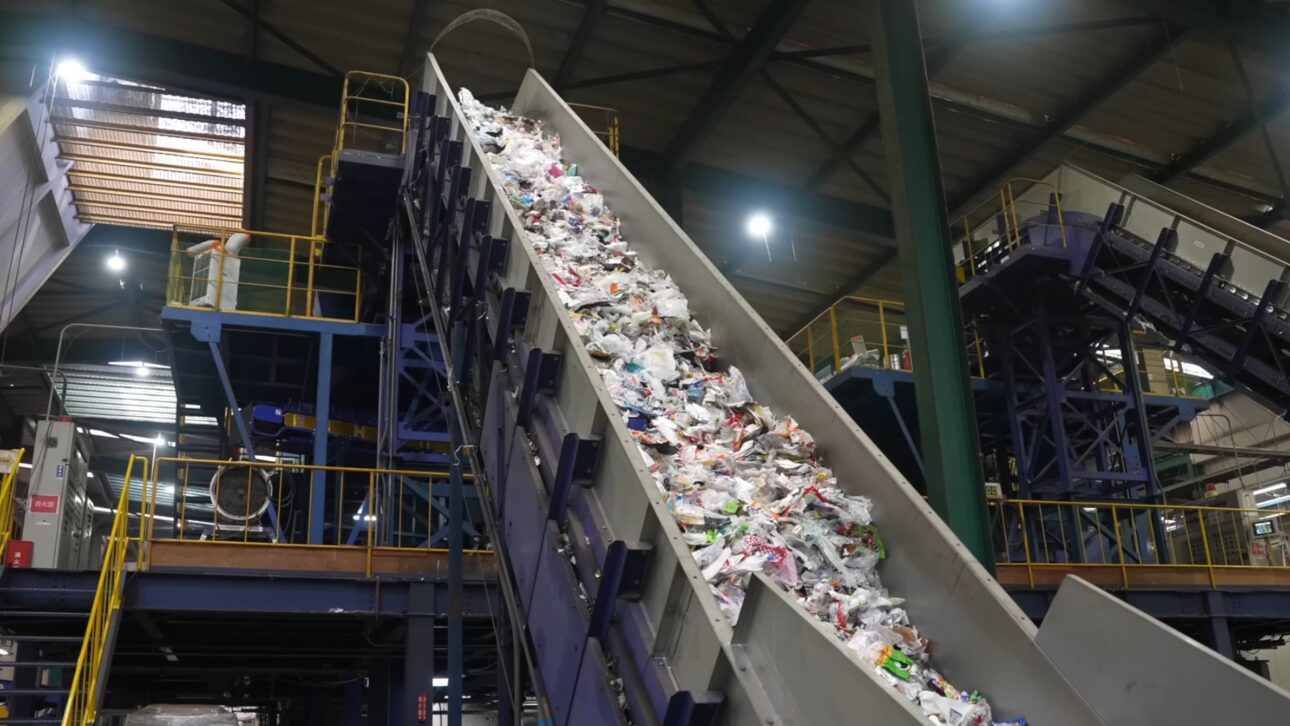 A Japanese city is transforming waste into pallets using advanced recycling technology that separates PP and PE and reduces plastic contamination.
The industrial process depends on separating polymers with different characteristics, especially polyethylene, the PE, and polypropylene, the PP, two of the most common materials in household packaging.
Records from the Japanese association responsible for packaging recycling show that recyclers like Eco Pallet Shiga operate with specific outlets for… PE, PP and PE/PP blendsThis highlights the importance of resin type classification to ensure quality and consistency in the final product.
Although the published material on this type of operation mentions optical sensors in the separation process, the public documents consulted reliably confirm the existence of the selection and industrial processing stages, but do not detail, with the same level of precision, the exact separation time “in seconds” nor the technical configuration of each line.
What is clearly documented is that the Mechanical recycling requires removing impurities, sorting polymers, and washing the fragments. before being transformed into new artifacts.
Recycled pallets are gaining ground in logistics.
After sorting, the plastic goes on to grinding, washing, and preparation of the recycled pulp.
This step is crucial because it reduces adhering residue, improves material homogeneity, and increases the consistency of the part produced at the end of the line.
In institutional reports and presentations, the company states that it uses recycled material to manufacture pallets intended for logistics, replacing part of the demand for virgin raw materials.
Pallets are strategic items for transportation and storage chains.
Therefore, the market demands Mechanical strength, stability, and repeatability in production..
Eco Pallet Hanbai, a company within the same business group, states that its recycled pallets have strength compatible with equivalent JIS standards, feature a finish to reduce slippage, and are used as a nationwide logistics solution.
There is also a piece of data that helps to measure the scale of this activity.
In corporate content published about the operation, Eco Pallet Shiga reports processing approximately 13 thousand tons per year from household plastic waste and convert it into something between 300 and 320 pallets.
In another recent document, related to support for expanding equipment, the company appears with a plan to recycle. 18.642 tons per year of packaging plastics and plastics collected in an expanded system, with final use in recycled pallets.
This industrial chain shows why the Japanese model is so appealing.
It is not simply a single machine or a one-off innovation, but an organized sequence of… collection, sorting, compaction, transport, resin separation, washing and manufacturing.
When this chain functions in an integrated way, waste ceases to be merely an environmental liability and begins to meet a concrete economic demand, such as the supply of pallets for storage and distribution.
Circular economy and the challenge of proper waste separation.
That is also why the case of Nagoya is often cited as an example of ongoing managementand not a magic solution.
The city has reinforced household waste separation over the decades, while accredited recyclers have built capacity to receive, treat, and transform the material.
Nevertheless, the municipal data themselves indicate room for improvement, since a significant portion of recyclable plastic continues to end up in the regular waste stream instead of returning to the industry.