
Research Funding New Zealand chair heralds forthcoming “investment plans” for national priorities
Basic and “public good” research will still have a place in New Zealand’s redesigned funding system, the chair of the new national funding body has said.
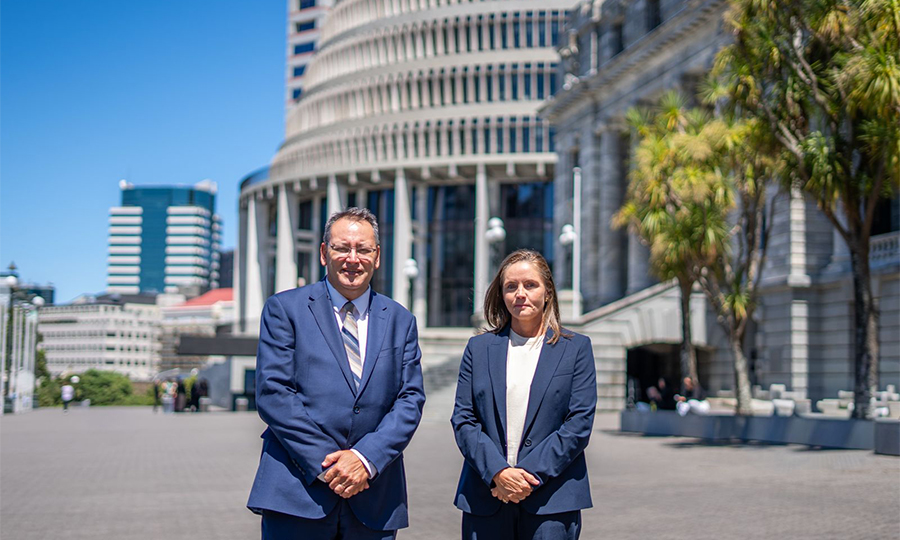
In a webinar on 12 March, Emma Blott (pictured, right), inaugural chair of Research Funding New Zealand, said that while “obviously commercialisation is a priority for government…not all valuable research is immediately commercial, so we still need to invest in public good research”.
“I think it’s been clear all through the [planning] documents and the reforms that the government still believes, and should believe, in discovery research,” the RFNZ leader said.
Blott said that while the government will set national priorities with advice from the Prime Minister’s Science, Innovation and Technology Advisory Council, RFNZ will be able to make independent decisions on which projects to fund.
The national priorities are expected to be published in June, under four “pillars” of research previously identified by the government, the webinar was told. The RFNZ board will then recommend a set of “funding mechanisms” and selection criteria to address those priorities, to be known as “pillar investment plans”.
Blott said the board does not have expertise in all areas. It is therefore in the process of setting up advisory groups to assist it with decision-making, made up of local and overseas members and chaired by RFNZ board members.
She said the board needs to be independent of government to create a “stable, credible and trusted” science system.
Marsden, Endeavour, overheads and health
Danette Olsen, who leads the science system investment reforms for the Ministry of Business, Innovation and Employment, told the webinar that the key Marsden and Endeavour Funds will run rounds this year under RFNZ’s supervision. The two funds are eventually to be absorbed into RFNZ.
After the national science priorities are published, science minister Shane Reti (pictured, left) is expected to issue the funds with formal guidelines for this year’s rounds. Grant contract arrangements will now be administered by the ministry.
Olsen said the ministry is hoping to address how research is funded within institutions in the new system. Currently, most institutions fund salaries out of grant income, creating an unstable workforce.
She said that one of the remits for RFNZ “is to think about workforce…and that will be part of the pillar investment plan process”.
The question of overheads is “part of the work programme and something that we’ll be looking at over the next few months. It’s definitely on the agenda.”
When the Health Research Council’s funding is rolled into RFNZ, as the government is planning, its work will be incorporated into the health and society pillar, Olsen said. Those changes could be “a few years away yet”.
Blott’s letter of appointment from Reti, released in February under freedom of information laws, revealed that RFNZ will actually consist of two boards, both chaired by Blott: a funding board for making grant decisions and a separate advisory board to provide advice on mechanisms.