
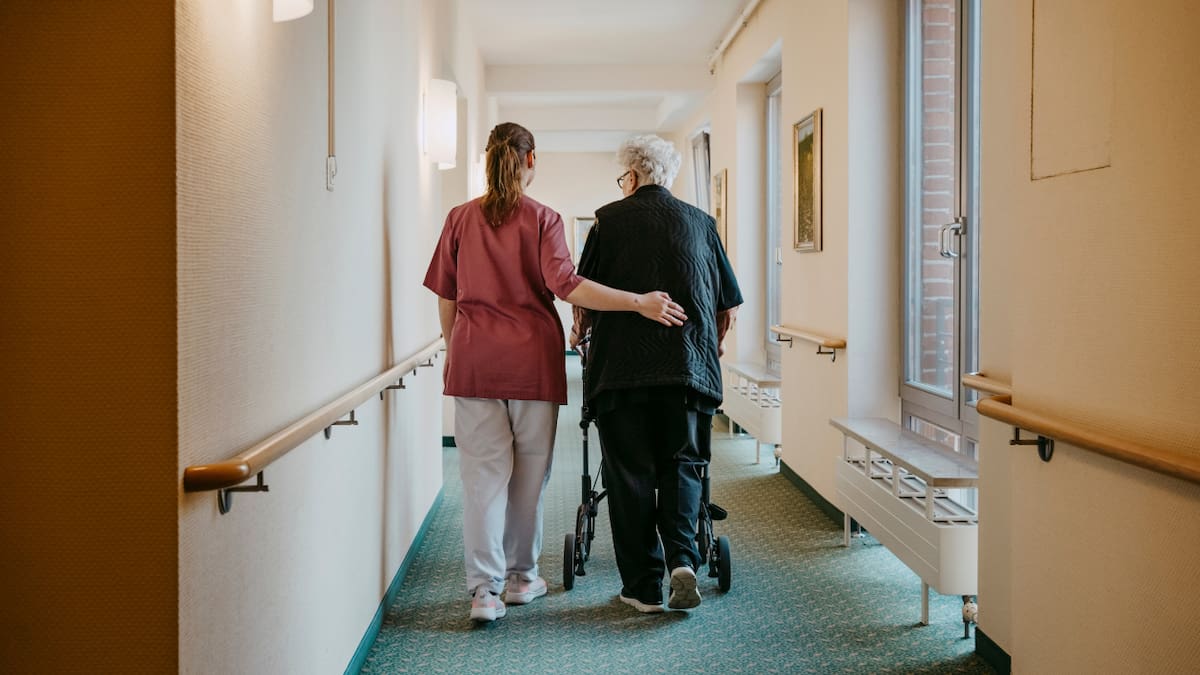
The CCTV footage from the corridor of the upmarket Auckland retirement village dementia unit is grainy, glitchy and brief. But for the family of Jan Foreman, the 80-year-old captured on film with her “caregiver”, it is a horror movie.
The few seconds of film show the caregiver yanking on
Foreman’s arm as she tries to take her out of her room – the force is such that Foreman falls to the ground, breaking her arm and dislocating her shoulder. The injuries saw her admitted to Auckland City Hospital, where she spent the next several months.
Ryman Healthcare runs the Edmund Hillary Retirement Village where the incident happened last April. It has apologised to the Foreman family and sacked the caregiver. The family rejected a settlement offer from Ryman, calling it derisory given the pain and suffering their mother endured, including a permanent disability, and their anguish over the incident.
They also did not want to be bound by confidentiality, given their wish to speak publicly about what happened, both to hold the company accountable and to expose what they believe are serious failings in dementia and elder care, in the hope other families will be more aware of potential red flags for mistreatment and neglect.
Although physical, emotional and financial abuse of older people in the community is well recognised, mistreatment in rest homes and retirement villages tends to get less publicity. In the community, surveys suggest at least 10% of older adults are abused annually in these ways, but reports to police amount to only a few hundred.
“It is unbelievably under-reported and under-investigated,” says University of Otago associate professor Yoram Barak, a consultant psychogeriatrician who believes rates of abuse in aged care facilities are likely higher still. “The fact that they have dementia is a risk factor in and of itself. We know that in the community, people who have impaired decision-making ability are more likely to be abused.”
Shelley, Ross and Nicky Foreman: Aiming to raise awareness of mistreatment in care. Photo / Tony Nyberg
Some recent cases of mistreatment in care investigated by the Office of the Health and Disability Commissioner (HDC) include:
■ December 2024: An Otago family discovered their father was being abused by his caregivers at Presbyterian Support’s Iona dementia unit in Ōamaru, the HDC reported. The family placed hidden cameras in his room because of concerns his carers might be contributing to his apparent aggression and agitation. Footage showed carers shouting and gesturing angrily at him when they tried to change his wet sheets and help him into incontinence pants. Three care-givers were found to have breached his rights.
■ December 2023: Ultimate Care Group was found to have breached multiple rights of a vulnerable resident with advanced dementia. The breaches came to light after numerous unexplained injuries. The HDC found the injuries over a prolonged period – some thought to be the result of assaults by other residents – could have been prevented if appropriate safeguards had been in place, and that the facility “had a culture of accepting behaviours of concern between residents that caused harm”.
■ February 2022: The HDC found a registered nurse’s treatment of a resident in a retirement village’s special care unit was “disrespectful and unkind” after she shouted at him and forcefully removed him from a room after he got into an altercation with another resident.
Unwashed and smelly
In 2022, when Jan Foreman’s worsening dementia and tendency to wander meant her family could no longer safely care for her, they looked for a facility that could. They chose the Edmund Hillary Retirement Village in Remuera because it was close to where they lived – family members visited daily – had beautiful grounds residents could use, and a locked “special care unit” for dementia patients deemed a flight risk. At $300 a day, it wasn’t cheap but, says daughter Nicky Foreman, an artist and art teacher, “we wanted to put her in the best facility”.
From the start, however, she, her father Ross and sister Shelley began to feel uneasy about aspects of its care. The first was that her mother was not being regularly showered or having her teeth brushed – she was rejecting the hygiene routines and becoming distressed – and both her breath and her body began to stink.
“Her breath would just about kill me,” says Nicky, who adds that on a couple of occasions, her mother wasn’t showered for up to 10 days. But when she raised the issue with staff, she did not feel listened to. “I understand [patients] can refuse care, but that’s part of the training in dementia care. You go back and you go back again. You don’t just ask and then that’s it. You have to cajole them into doing things.”
In 2024, some of her mother’s jewellery, including her wedding ring and the eternity ring she had been wearing, disappeared. Nicky noticed a “huge bruise” on her finger where her wedding band had been. She says that when she reported the items missing, a manager promised it would be investigated, but “nothing ever happened”.
Marsha Cadman, Ryman’s chief operating officer, says these issues were looked into. “Dementia is a very challenging condition to deal with and in providing care for people with dementia, we take a person-centred approach, making sure we’re tailoring routines to residents’ individual preferences. Trying to create a calm and safe environment is really important, and encouraging independence where possible.”
Nicky Foreman, centre, with her parents: “We wanted to put her in the best facility.”; Jan Foreman, who has dementia, has a permanent physical disability after an incident at the Edmund HillaryRetirement Village. Photos / Supplied
Asked if that meant residents could go many days without being showered, Cadman said it did not, but that “it means we respect that person’s right to choose that, even if they don’t want to participate in hygiene activity at that point in time; we allow that to play out and make sure we work very closely with them and their families and seek specialist advice when we need to.”
Asked what changes had been made at the retirement village since Jan Foreman’s fall, Cadman declined to go into specific detail but said, “A lot of them have to do with employment relations matters, and I don’t want to hide behind that, but I think the key for us was that we had a significant concern about the behaviour of a particular individual in that unit, and that person is no longer with us. We acted very quickly on that.”
Obvious injury
Last April, when staff phoned the family to report the fall, Ross and Shelley went immediately to the facility, where a registered nurse said they were waiting for a mobile X-ray unit. When Nicky arrived a couple of hours later, she says, despite not being a medical professional, she could see her mother’s shoulder was dislocated and she should be admitted to hospital immediately. It was six hours before she was taken by ambulance to Auckland City Hospital. The dislocation has left her with a permanent disability – she can no longer lift her left arm more than a few centimetres.
Immediately suspicious about the cause of the fall, Nicky demanded to see CCTV footage. It showed her mother toppling to the ground after the caregiver pulled forcefully on her arm. “My first reaction when I saw the video was one of horror, but not shock. I knew something bad had gone on for such an extensive injury to have occurred.”
A subsequent in-house investigation revealed that although the caregiver immediately activated an emergency bell, her response while Jan lay on the floor – she simply stood next to her most of that time – “lacked empathy, kindness and care”.
They pulled her over, pulled her to the ground and left her there. It was shocking footage and clear evidence of a grossly negligent act.
Antonia Fisher
In a letter to Nicky after the investigation, Karyn Nobilo, Ryman’s Auckland general manager of operations, said neither the caregiver nor a nurse, “adhered to our fall management policy”. She also acknowledged that bruising around Jan’s wrists was “most likely” the result of being held tightly by the caregiver.
Alarmed by what she regarded as Ryman’s failure to escalate the incident to more senior staff, Nicky engaged prominent Auckland barrister Antonia Fisher KC, an expert in medical law. Fisher says she was shocked when she saw the footage – obtained from the police under the Official Information Act, after a privacy waiver from Ross, who has power of attorney for his wife.
“It was absolutely horrendous. They pulled her over … pulled her to the ground and left her there. It was shocking footage and it was clear evidence of a grossly negligent act followed up by other caregivers not doing what they should do. It was extraordinary … The unusual thing about this case is we have got this footage. With a dementia patient, you normally never know what’s happened.”
Despite Fisher and the family’s concerns, the police decided not to prosecute the caregiver, saying they could not prove intent to harm. Fisher understands, although Ryman sacked the woman, she was never questioned by police.
Detective Senior Sergeant Mark Greaves of Auckland City CIB says the carer had “a lawful reason to touch Mrs Foreman in the execution of her duties and did not believe the necessary [intent] for assault could be proven”. He says her actions would not amount to “a major departure” from the standard of care threshold for an ill-treatment or neglect charge involving a vulnerable adult.
From left: Office for Seniors director Nicky McDonald; Ryman Healthcare’s Marsha Cadman; Dementia Foundation chair Matthew Croucher. Photos / Supplied
The initial review by Ryman identified gaps in caregiver and nurse responsibilities, ineffective pain monitoring and behavioural management, incomplete documentation and inconsistent follow-up on physical assessments.
Jan Foreman was discharged from hospital last August and is now in a Te Atatū facility, where, Nicky says, she is well looked after despite a lower staff-to-patient ratio, cheaper daily rates and the facilities being far less salubrious than Ryman’s.
The family recommends ongoing vigilance when older relatives are in care. “It keeps me up at night thinking there are people at risk,” says Shelley. “This happened to my mum. It’s probably happened to heaps of other people. Other people might not have spoken up and just gone on with their lives the best they could.”
Ryman’s Cadman described the incident as “incredibly distressing” and reiterated the employee had been promptly dismissed. “The employee behaved in a completely unacceptable way … Ryman is very focused on providing safe, high-quality care for our residents and that did not reflect the standards of care or the values that we expect.”
She says an independent investigation into the incident is continuing to examine any wider issues for Ryman, the country’s largest retirement village operator with nearly 4000 aged care beds. “Serious incidents of this nature are extremely rare. One incident like this is one too many for me, and we’re determined to make sure we take the learnings out of that.”
Resorting to spycams
Shelley says after her mother’s rings vanished, she asked a manager about installing a hidden camera in her room and was told she “definitely” could not do this because it would breach the privacy of staff. Cadman reiterated the company’s policy was not to allow cameras in residents’ rooms “for dignity and privacy reasons”.
Even if families were exercising an enduring power of attorney on behalf of the resident, she said other residents often went in and out of each other’s rooms and this had “privacy implications” for them as well. “This is not an easy issue to resolve.”
However, increasing numbers of people are thought to be installing spycams in rest home and retirement village rooms, with or without permission. In response to questions from the Listener, a spokesperson for the Privacy Commissioner said in this context, the Privacy Act did not generally “restrict individuals who record, film or photograph other people for personal reasons”. However, this would not be the case if the recording, and any subsequent distribution or publication was “highly offensive” to a reasonable person.
A person with dementia might say a caregiver is stealing a purse when they’ve just forgotten where they put it.
Donna Chisholm
“If an individual wants to put up cameras in their room, they should consider what type of care facility they are living in, what terms and conditions they agreed to before moving in, and any relevant policies of the care facility.”
In 2016, after a family installed a spy camera in a digital clock in their father’s room at a Hamilton rest home, they recorded repeated assaults by his caregiver – who later pleaded guilty in court. Although the then district health board commented it was concerned about the covert surveillance that was installed without permission and may have breached the privacy of both the father and staff, it later resiled from that position. Then privacy commissioner John Edwards said it was “certainly not a breach of the Privacy Act”.
More than safety
What else can families do to keep their loved ones safe in care and in the community? Dr Matthew Croucher, a Christchurch psychogeriatrician and chair of the NZ Dementia Foundation, says safety isn’t the only issue. “We do want people to be safe,” he says, “but that’s not all we want. We want them to flourish in the face of whatever they are living with.”
But sometimes safety conflicts with flourishing. For example, shifting Mum or Dad into care might fix a physical safety problem but reduce their quality of life and emotional and spiritual wellbeing by removing them from their family and familiar surroundings.
Matthew Croucher suggests relatives turn up when caregivers are present to judge the quality of the interactions for themselves. Photo / Getty Images
The most important thing families can do is to remain involved in the care, Croucher says, “not just switching to becoming a consumer where the government pays or we pay someone else to look after Mum”.
Staying involved also means family members can be sons and daughters or partners again, rather than having to police or nurse their parent or spouse.
“Families generally do this really well. But there are barriers and one of them is the expectations that both care homes and families sometimes have – that family are no longer going to be involved. Sometimes, people are so burnt out and exhausted they don’t go back to being the son and the daughter again – just turning up to hang out for a couple of hours, have a coffee and watch a movie: all that stuff they used to do that got crowded out by the caregiving.”
As Ryman’s Cadman says, dementia is a very challenging condition. RNZ this month reported the findings of coroner Ruth Thomas concerning the November 2023 death of Robin Walter Beets, aged 84, in a Lower Hutt dementia unit. Beets died in hospital not long after he was attacked in a lounge by another dementia patient. He underwent hip surgery after the incident. A Coroner’s Court clinical adviser who reviewed the evidence said staff had done everything in their power to prevent the assault and the incident was not preventable. “Although incidents like this can be assumed at some level to probably have some sort of trigger in the person’s mind, it is often impossible, even in retropsect, to identify what it was.”
Potential red flags
Annual complaints about aged residential care facilities to the HDC have increased from 95 in 2015 to 140 last year (although they hit a peak in 2023 of 191). Complaints about aged care in the community have remained relatively static, at about 40-70 a year.
Are there red flags that might indicate potential care-giver abuse – and how can a person with dementia communicate if those issues exist? As Croucher points out, a person with dementia might say a caregiver is stealing a purse when they’ve just forgotten where they put it, or say they “don’t like” someone without giving details. He suggests relatives turn up when caregivers are present to judge the quality of the interactions for themselves. “How does Dad react to them? Is he pleased to see them and enjoying being touched by them? Or is he nervous and shrinking away from one caregiver but not another?”
In the latter case, he says families should approach the provider and ask for a change of staff.
It’s not uncommon for people with dementia to dislike and resent personal care such as showering. “If we think about toddlers, they generally hate showering. It’s quite intense, loud and it’s literally in your face. People with dementia start to experience it that way as well.”
Office For Seniors director Nicky McDonald says elder abuse can be similar whether in care or at home and can show up in sudden mood or behaviour changes, unexplained injuries, fear around certain people, or missing money or possessions (see “Theft within whānau”, opposite).
“Families should also look for signs of neglect, such as poor hygiene, untreated health issues, or someone being isolated or controlled by another person.”
Nicky Foreman hopes going public brings overdue justice for her mum, whose dementia has significantly deteriorated since the fall, and helps other families avoid the months of anguish they went through. “Dementia patients cannot advocate for themselves.”
Families should approach the provider and ask for a change of staff if concerns arise. Photo / Getty Images
Internationally, two-thirds of caregivers in aged-care facilities admit to having mistreated patients in the preceding year, research reported by the World Health Organisation in 2024 found.
The problem is there’s no real definition of what “mistreatment” means, says University of Otago’s Yoram Barak, an associate professor of psychiatry and psychogeriatrician. It’s an umbrella term used to avoid intimidating those being questioned and risking dishonest answers, he says.
No similar research has been done in New Zealand and a sticking point is how it could be done in dementia units. Those suffering cognitive impairment are not reliable informants, says Barak. Those who might be reliable – such as staff – fear reporting could cost them their jobs. “The problem is just about unsolvable at the moment.”
In the US, elder abuse expert Laura Mosqueda of Southern California University is heading a project to develop a screening tool for identifying abuse in aged-care institutions, with millions of dollars pumped into it. In China, research found a screening test of 241 caregivers found 40% showed “abuse tendencies”. The study highlighted the high risk of burnout for caregivers, given the difficulty and stress of the job. Barak says such screening should be regularly used here, particularly given many workers lack training.
The number of New Zealanders with dementia is predicted to climb from about 83,000 now to 170,000 by 2050. But as soon as 2032, Health New Zealand estimates, the country will be short of 12,000 dementia beds. Yet, says Barak, Health NZ continues to reduce psychogeriatric beds. He and Dementia Foundation chair Matthew Croucher also point to chronic and worsening staff shortages among both health professionals and caregivers.
Croucher is a member of Health NZ’s Dementia Mate Warewareadvisory group, which four years ago produced an action plan to improve services that was endorsed by both major parties. But the government has still not committed to it.
Examples of elder abuse
■ Restricting medication or over-medicating
■ A relative taking control of finances and spending the money on themselves
■ An adult child moving in and not paying their way, or neglecting the needs of the older person
■ Physical restraint
■ Emotional neglect
■ Sexual abuse
Telltale signs
■ Withdrawal from family members or friends
■ Unexplained transactions, loss of money or unpaid bills
■ Symptoms of anxiety, depression or confusion
■ Injuries, such as bruises, cuts or broken bones
■ Malnourishment or weight loss
■ Poor hygiene or an unclean house
■ Withdrawal from social activities
■ Fear of a particular person or avoiding contact with them
■ Reluctance to talk openly, or letting others speak for them.
Where to find help
■ Age Concern: 0800 652105
■ Elder Abuse helpline: 0800 32 668 65, text 5032. Email: support@elderabuse.nz
Source: NZ Police
SaveShare this article
Reminder, this is a Premium article and requires a subscription to read.
Copy LinkEmailFacebookTwitter/XLinkedInReddit