
Deep-freezing a brain and bringing it back the way it was is one of those sci-fi ideas that refuses to die. The problem is that brains are extremely delicate.
Even if individual cells survive freezing, the full orchestra of brain function – neurons firing in patterns, cells producing energy, circuits staying flexible – has been almost impossible to restore.

A new study from Germany doesn’t claim a miracle. But it does show something real.
Using an ice-free freezing technique called vitrification, the researchers were able to freeze and thaw mouse brain tissue in a way that preserved several key signs of living function.
It’s still far from “cryosleep,” but it’s a concrete step toward keeping brain tissue intact through extreme cold.
Freezing the brain usually breaks it
The biggest enemy is ice. When water freezes into crystals, it expands and forms sharp structures that can shove aside or puncture the brain’s tiny architecture.
That architecture matters because the brain isn’t just a bag of cells – it’s wiring, membranes, synapses, and microscopic organization that needs to stay in place for anything meaningful to happen after thawing.
Study lead author Alexander German, a neurologist at the University of Erlangen–Nuremberg, points out that the problem isn’t only ice crystals.
“Beyond ice, we must account for several considerations, including osmotic stress and toxicity due to cryoprotectants,” he said.
Cryoprotectants are the chemicals used to protect tissue during freezing. They can help prevent ice formation, but they can also be harmful if the concentrations are too high or if the tissue is exposed too long.
Recovering brain function
Instead of allowing tissue to freeze normally, German’s team used vitrification, a method that cools material so quickly that molecules get trapped in a disordered, glass-like state before they can form crystals.
In simple terms: the goal is to turn the water in tissue into something like solid glass rather than jagged ice.
“If brain function is an emergent property of its physical structure, how can we recover it from complete shutdown?” German asked.
The scientists weren’t just trying to see if cells looked okay after thawing. They wanted to see whether any meaningful brain-like function could restart after the tissue had been brought to a full stop at extremely low temperatures.
Thin slices of frozen brain tissue
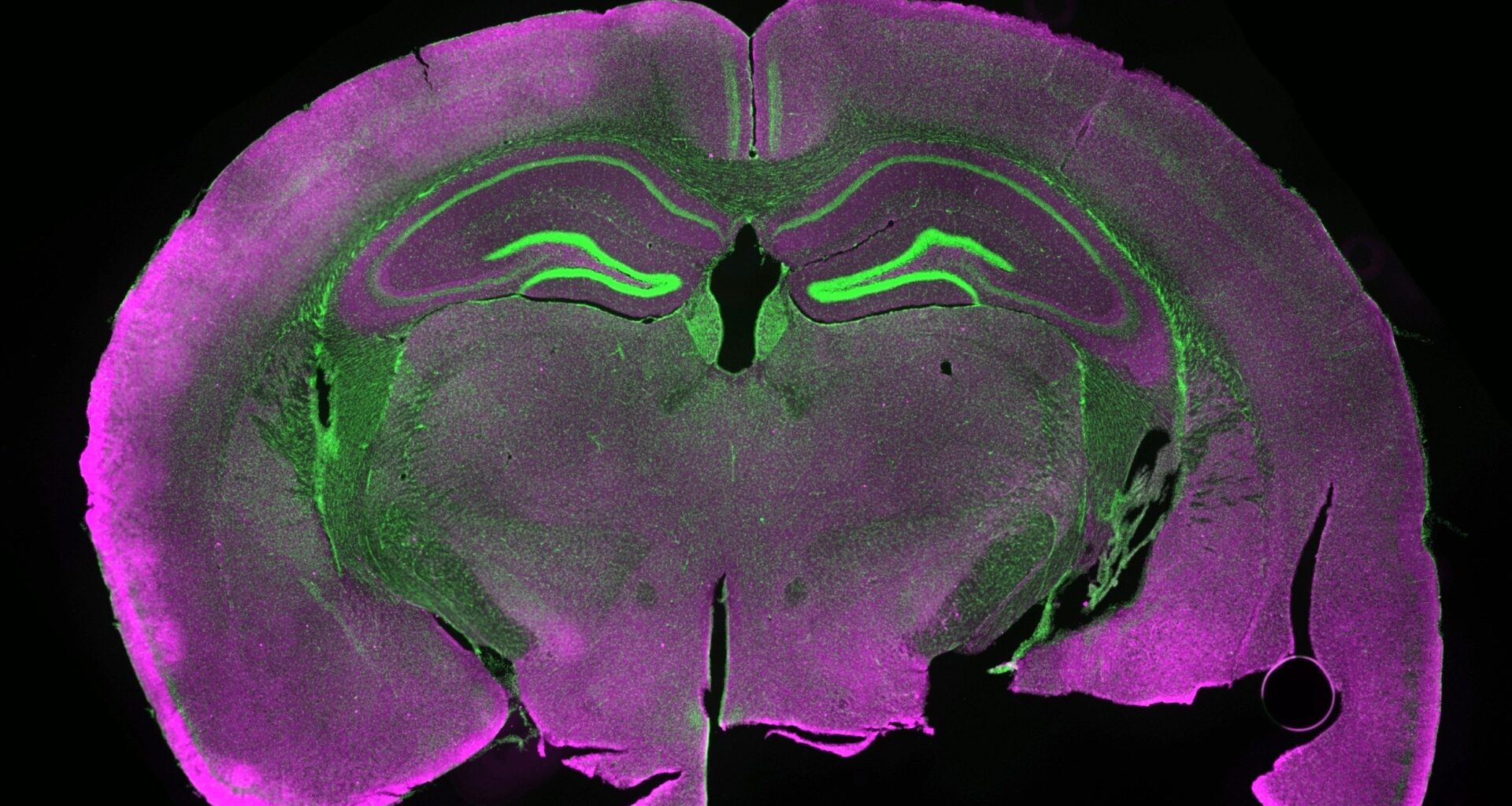
The team started with thin slices of mouse brain tissue – about 350 micrometers thick – that included the hippocampus, a region deeply involved in memory and spatial navigation.
They pre-treated the slices in a solution containing cryopreservation chemicals, then rapidly cooled them using liquid nitrogen at −196 ºC.
After that, the slices were stored at −150 ºC in the vitrified, glass-like state for anywhere from ten minutes to seven days.
That time frame matters. This wasn’t a “dip it and test it immediately” situation. The tissue stayed preserved long enough to make this feel like real storage, not just a flashy temperature trick.
What “survival” looked like after thawing
After thawing the brain slices in warm solutions, the researchers checked several layers of function.
Under the microscope, neuronal and synaptic membranes looked intact. That’s important because damaged membranes can ruin signaling even if cells technically “survive.”
They also tested mitochondria, the cell’s energy producers, to see whether metabolism had been compromised. The results were encouraging: mitochondrial activity suggested no metabolic damage.
Then came electrical recordings. Here, the researchers found that neurons still responded in a near-normal way, though not perfectly.
Electrical recordings of neurons showed that, despite moderate deviations compared with control cells, the neurons’ responses to electrical stimuli were near normal.
That’s a big deal in this field, because “cells are alive” is one bar, but “cells behave like neurons” is a higher one.
The hippocampus is often used in lab research because its circuitry is well understood. This region can also show long-term potentiation – a strengthening of synaptic connections that’s considered a key mechanism behind learning and memory.
In the thawed tissue, those pathways still showed long-term potentiation. That’s not the same as restoring memory in a living animal, obviously. But it’s one of the more sophisticated “functional” signals you can ask for in a brain slice.
It suggests the tissue didn’t just survive – it kept some of the plasticity that real brain circuits need.
There’s also an unavoidable limitation: brain slices naturally deteriorate once removed from the body, so the team could only monitor them for a few hours after thawing.
This wasn’t a long-term recovery. It was an answer to the question “does the machinery come back online at all?”
Is this close to human cryopreservation?
This is not close to human cryopreservation, at least not yet. The study used thin slices, not whole brains, and mouse brains are tiny compared with human brains.
Larger organs are harder to cool and warm evenly, and uneven temperature changes can crack tissue or create local ice formation.
Mrityunjay Kothari, a mechanical engineering researcher at the University of New Hampshire in Durham, sees it as real progress but not a shortcut to sci-fi.
“This kind of progress is what gradually turns science fiction into scientific possibility,” he said.
At the same time, he cautions that “applications such as the long-term banking of large organs or mammals remain far beyond the capabilities of the study.”
So, no, this doesn’t mean “freeze a person and revive them later.” But it does mean scientists are getting better at preserving delicate neural function through deep cold – something that could matter in much nearer-term contexts than time travel.
Why this matters
German suggests the findings hint at future medical uses: protecting the brain during disease, buying time after severe injury, or improving organ banking.
Those are the kinds of applications where even partial preservation of function could be valuable.
The main takeaway is not that brains can be frozen and rebooted like laptops. It’s that, with the right chemistry and the right freezing/thawing strategy, brain tissue can retain more real function than researchers have been able to preserve before.
It’s still early. It’s still fragile. But it’s also a clear sign that “complete shutdown” doesn’t necessarily mean “complete loss” – at least not every time.
The study is published in the Proceedings of the National Academy of Sciences.
—–
Like what you read? Subscribe to our newsletter for engaging articles, exclusive content, and the latest updates.
Check us out on EarthSnap, a free app brought to you by Eric Ralls and Earth.com. –
—-