
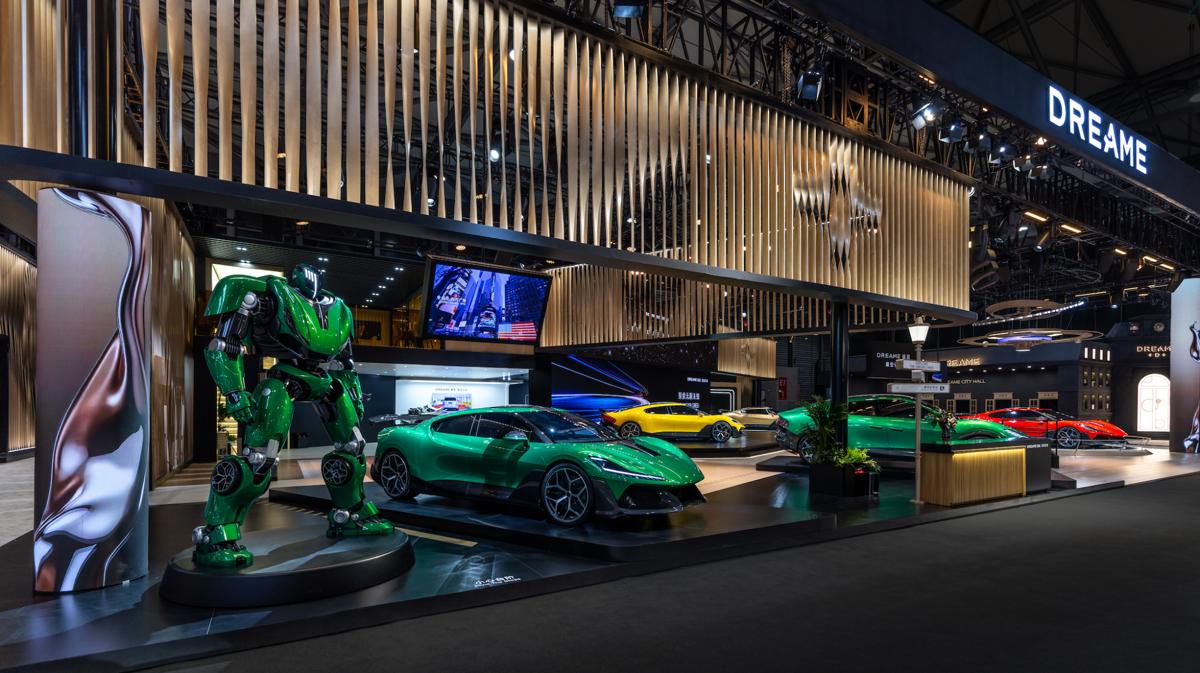
Chinese technology company Dreame, best known for robot vacuums and home appliances sold through the likes of Harvey Norman and Noel Leeming, has confirmed it is planning to launch a range of mainstream electric vehicles in New Zealand and Australia by early 2027.
The company revealed its automotive ambitions at the AWE (Appliance and World Electronics) expo in Shanghai this month, where NZ Autocar sat down with Dreame’s local and global leadership. Dreame has appointed a New Zealand country manager, who already looks after their appliance lines, assembled an automotive team of nearly 1000 people, and is actively in discussions with potential distribution partners here.
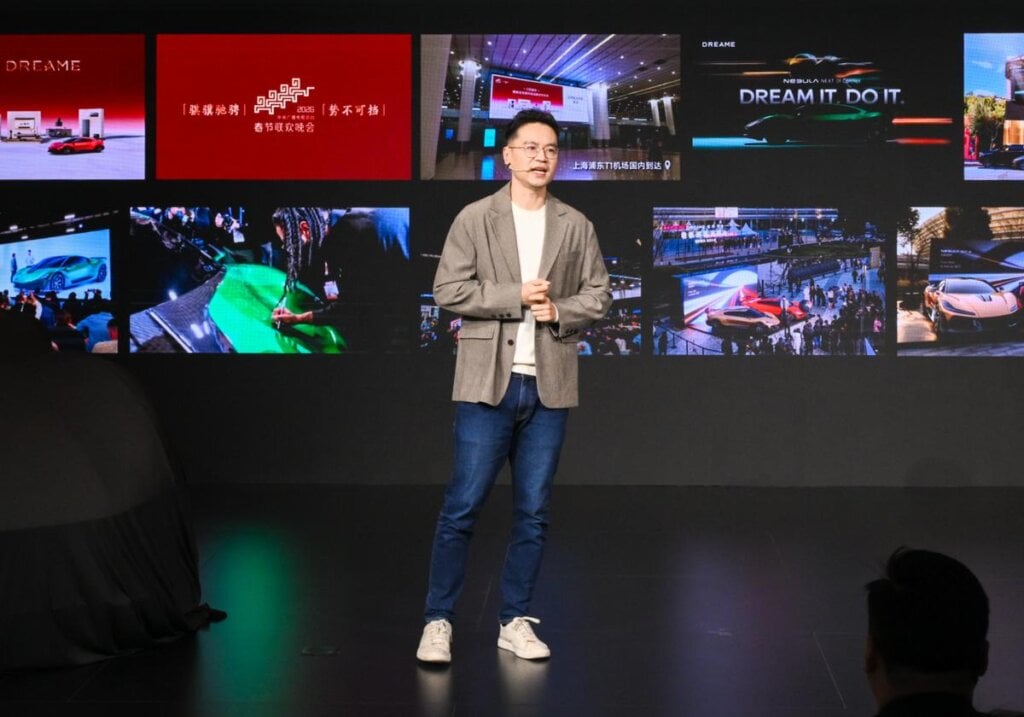 Dreame Global head of automotive marketing, Ma Long
The company says Australia and New Zealand will be among the very first markets in the world to receive its production vehicles, potentially ahead of China. Ma Long, Chief Marketing Officer of Dreame’s automotive division, told NZ Autocar the company sees ANZ as a strategically important test market. “New Zealand and Australia is one of our most important markets,” Ma says. “We genuinely believe there’s a way that we can make a big splash in Australia and New Zealand that will allow us to use that as the best case of what we do here and put that into the UK, Japan and other countries.”
Mainstream EVs, not supercars
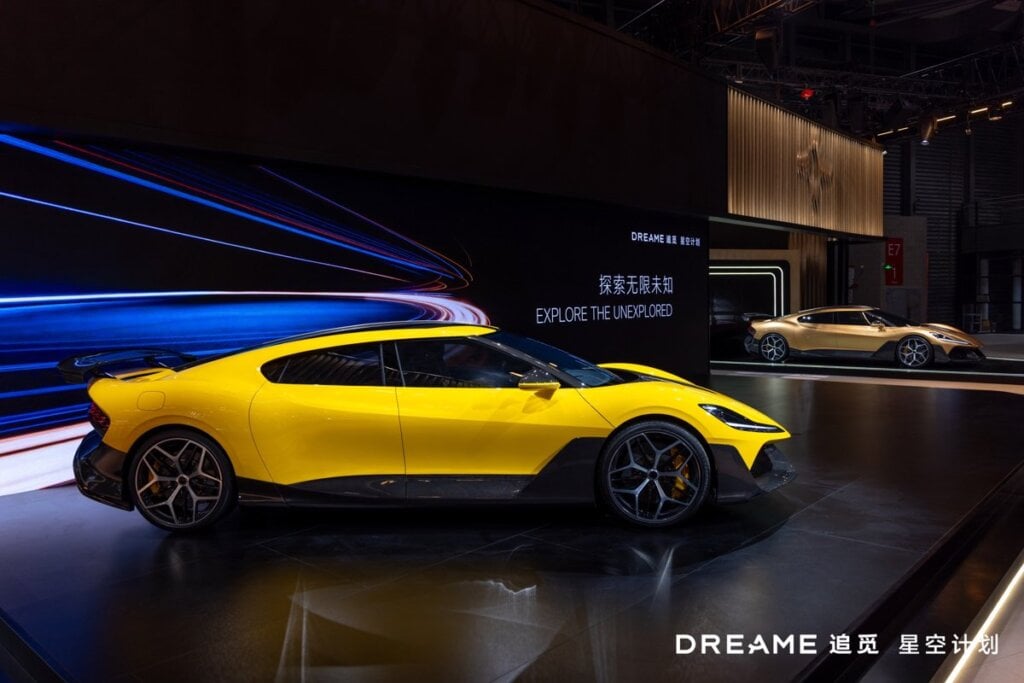
The expo’s headline acts were the Nebula Next 01 and 01X, a hypercar coupe and SUV crossover concept claiming quad-motor powertrains producing 1399 kW (1876 hp) and 0-100 km/h in 1.8 seconds. Both are built around in-house solid-state batteries that Dreame says will enter mass production in 2027.
However, the production vehicles destined for New Zealand will be a separate family of mainstream EVs. The initial lineup is expected to include models in the small SUV, mid-size SUV, and possibly sedan segments. Dreame declined to share specific pricing but says it expects to be competitive with current Chinese EV brands in the ANZ market while offering a stronger feature set.
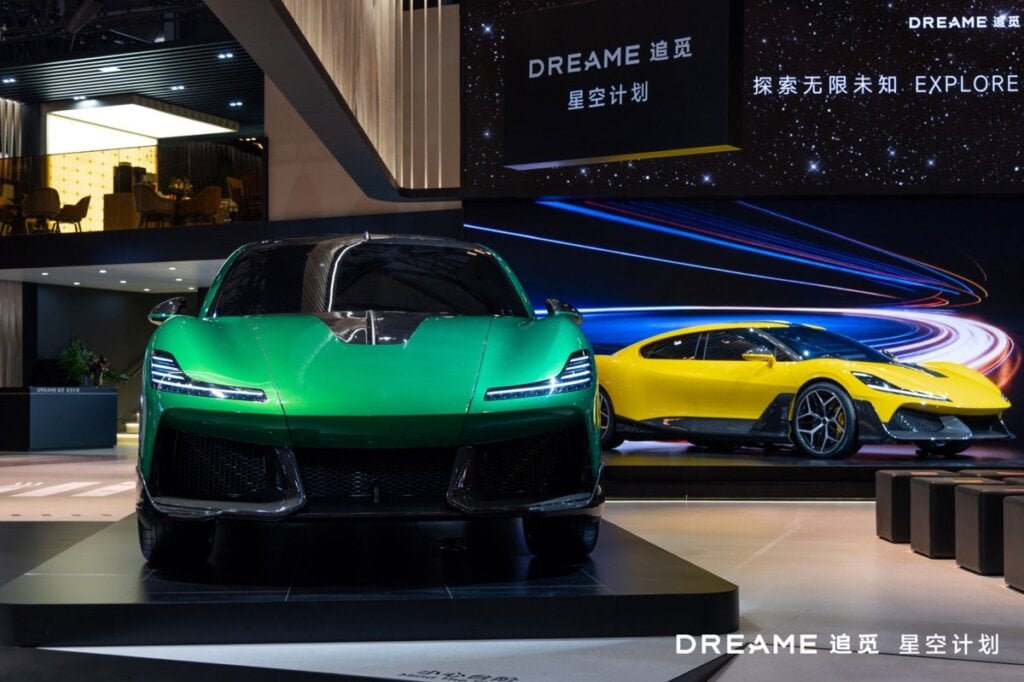 Next 01X
Ma says Dreame is not interested in joining the price war that defines much of the Chinese EV market. “We’re not trying to compete on a commoditised car,” he says. “Right now we’re at a time where AI is creating a new window for newer players, just like the shift from petrol to electric created the opportunity for BYD and Tesla ten years ago.”
The mainstream vehicles will use LFP battery cells sourced from CATL, with Dreame developing its own pack technology. Battery capacities are expected to range from 60 to 80 kWh, with anticipated ranges of around 700 km. The platform also supports range-extended (EREV) configurations with a claimed 550 km of pure electric range.
The company confirmed it is developing dedicated right-hand-drive vehicles rather than converting left-hand-drive cars and is targeting five-star ANCAP safety ratings. Local testing in the Southern Hemisphere is expected to begin by the end of May.
“We’re doing local testing to make sure that we are fully compliant and tested against local standards,” Moore says. “These cars will be certified for ADR rather than EU standards.”
At the expo, Dreame presented a 60Ah ultra-large all-solid-state battery that it says will be mass produced by the end of this year. The company claims a cell energy density of more than 450 Wh/kg, more than twice that of traditional lithium batteries, and says it is working to achieve an energy density above 800 Wh/kg for future batteries. If those figures hold up, it would represent a significant step change in EV battery technology.
Distribution and local team
James Moore, Dreame’s Country Manager for New Zealand, told NZ Autocar the company is exploring distribution partners, though has not ruled out setting up their own operation. “We’re more likely to go with a distribution model,” Moore says. “We’re exploring potential partners right now.”
Moore says the company is committed to the market long-term. “We’re keen to build longstanding partnerships. We’re not in this for a short-term hit,” he says.
A traditional dealer model appears most likely, though Moore did not rule out direct-to-consumer sales or leveraging Dreame’s existing electronics retail footprint in Australia and New Zealand. “We are unique in the sense that we have a scope and scale already across Australia and New Zealand to launch it many different ways,” he says.
Moore, who previously worked at Enterprise Rent-A-Car in the UK, Dyson, and Japanese import specialist Moana Blue in New Zealand, says he has already hired a Mandarin-speaking liaison based in China to bridge the gap between the local operation and Dreame’s headquarters.
No factory yet
Dreame does not currently have an automotive manufacturing facility. In China, the government controls manufacturing permits and capacity allocation, and the company is still working with agencies to secure approval. It is simultaneously exploring knock-down assembly arrangements in Europe and the Middle East, and has confirmed it is looking at a factory site near Tesla’s Gigafactory in Berlin, which would make it the first Chinese car brand to establish production in Germany.
Despite this, the company says vehicle designs are essentially finished and supplier contracts are in place. “Suppliers are already in contract,” Ma indicated when asked about readiness. Dreame says it expects to show the production vehicles to media within six to eight weeks.
Design and cabin
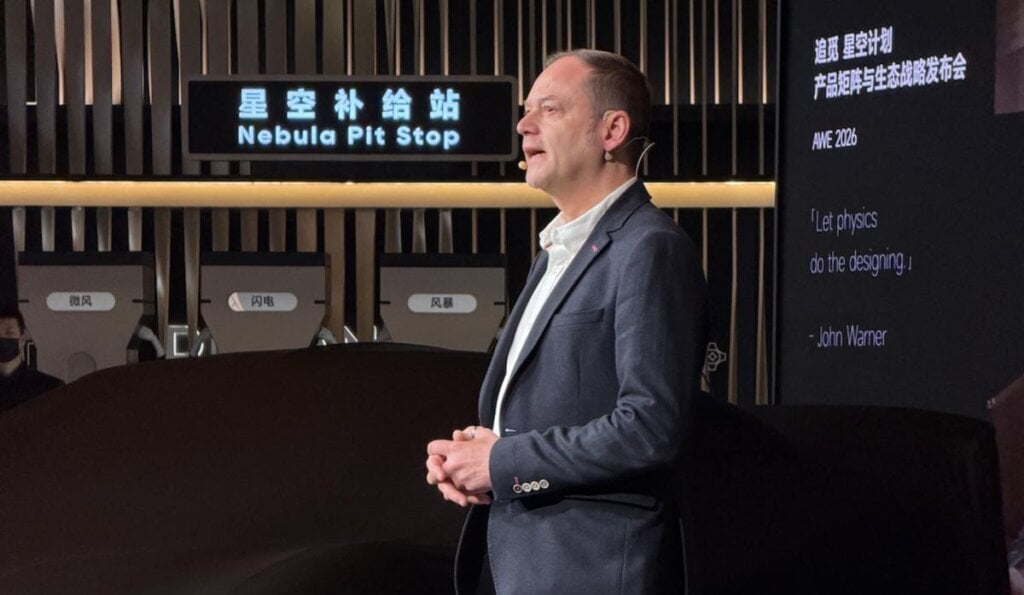 John Warner
The design is being led by John Warner, formerly head of interior design at Jaguar Land Rover and then Li Auto, where he was responsible for the cabins on the L7, L8, L9, and MEGA.
Warner says the production vehicles will adopt a deliberately restrained design language. “We’re trying to integrate more of a timeless, essential body side,” he says. “Anything that’s stylised, dates really quickly.”
Warner says the goal is a car that still looks good a decade after purchase. “You’re in this car for 10 years. You don’t want it to be, at the end of 10 years, looking like it’s a 30 or 40 year old car,” he says. “We want it still to be a staple.”
He pointed to his previous employer Li Auto as a benchmark for restrained design. “They’re a lot more simplistic in their language, which makes them a bit more timeless, which makes them appeal to a wider marketplace,” he says. “The moment you start with bells and whistles, you’ve lost your DNA.”
Warner also confirmed the cars will retain physical buttons in the cabin, pushing back against the screen-heavy approach common in Chinese EVs. “People are going back to small physical buttons,” he says. “There’s a way of listening to the customer.”
Connected ecosystem
Dreame’s key point of difference is its existing smart home ecosystem. Because the company already makes robot vacuums, floor washers, and other connected devices, it says it can integrate the car into the home in ways traditional carmakers cannot.
The company demonstrated an example where the car learns the owner’s daily commute routine and automatically triggers the robot vacuum to clean the house before they arrive home.
Clean Vehicle Standard
When asked whether a potential abolition of New Zealand’s Clean Vehicle Standard would change Dreame’s plans, Moore acknowledged it would make the market “slightly less appealing” for an EV brand but said the company would proceed regardless. “We will pursue what we think is the right strategy,” he says.
Dreame Technology was founded in 2017 and was formerly part of the Xiaomi ecosystem. It now operates more than 6000 retail points across 100 countries. The company says its core business continues to deliver record revenue and profit.