
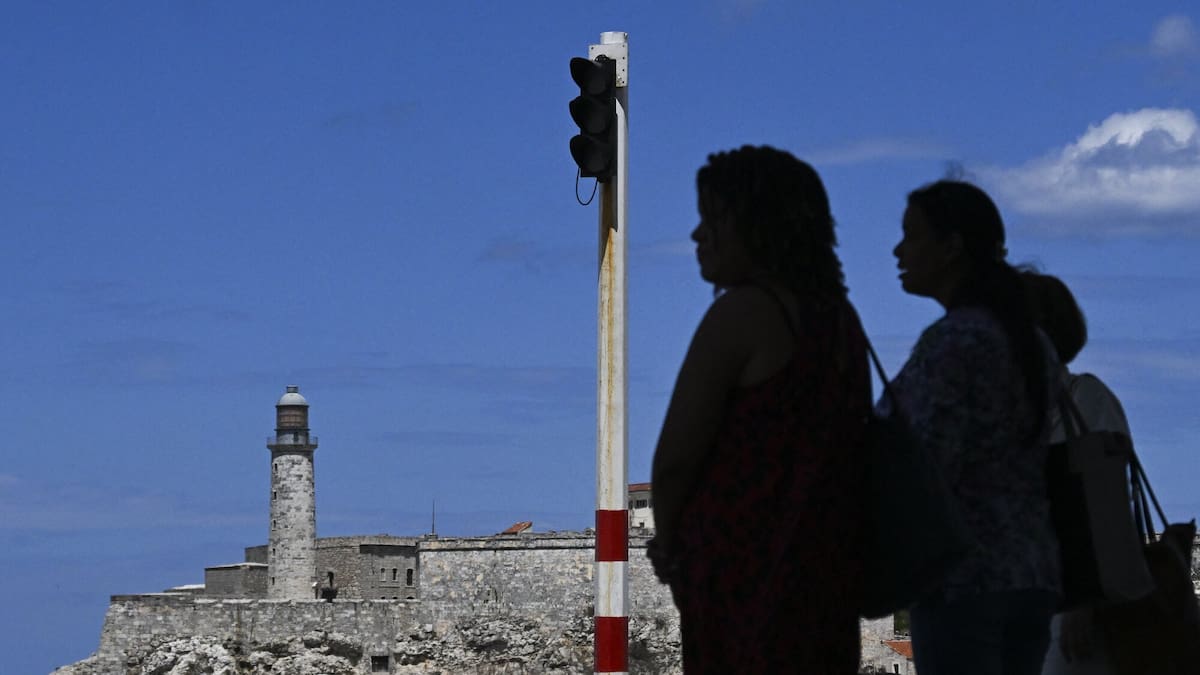
It was one of the Republican’s most explicit threats and came as the Caribbean island of 9.6 million people grappled with yet another major power cut.
The blackout resulted from a “complete shutdown of the national grid”, Union Nacional Electrica de Cuba (UNE) said in a statement, adding that work had begun to restore electricity flow.
Cuba’s ageing electricity generation system is in disarray, with daily power outages of up to 20 hours the norm in parts of the island, which lacks the fuel needed to generate power.
But since the US’ ousting of Cuba’s top ally, Nicolas Maduro of Venezuela, on January 3, the island’s economy has been hammered further as Trump maintains a de facto oil blockade.
No oil has been imported to the island since January 9, hitting the power sector while also forcing airlines to curtail flights to the island, a blow to the all-important tourism sector.
In a bid to relieve economic pressure – and meet US demands – a senior economic official in Cuba announced that Cuban exiles would now be able to invest and own businesses there.
“Cuba is open to having a fluid commercial relationship with US companies” and “also with Cubans residing in the United States and their descendants,” Oscar Perez-Oliva, who is foreign trade minister and also deputy prime minister, told NBC News.
The New York Times reported, relying on anonymous sources, that Trump administration officials have signalled to Cuban officials the US wants President Miguel Diaz-Canel to be removed from power.
Popular unrest
The blackouts, as well as regular shortages of food, medicine and other basics, are spurring frustrations. In a rare moment of violence, demonstrators vandalised a provincial office of the Cuban Communist Party last weekend.
It was part of a new trend of protests in which people bang pots and pans at night, at times yelling “Libertad”, or freedom.
Fourteen people have been arrested after the office assault in Moron, a town of around 70,000 people east of Havana, the regional party chief told state-run newspaper Invasor.
The violence prompted President Miguel Diaz-Canel to acknowledge in an X post “the discontent our people feel because of the prolonged blackouts”, including a major outage in early March.
“What will never be comprehensible, justified or admitted is violence,” he said.
The government has rationed gasoline sales and some hospital services because of the fuel shortages, and Diaz-Canel acknowledged last week that his government had held talks with the United States.
Trump has alleged the fuel blockade is a response to an “extraordinary threat” posed by Cuba to the United States.
Trump said that Cuba “wants to make a “deal”, which could come quickly after his administration has finished the war against Iran.
“I think we will pretty soon either make a deal or do whatever we have to do,” Trump told reporters aboard Air Force One.
– Agence France-Presse