
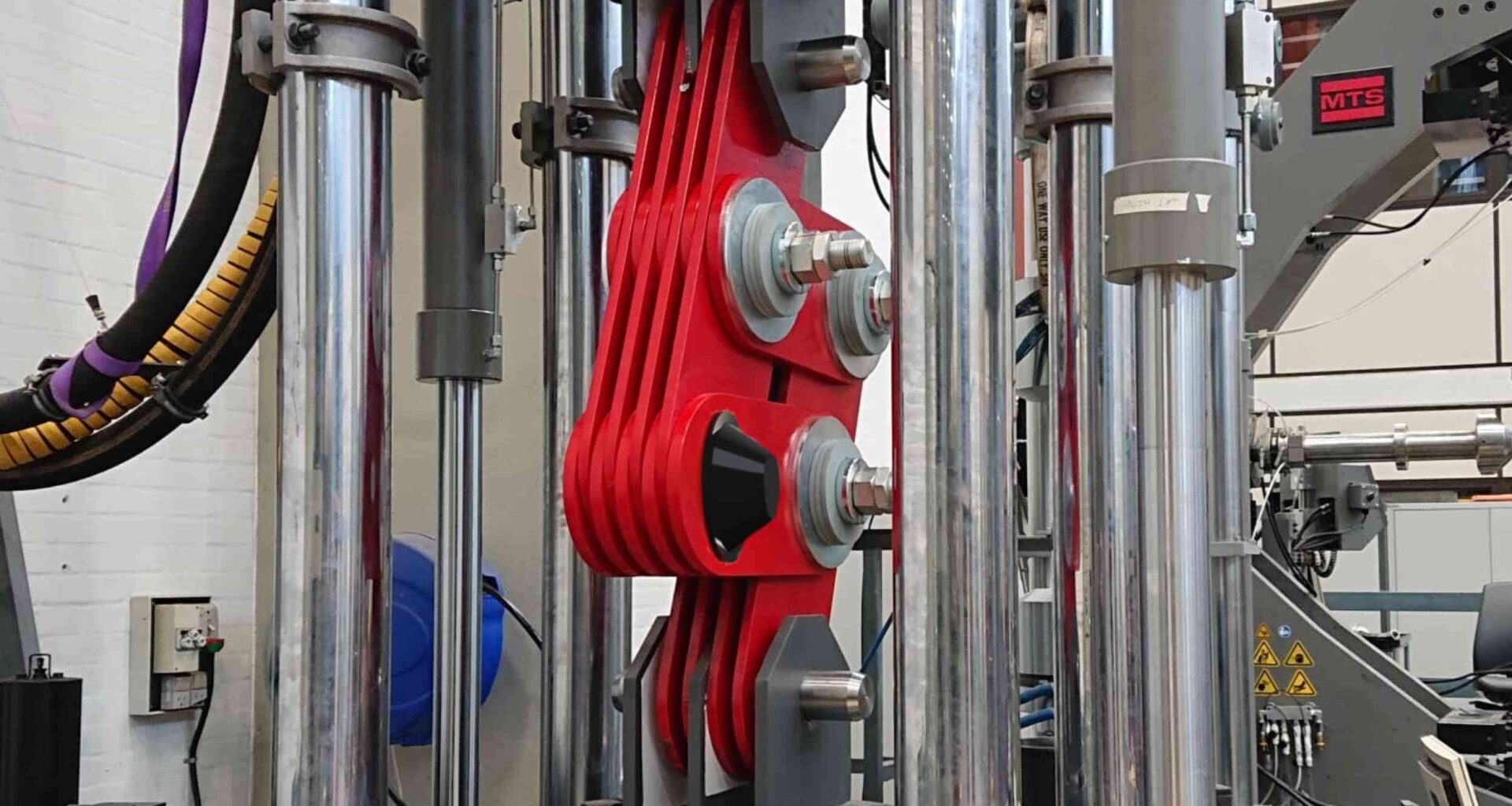
Researchers have demonstrated that a cylinder packed with steel balls can absorb about 14% of vibration energy that would otherwise travel through a structure.
That result points to a simpler way to help buildings, bridges, and sensitive equipment take less punishment during earthquakes and other violent shaking.
Inside the cylinder

A U.S. patent granted in December 2025 covers the device and locks the design into the public record.
Working from that concept, Moussa Leblouba, engineering professor at the University of Sharjah in the United Arab Emirates, designed a damper for frames.
The device uses a hollow cylinder packed with steel balls and a central shaft fitted with short rods.
That spare layout aims to tame motion with simple contact rather than with pumps, electronics, or sacrificial metal parts.
How friction helps
When a building sways, the shaft slides back and forth, and its rods shove through the packed balls.
That rubbing turns part of the quake’s movement into heat, which leaves less energy available to crack concrete or twist steel.
“The friction generated between the balls and the rods absorbs and dissipates the vibration energy,” Leblouba said.
Because the energy gets spent inside the damper, the surrounding structure should feel a smaller, slower push.
No power needed
Many dampers dissipate motion through fluid compression, friction, or metal yielding, and each option brings trade-offs in upkeep.
“Our device needs no power at all; it works through pure physics, through friction; it is passive,” Leblouba said.
A blackout during an earthquake would not switch it off, and damaged pieces could be swapped without replacing the whole unit.
That kind of resilience could matter most after the first shock, when crews need protective systems that still function.
Fitting older structures
Retrofitting older buildings is often easier with dampers than with base isolators, and this design aims for that niche.
Those devices separate a structure from ground motion, but they can demand much deeper structural changes than a compact damper.
Bridges, towers, and framed equipment racks are the clearest candidates, especially when owners need upgrades without emptying an entire site.
Adoption will still depend on engineering details, but retrofit-friendly hardware usually reaches real projects much faster.
What tests showed
Early laboratory tests put the device’s reported performance into clear numbers rather than broad claims.
Leblouba said the design reached about 14% damping ratio, a measure of how quickly shaking dies away.
Across tiny motions of about 0.04 to 0.20 inches (1 to 5 millimeters), it also averaged roughly 28,500 pounds (12,927 kilograms) of resisting force for each inch moved.
Those figures are promising, but they come from small displacements, not the full violence of a large, real earthquake.
Beyond quake zones
Shaking that damages structures does not come only from earthquakes, and the patent was written with broader vibration problems in mind.
Strong winds, rail traffic, industrial machinery, and repeated shocks can all push equipment or frames into harmful back-and-forth motion.
For that reason, the same cylinder could serve in communication gear, lab instruments, or transport systems that hate vibration.
A device that calms many kinds of shaking usually becomes more valuable because it can spread development costs across industries.
From sand to steel
This patent did not appear out of nowhere, because Leblouba’s lab has already been testing particle-filled dampers.
A published paper from the same group tested a box device filled mainly with sand, again using particle motion to spend energy.
The steel-ball cylinder changes the geometry and the contact surfaces, but it keeps the same basic idea of cheap particles doing hard work.
That continuity shows this is not a one-off gadget, but part of a deliberate research path.
Cost and accessibility
Nothing in the device sounds complex: a cylinder, a shaft, short rods, and steel balls that can be assembled on-site.
Simple parts matter in earthquake-prone countries because maintenance crews can replace one damaged element instead of scrapping a whole system.
That could lower cost twice, first at installation and later after a damaging event when repairs usually become painfully expensive.
For places with high seismic risk and thinner budgets, that combination may matter as much as raw performance.
From patent onward
The next job is to see whether the small prototype keeps behaving when the loads get larger and messier.
Planned shake-table tests, controlled experiments that replay earthquake motion, will push scaled structures carrying the device through more realistic movements.
Researchers also want to vary rod shape, rod spacing, ball size, and ball material to tune how the damper responds.
Until those results arrive, the invention looks promising mainly as a smart concept with encouraging early behavior.
Impact of the new design
A damper that relies on rubbing steel balls instead of pumps or complex electronics could widen who can afford seismic protection.
Its real value will depend on larger tests and field use, but the idea already narrows the gap between engineering and usable hardware.
The study is published in the Journal of Building Engineering.
—–
Like what you read? Subscribe to our newsletter for engaging articles, exclusive content, and the latest updates.
Check us out on EarthSnap, a free app brought to you by Eric Ralls and Earth.com.
—–