
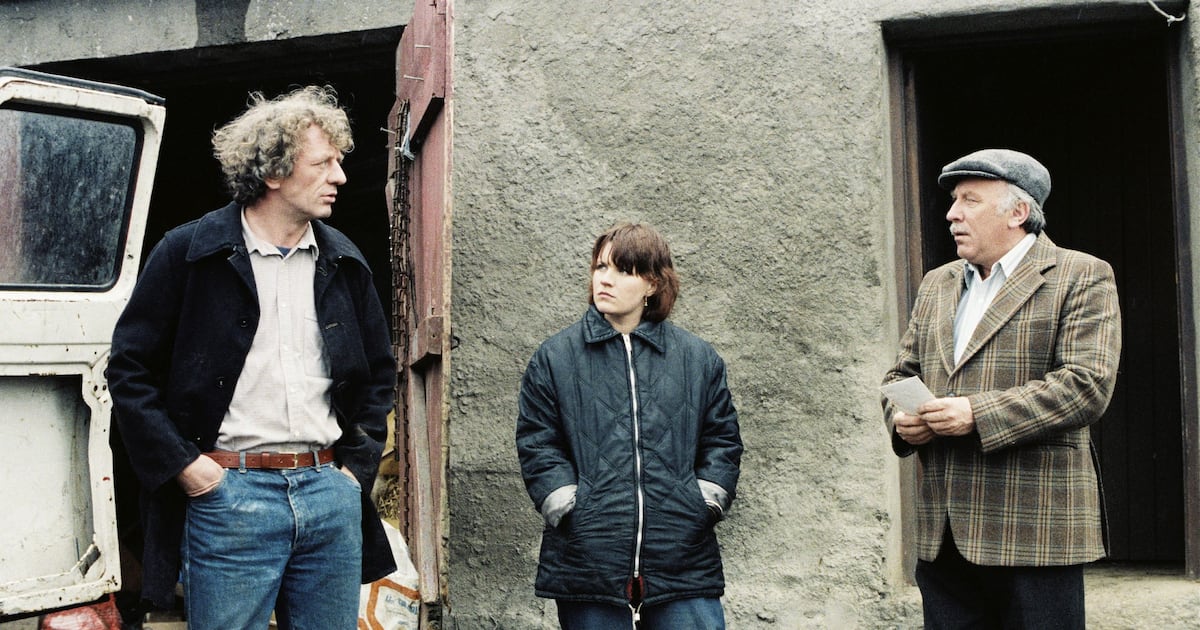
Ireland excels at a lot of things. Literature. Preachy rock stars. Potato-based snacks. But in television we have long punched below our weight: compare and contrast our history of underachievement on the small screen with the ambitious, cutting-edge TV produced by nations of a similar size, from Borgen (Denmark) to Wellington Paranormal (New Zealand). Still, gold has occasionally twinkled amid the dross – with the unfortunate caveat that much of the best “Irish” programming has been funded with international (often British) money. So rest your shillelagh, put your feet up and read on as we bring you the 10 best Irish TV shows of all time – and then take a deep breath as we run through the five worst.
The 10 best Irish TV shows of all time10. Normal People (2020)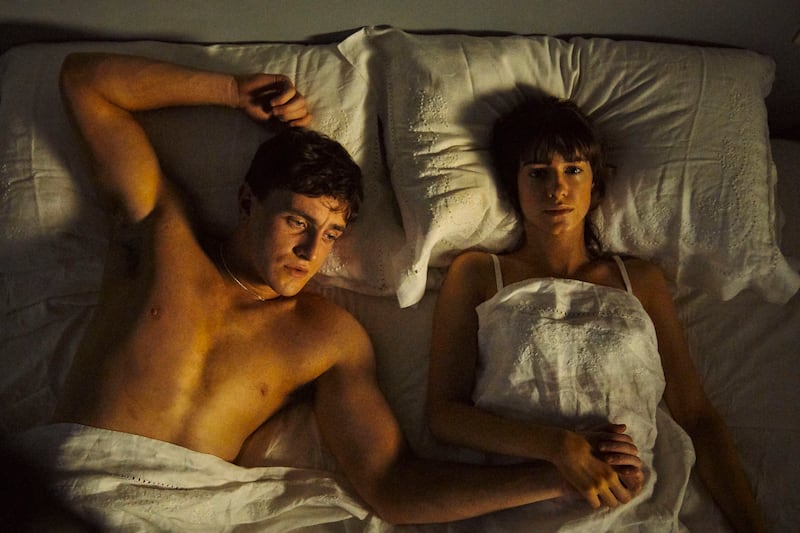 Normal People: Paul Mescal as Connell and Daisy Edgar-Jones as Marianne. Photograph: Enda Bowe/Element Pictures
Fuelled by the raw star power of a then-unknown Paul Mescal and Daisy Edgar-Jones, Lenny Abrahamson’s Sally Rooney adaptation became a lockdown sensation – a surreal turn of events for a show that features Mescal playing a star corner forward on the school football team and where a character not being asked to the debs is a major plot point.
9. Strumpet City (1980)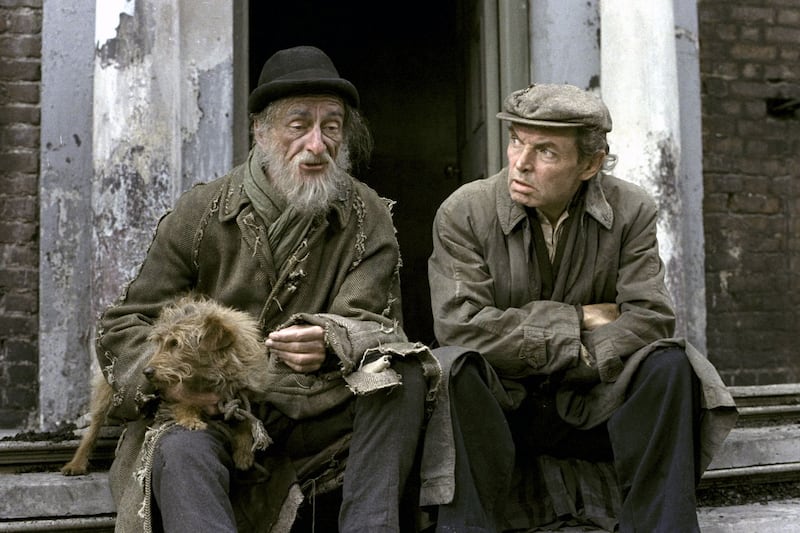 Strumpet City: David Kelly as Rashers Tierney and Brendan Cauldwell as ‘Toucher’ Hennessy. Photograph: Mary Lee/RTÉ
RTÉ could do costume drama as well as anyone else back in the day, as illustrated by this 1980 adaptation of James Plunkett’s 1969 novel set during the Dublin lockout and starring a top-tier cast headed by Peter O’Toole, Peter Ustinov and David Kelly. Decades before Julian Fellowes, it was Dublin doing Downton Abbey, with hearty spoonfuls of Ken Loach social commentary sprinkled through.
8. Bosco (1979-87)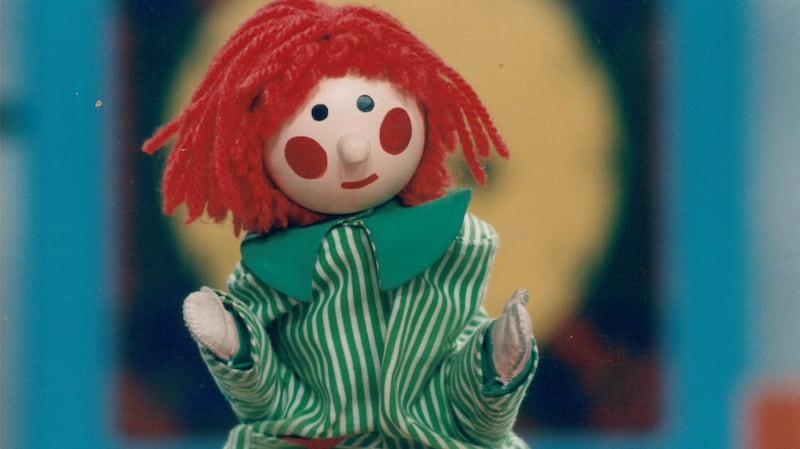 Bosco: The puppet’s cultural clout has carried on into the 21st century
Perhaps the most influential Irish children’s series of all time, Bosco and regular segments such as the Magic Door, not to mention the melancholic hedgehog Gregory Gráinneog, are seared into the imagination of everyone who grew up in the 1980s.
But Bosco’s cultural clout has carried on into the 21st century: show any Irish person a red-headed puppet sitting in a box and they’ll immediately recognise the Australian artist Jan Mitchell’s design. Which is why Bosco makes the list ahead of (the arguably equally influential) Zig and Zag on The Den, or the Beckettian brilliance of Podge and Rodge.
7. The Late Late Show (1962-)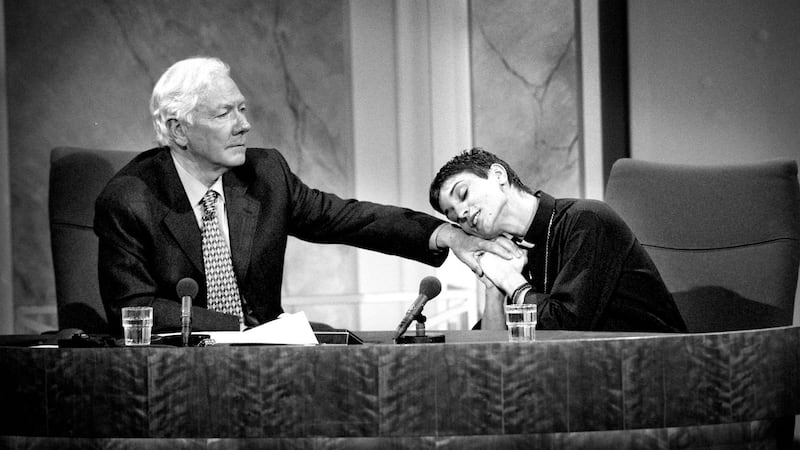 The Late Late Show: Gay Byrne and Sinead O’Connor on May 21st, 1999. Photograph: David Conachy/Independent News and Media/Getty Images
Drama generally ages better than factual television, hence the emphasis on scripted TV in this countdown. But in terms of cultural impact it’s impossible to overestimate The Late Late Show. In the Gay Byrne decades it dragged Ireland kicking and screaming into the modern era (even if Byrne’s condescending interviewing style has not aged well, particularly with women guests). That was followed by the Pat Kenny “Robopat” years, then Ryan Tubridy, who helped turn the annual Christmas Toy Show into a national phenomenon – only to spoil it all by swearing at a bottle of Fanta on live TV.
6. When Reason Sleeps (1987)
There was something a bit weird and creepy about mid-1980s Ireland – all those moving statues and bottles of Cidona that looked like they’d been liberated from a crypt before being pressed into your confused 10-year-old hands. That uncanniness was wonderfully tapped by this obscure and unjustly forgotten anthology produced by RTÉ and Channel 4, which captured an Ireland at the peak of its “eerie Éire” phase – a sort of Grand Guignol snapshot of this forlorn Gubu purgatory.
5. Glenroe (1983-2001)
Was Glenroe a quality drama? Lost to the mists of history, it is impossible to have a measured opinion on the Wicklow-set soap, a pillar of 1980s popular culture. But it is nonetheless important to acknowledge its significance, both for the programme’s steamy shenanigans – Hugh Hefner had nothing on Dick Moran of the ever-wandering gaze – and for its impact on a generation who genuinely felt an existential crush each Sunday as the theme tune spelt the end of the weekend and the onset of the dreaded Monday morning, back-to-school blues. All these decades on, swathes of Irish society will still be triggered by those opening notes: the fun is over and it’s time for an early night and who knows what the following morning.
4. Bad Sisters (2022-24)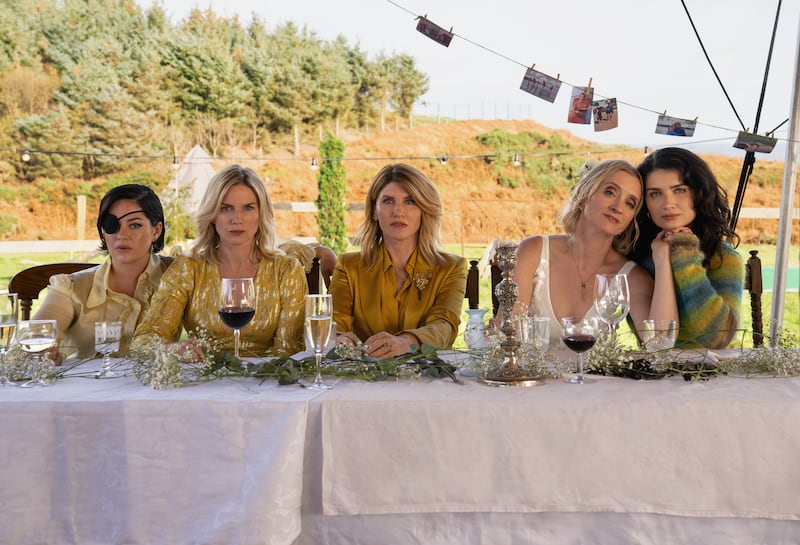 Bad Sisters: Sarah Greene, Eva Birthistle, Sharon Horgan, Anne-Marie Duff and Eve Hewson. Photograph: Apple TV
Scenic coastal Dublin was the perfect backdrop for a tale of sisterly love, middle-class skulduggery and a toxic English brother-in-law – with this dark comedy elevated further by Sharon Horgan’s brilliantly zinging script. Debuting on Apple TV, it is that rare streaming show set in Ireland that did not dive headfirst into caricature. If only Netflix’s dire Bodkin and hellish House of Guinness had demonstrated the same care and respect.
3. Derry Girls (2018-22)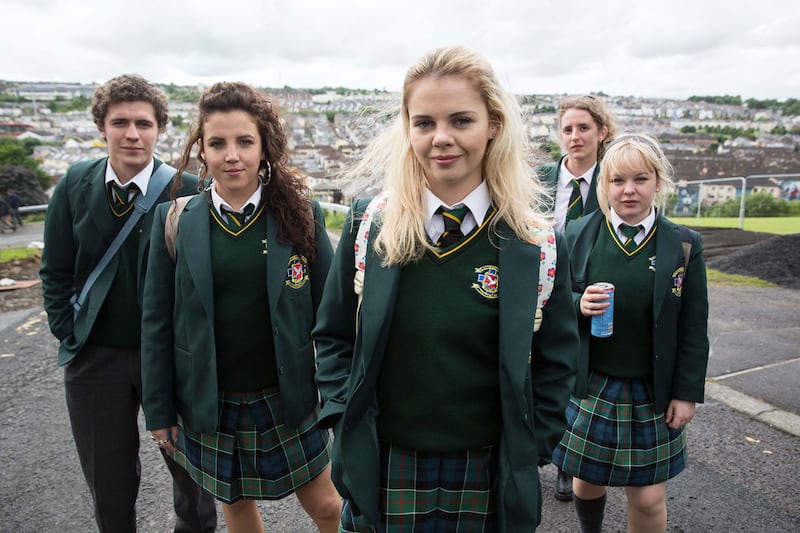 Derry Girls: Dylan Llewellyn, Jamie-Lee O’Donnell, Saoirse-Monica Jackson, Louisa Harland and Nicola Coughlan. Photograph: Jack Barnes/Channel 4
Lisa McGee’s Troubles-set comedy was both a love letter to 1990s Ireland – the first thing we hear are the opening notes of The Cranberries’ Dreams – and a reminder of how bleak humour helped ordinary people in the North get through the decades-long conflict.
The cast was a comedy tour de force, with Saoirse-Monica Jackson, Nicola Coughlan and Siobhán McSweeney among those who have gone on to bigger things.
But, whatever they achieve in the future, they will forever be synonymous with Derry Girls, a portrait of teen angst and yearning that also quietly reminded viewers of the horrors of the Troubles and the promise of a new tomorrow represented by the Belfast Agreement of 1998, as featured prominently in the finale.
2. Father Ted (1995-98)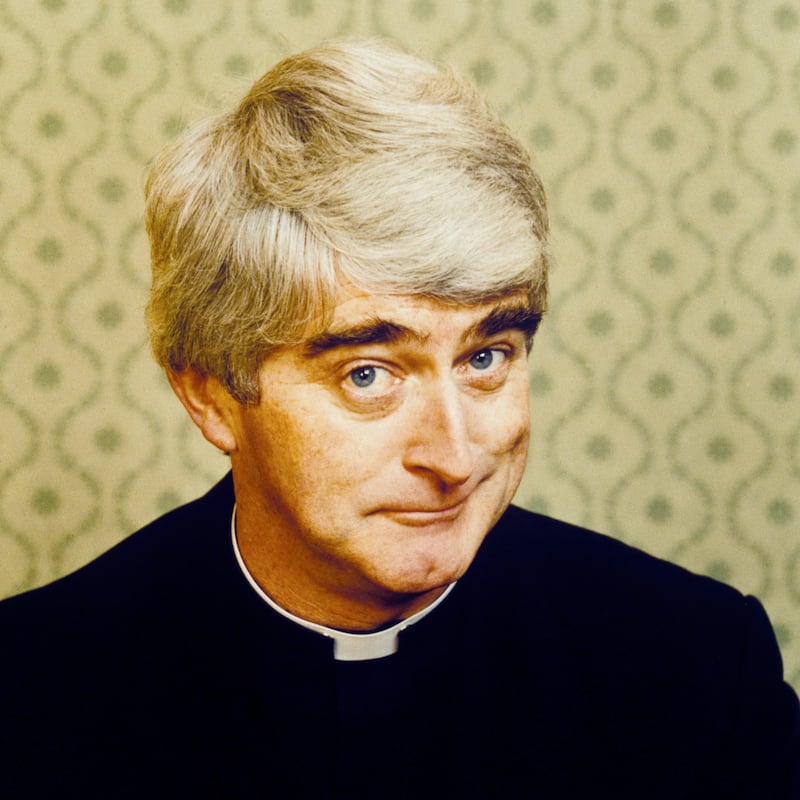 Father Ted: Dermot Morgan as the eponymous main character. Photograph: Channel 4
If Father Ted seems whimsical and absurd today, in mid-1990s Ireland, Graham Linehan and Arthur Mathews’s sitcom was essentially a documentary with a laughter track. Pre-Celtic Tiger Ireland really was that surreal, silly and priest-ridden – and Father Ted achieved television immortality by capturing the mad reality of living in a nation fuelled largely by magic realism, superstition and reinforcing cups of tea.
It held a mirror up to a country living in a parallel dimension, decoupled from the rest of the world – a sort of Craggy Island of the soul – and suggested that, instead of giving in to despair, it was better to laugh at ourselves.
1. Love/Hate (2010-14)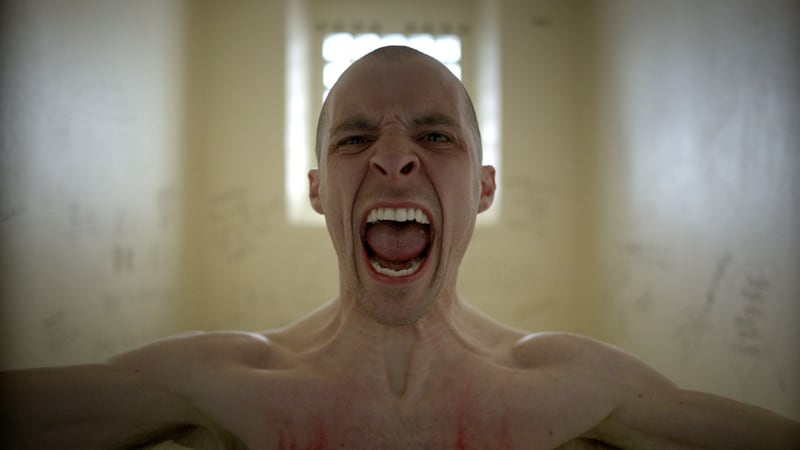 Love/Hate: Tom Vaughan-Lawlor as Nigel ‘Nidge’ Delaney
Ireland had become Nidge Country by the time Tom Vaughan-Lawlor’s charismatic gangster was bumped off in the final season of Stuart Carolan’s slick gangland thriller. Stylish, glossy and with the best ever cast for an RTÉ drama – Vaughan-Lawlor was joined by Barry Keoghan, Charlie Murphy, Ruth Negga, Aidan Gillen and Caoilfhionn Dunne, among others – Love/Hate brought Hollywood dazzle to Sunday nights on RTÉ.
Carolan would go on to become showrunner of The Alienist: Angel of Darkness, Netflix’s Gilded Age murder mystery, where he worked with Daniel Brühl, Luke Evans and Dakota Fanning. Keoghan would quickly graduate to Oscar-nominated stardom. But still the question has lingered: might Love/Hate return?
The degree to which the series continues to overshadow Irish drama was confirmed when Vaughan-Lawlor was promoting RTÉ’s recent social satire These Sacred Vows and found himself batting again and again the question of whether Love/Hate and the gunned-down Nidge might rise from the grave. His tantalising answer was that you can never say never.
The five worst Irish TV shows of all time5. Rebellion (2016)
The anniversary of the Easter Rising was the perfect opportunity for RTÉ to show it could do serious historical drama with all the trimmings. Instead it botched the assignment with this confused take on the struggle for Irish independence, which managed to turn the fight against Britain into a feature-length snooze and then went and spoiled it all over again by reducing Éamon de Valera to a cartoon villain, simplifying a complex and contradictory politician to a mere punching bag.
4. The Big Bow Wow (2004)
Irish people are great at comedy – until RTÉ becomes involved, at which point all trace of wit or creativity is drained. For proof see … any Montrose sitcom ever made, but especially this disastrous attempt at drawing a yoof audience from the darkest days of the pre-crash, late-period Celtic Tiger.
3. Fade Street (2010-11)
You could write an entire article about Irish television’s plunge into an abyss of terrible reality TV in the 2000s – other examples include Fáilte Towers (appalling), Celebrity Farm (atrocious) and Tallafornia (there is no life in the void). But the broadcasting biscuit is snatched by this sorry RTÉ stab at capturing the lives of fashion-obsessed millennials (including a young Vogue Williams).
2. The 2 Johnnies Late Night Lock In (2023-)
Do you enjoy “the craic”? Might you describe a talented GAA athlete as “playing county” rather than simply saying they line out for Cork or Kerry or whoever? Will you be the first to join in whenever two or more strangers launch into a chorus of “Olé, olé, olé” at a public gathering? Then you are the target audience for this sanity-scalding bungee jump into performative “boggerdom”.
1. Mrs Brown’s Boys (2011-)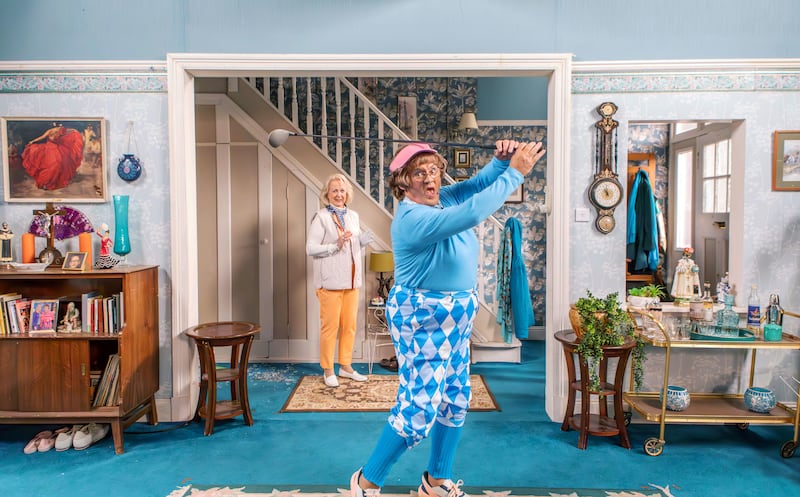 Mrs Brown’s Boys: Susie Blake as Hilary Nicholson and Brendan O’Carroll as Agnes Brown. Photograph: BBC
It isn’t that Brendan O’Carroll’s knockabout Irish-mammy routine is inherently awful, though many would argue that it is. It’s just that the gulf between its lowest-denominator, fnarr-fnarr humour and its blockbuster popularity is hard to come to terms with. This is our great contribution to 21st-century light entertainment? We might as well all throw in the towel and contemplate the futility of existence.