
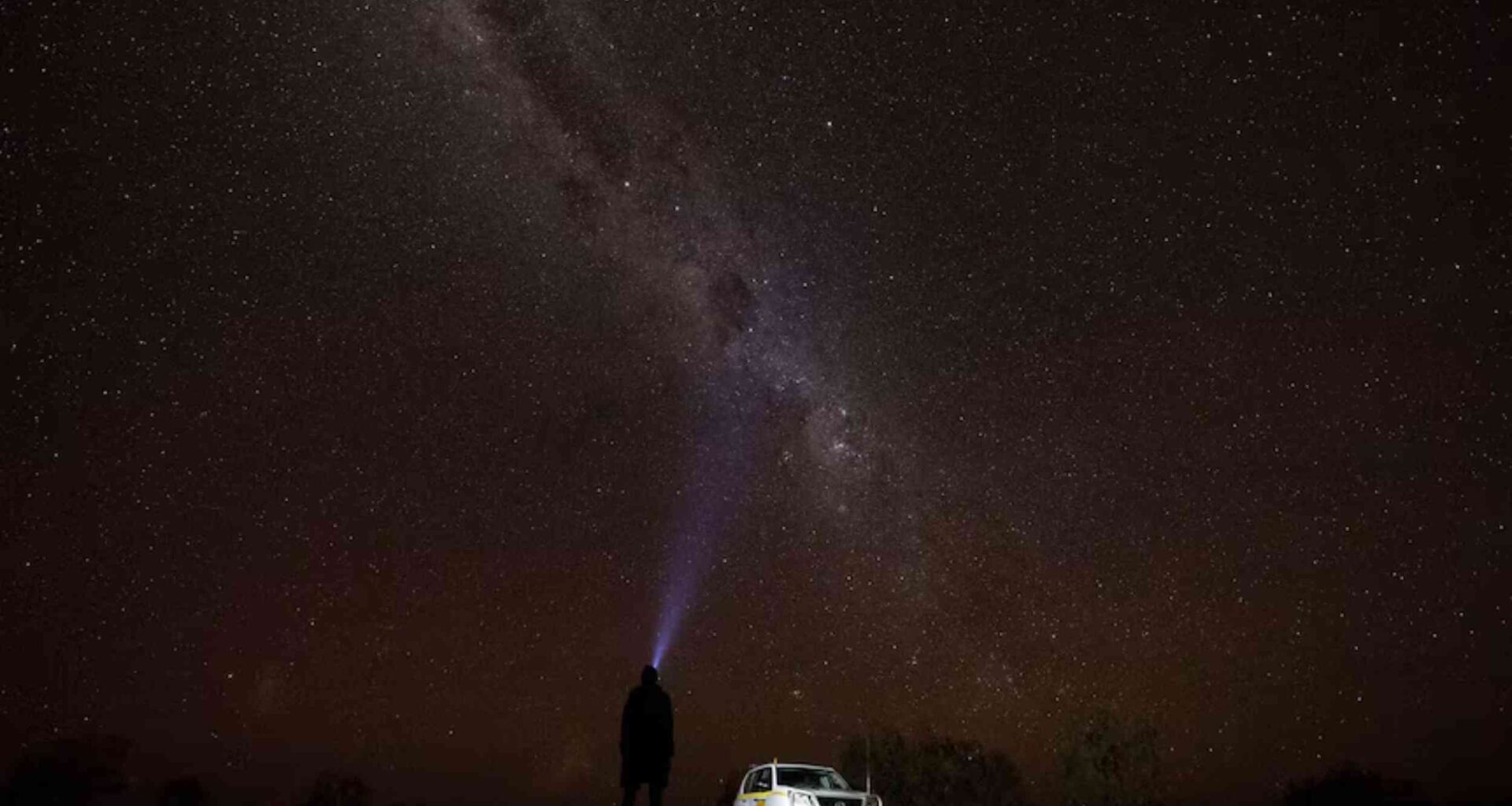
Researchers have now documented that Winton has become Queensland’s first International Dark Sky Community, showing that a working town can still keep a sky where stars remain clearly visible.
That new status turns one remote town into evidence that the stars many places have lost can still be kept in view.
A town as proof
Across far western Queensland, that finding rests on an ordinary town where darkness is now treated as part of the built environment.
Working through Winton Shire Council, local residents, businesses, and public spaces turned lighting changes, outreach, and sky checks into the evidence behind the designation.
Because the status applies to a working community rather than empty desert, every streetlight, shopfront, and porch had to follow the same lighting rules after sunset.
That local success leads to a simple question about what changed in the lights themselves.
How the lights changed
A February 2025 policy pushed warmer bulbs, better shielding, and steady retrofits across public lighting.
Warm-colored lamps help reduce skyglow because bluer light scatters more easily through air, sending a brighter haze upward instead of onto roads.
Shielded fixtures and audit-driven upgrades also cut glare at eye level, which made the change practical for residents.
Change unfolded one light fixture at a time, because preserving star visibility depends on countless everyday decisions rather than a single sweeping fix.
Stars are disappearing
Outside places like Winton, the visible night sky has been fading fast for people living near growing sources of light.
Citizen-science observations showed sky brightness rising by about seven to ten percent a year from 2011 to 2022.
Brighter skies erase the faintest stars first, so people lose depth and detail long before darkness disappears completely.
Against that global trend, Winton’s local rules feel larger, because they push against a problem moving the other way.
The value of dark skies
Here, light pollution – unwanted artificial light that brightens the night – became a policy target rather than a background annoyance.
DarkSky treats darkness as a natural resource, because bad lighting disrupts habitats, wastes energy, and weakens the sky itself.
Certified places must pair better fixtures with public education, so residents understand why one bright sign can affect everyone.
So Winton’s tourism pitch now reads as a small but real act of environmental management.
A tourism test
Visitors already came for fossils and frontier history, but the town now expects the night sky itself to encourage longer stays.
In Winton, astrotourism – travel built around stargazing and night programs – has become a realistic business plan rather than a niche extra.
Tourism operators see the certification as a new draw for travelers already heading west for Winton’s older attractions.
“This is about benchmarking a regional centre and future-proofing our region,” said Mayor Cathy White of Winton Shire Council.
A rare pairing
Nearby, the Jump-Up already held sanctuary status, giving Winton a second dark-sky designation in the same landscape.
Sanctuary status protects remote darkness, while community status asks a working town to manage roads, homes, shops, and signs.
For visitors, the pairing works well because museum days can roll into star-heavy nights without leaving the broader Winton area.
It also raises the bar, since a poorly lit main street would undercut the region’s most fragile selling point.
Rules with teeth
Enthusiasm helped, but Winton’s strongest move came when dark-sky promises stopped sounding voluntary and started sounding permanent.
Council later wrote those standards into the planning scheme, becoming Queensland’s first local government to embed dark-sky rules there.
New external lighting in the township zone now faces a clearer test, because brighter fixtures would no longer slide in quietly.
Legal backing gave the certification weight, since it can outlast one tourism push or one council term.
Residents changed habits
Certification depended on local backing, not just paperwork sent to an outside nonprofit with a respected seal.
Local groups joined lighting audits, residents measured sky quality at events, and businesses accepted limits on bright signs.
Across open, flat terrain, one poorly aimed light can send its glare far beyond its property line and into the surrounding night sky.
Community support is hard to fake, and DarkSky makes that shared discipline part of the certification test.
A longer dark road
Regional advocates now talk about a Dark Sky Highway stretching through outback Australia instead of stopping at Winton.
Any dark-sky route works only when neighboring towns copy the rules, because one bright stretch can punch a hole in darkness.
Winton offers a practical model for places that want tourism growth without surrendering the night to brighter infrastructure.
Success elsewhere would turn one badge into a route people can actually travel beneath protected stars.
Keeping stars visible
Winton did not discover a new sky, but it showed that policy, local buy-in, and better fixtures can keep one.
The harder test comes next, because every new sign, bulb, and building will decide whether that promise lasts.
—–
Like what you read? Subscribe to our newsletter for engaging articles, exclusive content, and the latest updates.
Check us out on EarthSnap, a free app brought to you by Eric Ralls and Earth.com.
—–