
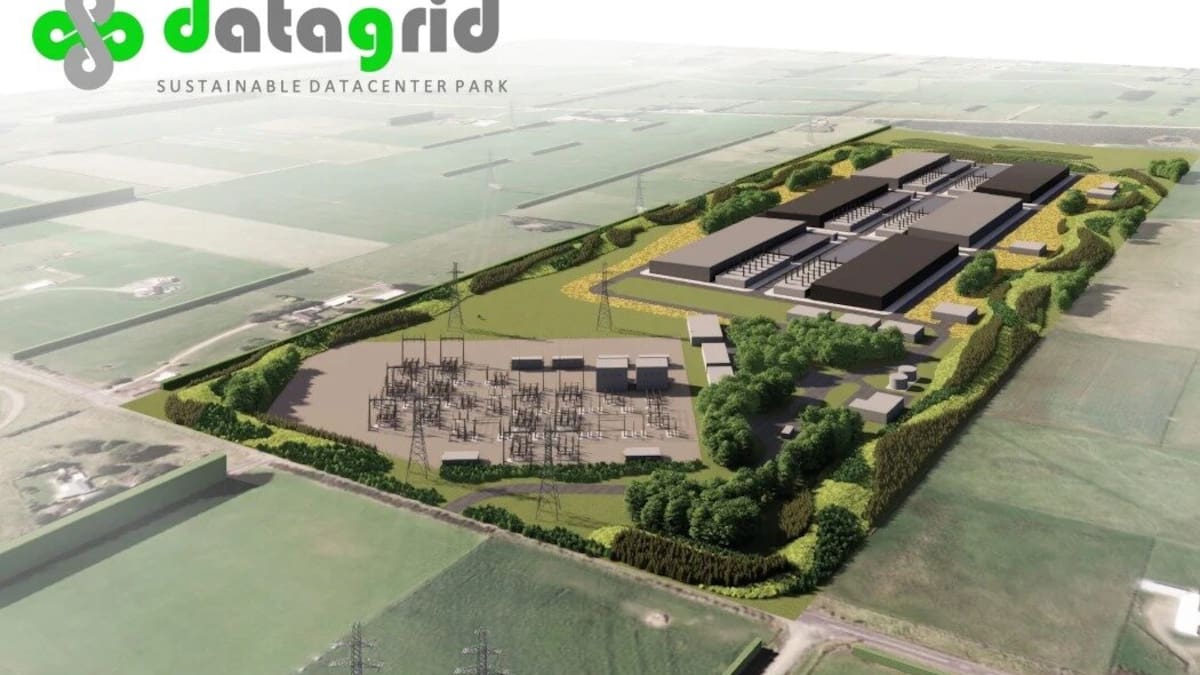
Chorus’ decision to withdraw from its partnership with Datagrid shines a light on the challenges faced by the proposed US$3 billion ($5.1b) project.
Datagrid first hit headlines in 2020 as two of the firm’s key backers, rich-lister Malcolm Dick and French entrepreneur Remi Galasso, proposed a massive data centre for Southland.
They said the facility, which they then pegged at a build cost of $700 million, could pick up the slack from Meridian’s Manapōuri Power Station when Rio Tinto closed its Tiwai Point aluminium smelter – the country’s biggest power hog.
A new submarine fibre cable, connecting the South Island directly to Australia for the first time, was always part of the plan. Datagrid’s founders said it would open up offshore markets for Datagrid.
The cable was dubbed the Tasman Ring Network. It would link Auckland, New Plymouth, Greymouth, Invercargill, Sydney and Melbourne in a 6000km loop.
“The cable is essential for the data centre,” a Ministry of Business, Innovation and Employment (MBIE) briefing published in June 2025, compiled after a meeting with Datagrid representatives, said. It put the price of the cable project at $3.4b.
“The Tasman Ring is expected to be operational in 2027 and have a capacity of 540 terabits per second, allowing for data-intensive operations associated with training [artificial intelligence or AI] large language models.”
Chorus chief operating officer Drew Davies and CEO Mark Aue with Datagrid CEO Perrine Dhalluin and founder Remi Galasso in December 2024 as the two companies signed a memorandum of understanding for the Tasman Ring project.
It would be easily the highest-capacity cable connecting New Zealand to the outside world (the part Spark-owned Southern Cross Cable Next is 72 terabits per second).
Things seemed all go in December 2024, when Datagrid announced it had signed a memorandum of understanding with Chorus to partner on the Tasman Ring.
But by August 2025, it had turned to custard.
At Chorus’ full-year results briefing, the ultra-fast broadband (UFB) operator said it was no longer actively pursuing the Tasman Ring partnership, which was allocated a big red dot in an investor presentation.
Chief executive Mark Aue told the Herald at the time that anticipated demand had not eventuated.
“Pre-sales commitment was not stacking up,” the Chorus boss said.
2030 timeline
Another key factor: the limited number of cable-laying ships in the world were all busy and 2027 seemed too tight.
“The timelines kept moving to the right. Realistically, I’d now say it’s post-2030,” Aue said.
“So you’ve got a lot of upfront capital to build the project and a long-term view before you start to get a view on it. It just wasn’t stacking up.”
READ MORE: Southland data centre to draw 220m litres of water a year, consents show
You can’t count Galasso out.
Last decade, he brought a consortium of investors together to fund the US$300m Hawaiki Cable, which went live in 2018, breaking the Southern Cross Cable’s erstwhile monopoly on New Zealand’s broadband connection to the outside world.
His fundraising was aided by a Crown agency, Reannz, buying $65m capacity as an anchor tenant, before construction began in a move designed to juice competition.
But when Datagrid was back in the news on March 13, after gaining key wastewater, groundwater, wetland removal and data cable landing consents from Environment Southland, there was still no news on a new Tasman Ring partner (Galasso did not return requests for comment).
Landscape shifts for Meridian
Two other big pieces of the puzzle are also missing.
Datagrid’s original 2020 launch announcement said it was partnering with Meridian to build a 70 mega-watt (MW) data centre.
But four years later, Meridian said in its annual results presentation that it was no longer an active partner in the project.
After protracted talks, Rio Tinto announced in May 2024 that it had reached an agreement with Meridian (which would remain its primary provider) plus Contact and Mercury running through until 2044.
An image from Datagrid’s environmental consent application, with a new substation at right (which Transpower says Datagrid would have to fund, if it’s ultimately approved.
The 572MW used by the smelter was no longer going begging as Datagrid lines up what is now a 280MW data centre, which will grow in time to a 1-giga-watt (GW) (1000MW) facility. The size of a data centre is described by its peak power use.
Mercury’s Manapōuri Power Station – built over an eight-year period, especially for the smelter – has 854MW capacity, or 800MW with resource consent limits (13% of New Zealand’s total).
Transpower: Lots of capacity coming online
Earlier this week, Transpower said it was confident the national grid could meet the energy needs of the new data centre.
Executive general manager of grid development Matt Webb said while the centre required a big load, there was a lot of new electricity generation emerging and Transpower was responsible for facilitating a balance between the two.
Webb said there were a number of significant Southland wind projects going through the consenting process, along with solar projects.
Transpower expected 1300MW of new projects (generation and battery storage systems) to be commissioned in 2026, increasing capacity by around 13% nationwide.
Mercury chief executive Stewart Hamilton told the Herald his company’s new wind farm in Southland “will provide some of that power”.
Kaiwera Downs will have around 180MW capacity once its second stage goes live. “But the wind only blows about 40% of the time, which brings that down.”
‘No commercial deal in place’
But while new capacity is coming to Southland, indications are that Datagrid is some distance from securing deals with any of the gentailers – which, beyond the commercial element, could well have a political dimension, given its data centre, if ultimately built, would become the country’s second-largest consumer of electricity in a market where consumers are squealing about rising prices.
In the US, planned new data centres often now face community protests.
Meridian general manager Guy Waipara said: “We’ve had a long-standing relationship with Remi and Datagrid, and we’re pleased to see that they have received consent. We are always open to discussions with potential customers, but we don’t have a commercial agreement in place.”
Contact said it had no deal. Genesis declined to comment.
“There’s definitely a component of chicken-and-the-egg,” Mercury’s Hamilton said.
Two-year process
On top of a deal with a gentailer, it will also be an involved process for a project of Datagrid’s size to plug into the national grid.
Webb said Transpower had been in serious discussions with Datagrid for a year or more and a formal connection application process was now underway.
“This application is currently in the ‘investigation stage’, where we carry out steps such as assessing technical requirements, evaluating network impacts and determining the feasibility and scope of the proposed grid connection,” he said.
“Once these details are agreed upon, and Datagrid commits to a Transpower Works Agreement to design and build the grid connection, the indicative timeline [for the new connection] is two years.”
The grid connection will be a new 220-kilovolt (kV) substation. Webb said Datagrid would have to carry the upfront and ongoing costs, which have yet to be determined at the current investigative stage.
The substation discussions revolve around a 280MW facility, Webb said, rather than Datagrid’s ultimate goal of a 1GW plant.
Funding for the data centre build
Datagrid did not respond to questions about whether it had secured funding for its US$3.5b data centre.
In December 2021, the company secured Overseas Investment Office (OIO) approval to buy 42ha of rural land in Makarewa, about 15 minutes’ drive north of Invercargill, for $1.8m for a “hyperscale data centre” that would most likely cost “more than $1b”.
The proposed facility has now been re-christened an “AI factory” to keep up with the temper of the times, but is still essentially the same thing: a campus of buildings housing tens of thousands of computer servers. The consent documents describe a 78,000sq m facility.
The application said the Galasso Family Trust was the ultimate beneficial owner of 62.5% of applicant Datagrid New Zealand.
BW Digital, an affiliate of BW Group – the Singapore company that bought the Hawaiki Cable for a reported US$350m in July 2021 – owned the other 37.5%.
But a November 2025 OIO update said BW’s stake had been sold to a firm associated with Galasso’s family trust.
Defied the odds before
Raising $5.1b for the project is a tall order, especially given that major AI players have already set up shop in northwest Auckland, where Microsoft has spent around $1b on its first hyperscale data centre, with a second in the works, and Amazon and Google have entered major co-location deals with unnamed parties – widely assumed to be DCI and the part Infratil-owned CDC (which now boasts close to 220MW capacity over three Auckland sites).
But Galasso has done it before, if not on this scale. The former telco executive raised hundreds of millions for the Hawaiki Cable (a project that Dick and 2degrees founder Tex Edwards joined as directors during the final push).
And there are now new avenues since the Hawaiki days. Chip-maker Nvidia – whose GPUs (graphics processing units) now form easily the most expensive component of the computer servers that run “AI factories” – has extended around US$125b in vendor financing to various data-makers since 2024, albeit largely to established players.
In terms of more traditional lending, the Financial Times reports that lenders looking to fund the build-out of data centres are being put off by a lack of sufficient insurance cover.
Large investors including KKR and Blackstone are among lenders to have turned down data centre debt because of insufficient insurance, the FT says. The key reason is the rapid escalation in the size and cost of mega-scale data centres, plus the rising costs of covering power or water disruptions.
It says one of the one of the largest data centre projects to date, Meta’s US$30b Hyperion campus in rural Louisiana, secured about US$4b of coverage.
A factory without many jobs
In its environmental concent application, Datagrid said is “AI factory” would support 72 full-time jobs once operational (and close to 5400 during its construction phase).
It estimated the broader economic benefits would add $36m to New Zealand’s GDP per year.
Chris Keall is an Auckland-based member of the Herald’s business team. He joined the Herald in 2018 and is the technology editor and a senior business writer.