
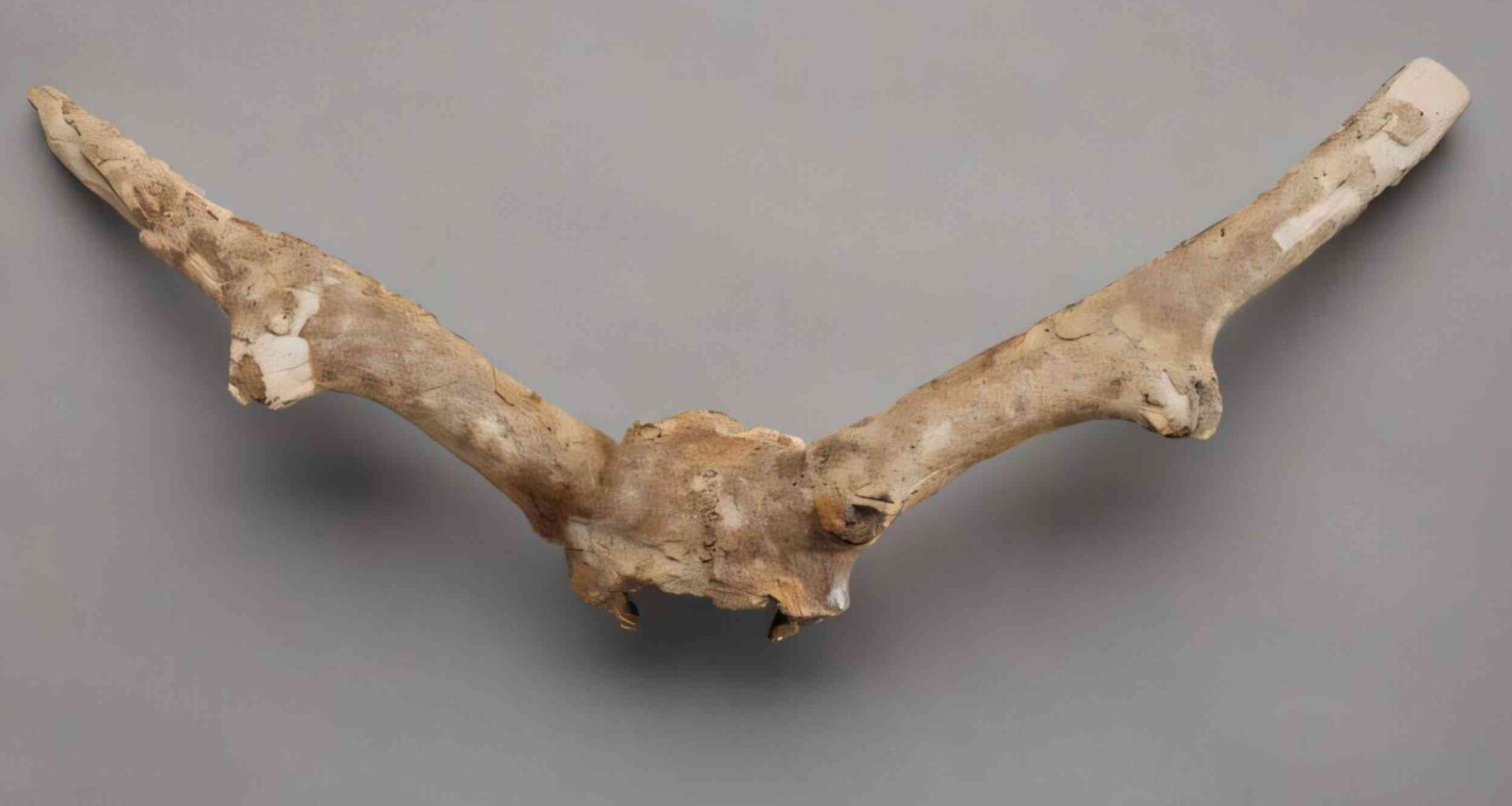
Researchers have identified the long-mysterious Toronto “subway deer” as a previously unknown extinct deer related to the ancestors of modern mule deer and white-tailed deer.
The finding transforms a decades-old fossil puzzle into new evidence of how Ice Age mammals disappeared as North American environments rapidly changed.
Deer fossil found below

The mystery sat inside one battered skull and antlers lifted from a west-end subway dig in 1976.
Working from that fossil, Aaron Shafer at Trent University recovered genetic fragments that placed the animal near white-tailed and mule deer.
Because no known species matched the antlers’ thick, nearly horizontal beams, the DNA finally settled an argument that had lasted 50 years.
The genetic answer solved the name, but it left the riddle of why this deer vanished while close relatives endured.
Early studies of the fossil
In 1982, paleontologists described the fossil as caribou-sized and unlike known deer from North America or Eurasia.
Their radiocarbon date, an age estimate from decaying carbon, put the antler at about 11,315 years old.
Sediments and pollen suggested milder conditions around ancient Toronto, with mixed forests rather than the dense city blocks above it now.
The odd antlers and age clues led paleontologists to name it Torontoceros hypogaeus, yet no second specimen ever appeared to confirm its place.
DNA from fragments
Better recovery tools reopened the case, because the antler held tiny scraps of code that earlier labs could not read.
That effort depended on ancient DNA, genetic material preserved in long-dead remains, recovered from fragments older methods would have missed.
Shafer and colleagues screened about 50 deer-family samples and extracted usable DNA from roughly one quarter.
Even that small DNA yield mattered, because one subway sequence could finally be compared with the Royal Ontario Museum (ROM) collections.
A new deer branch
Comparisons with ROM samples did not link the fossil to caribou, moose, elk, or living deer elsewhere in the collections. Instead, the fossil sat close to the branch that later split into white-tailed deer and mule deer.
“By comparing short strands of the animal’s DNA across species, we could see it diverged before white-tailed deer and mule deer, think of it as their grandparent,” said Shafer.
That shorthand is informal, and the paper still leaves some uncertainty over whether the animal was a separate species or population.
Why the deer vanished
Partly because it added another animal to North America’s Ice Age losses, the finding adds important context.
Paleontologists call such Ice Age mammals megafauna, animals big enough to reshape vegetation, nutrient flow, and predator-prey pressure.
The new paper argues that this deer likely favored open ground, then lost that setting when dense woodland spread across the region.
A species tied to that disappearing habitat could have been trapped by environmental change long before anyone saw humans in Toronto.
An old debate
Across North America, the closing stretch of the last ice age erased at least 37 mammal groups larger than about 100 pounds (45.4 kilograms).
Scientists still argue about climate stress and human pressure behind that die-off, and the answer likely varies by species.
Recent work links many declines more strongly to climate swings than to growing human populations, though the broader argument remains unsettled.
The subway deer’s story fits that pattern neatly, because its habitat appears to have changed faster than its lineage could adjust.
Limits of single fossil
Everything rests on one specimen, which is both the finding’s power and its biggest weakness.
With no second skull or antler, unusual shape alone could always be dismissed as odd growth or damage.
“It’s an exciting finding but you’re always tempering your excitement until you’re confident in your screening for contamination and degradation in ancient DNA samples,” said Shafer.
Even so, the animal’s exact rank on the deer family tree may stay blurry until more remains surface.
Lessons for modern deer
Modern deer are not responding to environmental pressure in the same way, and Trent’s team started from that mismatch.
Current populations already show diverging fortunes: caribou and moose are declining, while mule deer and white-tailed deer are doing better.
Shafer said the team wants the older genetic record to help judge resilience and risk in living deer.
Linking ancient losses to living lineages gives conservation scientists one more way to spot vulnerability before a familiar species starts slipping.
From lore to lineage
For decades, the subway deer lived as Toronto folklore, a strange antler in a drawer and a story without closure.
The ROM still records the case as one fossil, one discovery date, and one object number. A Toronto Transit Commission employee named Horst Templin spotted it during excavation, and that chance find outlived the subway project itself.
Now the fossil does more than decorate local history – it anchors a missing branch in North American wildlife.
What the deer changed
A fossil once famous for being odd now reads as evidence that extinction can hide in plain sight until methods catch up.
That makes the Toronto specimen useful beyond one subway dig, because it links a local mystery to the pressures shaping deer today.
The study is published in Biology Letters.
Credit image: Paul Eekhoff
—–
Like what you read? Subscribe to our newsletter for engaging articles, exclusive content, and the latest updates.
Check us out on EarthSnap, a free app brought to you by Eric Ralls and Earth.com.
—–