
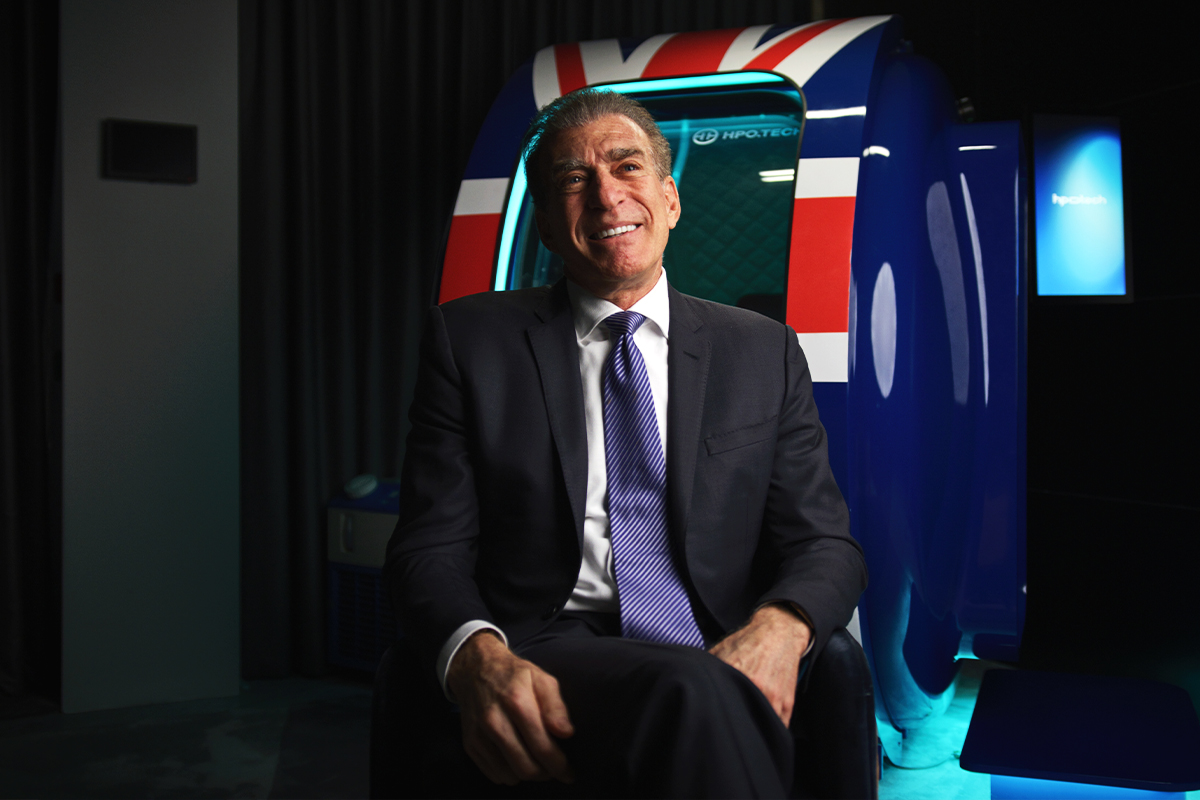
As hyperbaric oxygen therapy moves beyond clinical medicine, HPO.TECH’s ZEUGMA hyperbaric chamber reflects growing interest in engineered recovery.
Hyperbaric oxygen therapy is finally moving out of the basement of specialist clinical medicine and into the frontline of performance. It is becoming a staple in an expanding toolkit where recovery, resilience and cellular maintenance are no longer just ‘nice-to-haves’ – they are the core metrics of healthspan. What was once a niche hospital treatment is being repurposed to manage systemic inflammation and maintain the kind of biological resilience that keeps high performers operative.
Among the companies helping bring this technology into new settings is HPO.TECH, developer of the ZEUGMA hyperbaric chamber. Designed for use in performance-focused environments as well as clinical contexts, the system operates at pressures of up to 2.4 ATA, enabling oxygen to dissolve into plasma at concentrations far beyond normal atmospheric levels. The goal is straightforward: to create a controlled physiological environment in which oxygen delivery to tissues can be enhanced, supporting processes associated with repair, recovery and cognitive performance.
Longevity.Technology: Hyperbaric oxygen therapy occupies an interesting – and increasingly visible – position in the longevity landscape. Long established in clinical medicine for conditions ranging from wound healing to decompression sickness, it has more recently migrated into the orbit of performance optimization and biohacking; a shift that has brought renewed scientific attention to how oxygen delivery influences cellular repair, inflammation and recovery. The underlying biology is not mysterious: under increased pressure, oxygen dissolves into plasma at far higher concentrations than under normal atmospheric conditions, reaching tissues that may otherwise receive limited supply. What remains under active investigation is not whether the physics works – it does – but how broadly those effects translate into durable benefits for healthy individuals pursuing resilience, recovery and cognitive longevity. That question is increasingly being explored not only in laboratories but in the lives of high-performing individuals who approach their physiology much as they do their businesses – something to be measured, engineered and, occasionally, placed under a little pressure.
Performance and recovery in practice
For Steve Varsano, founder of The Jet Business in London, the relationship between performance and recovery is not theoretical. His working day spans continents; Asia is already active when his morning begins and New York is only warming up as London moves toward evening. Negotiations unfold across time zones, schedules compress and sleep – historically – has been something to fit around the edges.
 The Zeugma hyperbaric chamber boasts full panoramic windows and physiology-tailored comfort
It is precisely this cadence of global business that first drew him toward the emerging field of longevity optimization.
Over the past several years Varsano has adopted a structured approach to health monitoring – regular blood testing, advanced diagnostics and targeted interventions designed to maintain performance as much as prevent decline. Hyperbaric oxygen therapy is now part of that routine.
Installed inside The Jet Business showroom overlooking Hyde Park Corner, the ZEUGMA hyperbaric chamber developed by HPO.TECH – finished in a Union Flag motif that nods to Varsano’s London base – sits not far from the floor-to-ceiling displays of Gulfstreams and Bombardier aircraft that define his professional world.
“The hyperbaric chamber has been life-changing for me,” he says. “My deep and REM sleep increased by 30–40%. I wake up less during the night. I’m sleeping about an hour more. The quality is dramatically better.”
Oxygen under pressure
The biological premise here is less about mystery and more about basic physics. By cranking up the atmospheric pressure inside a sealed chamber while breathing pure oxygen, you’re essentially forcing that oxygen to dissolve directly into the blood plasma. It’s a bypass of the standard respiratory limits, allowing oxygen to diffuse into deeper tissues and ‘cold spots’ where circulation is usually restricted.
Clinically, hyperbaric oxygen is an old hand; it’s been the gold standard for treating everything from decompression sickness to chronic wounds for decades. But the conversation has shifted. Researchers are now looking at whether those same mechanisms can be pointed at the hallmarks of aging – specifically systemic inflammation, vascular decline and failing tissue repair.
The data is starting to back the move. We’re seeing evidence that repeated hyperbaric exposure can trigger angiogenesis – the literal construction of new blood vessels – while simultaneously recalibrating inflammatory signaling and cellular stress. There is even a growing case for cognitive gains, likely driven by the sudden, massive influx of oxygen to neural tissues that are usually running on a much tighter budget.
 Steve Varsano has a ZEUGMA hyperbaric chamber in his offices at The Jet Business meaning he can access it regularly throughout his working week
The field remains active and evolving; protocols vary, and the magnitude of long-term benefits continues to be studied. Yet the physiological logic – increasing oxygen availability to support cellular metabolism and repair – has made hyperbaric therapy a topic of growing interest within longevity research.
Engineering recovery
For Varsano, the ‘why’ is less about theoretical debate and more about the immediate ROI. He’s putting in ninety-minute sessions several times a week – often using the downtime to stay current on the very biotech that’s keeping him in the game. It’s the ultimate feedback loop: investing in his health while learning about the future of it.
Varsano’s HBOT protocol is part of a broader shift toward treating health as a system to be actively engineered rather than a decline to be passively managed. We’re seeing this mindset take over everywhere from elite sports to the C-suite. High performers have stopped waiting for permission and started adopting technologies that can stabilize their physiology, accelerate recovery and – most importantly – extend the runway for peak cognitive output.
In that context, hyperbaric oxygen therapy sits alongside other emerging interventions – from advanced diagnostics to metabolic monitoring – that aim to shift healthcare away from reactive treatment toward proactive maintenance; diagnostics, recovery platforms and controlled physiological environments among them.
 Steve Varsano says he takes advantage of anything he can do to extend his life and be healthy – and that’s why he uses the ZEUGMA hyperbaric chamber regularly Staying sharp
Steve Varsano, now well past the stage when many business leaders contemplate retirement, sees longevity not as an abstract concept but as a strategic advantage.
“Most people my age think about retirement,” he says. “I’m thinking about expansion.”
The philosophy is simple. Sustained ambition requires sustained health – and sustaining health increasingly involves a willingness to explore technologies once reserved for specialist medicine.
In aviation, pressure differentials allow aircraft to travel comfortably at 40,000 feet. Inside a hyperbaric chamber, pressure performs a different task; it enables oxygen to reach further, diffuse deeper and potentially support the cellular systems that underpin resilience.
Two very different machines. One shared idea.
Performance, after all, is rarely just about altitude. Sometimes it is also about depth.
Photographs courtesy of HBO.TECH