
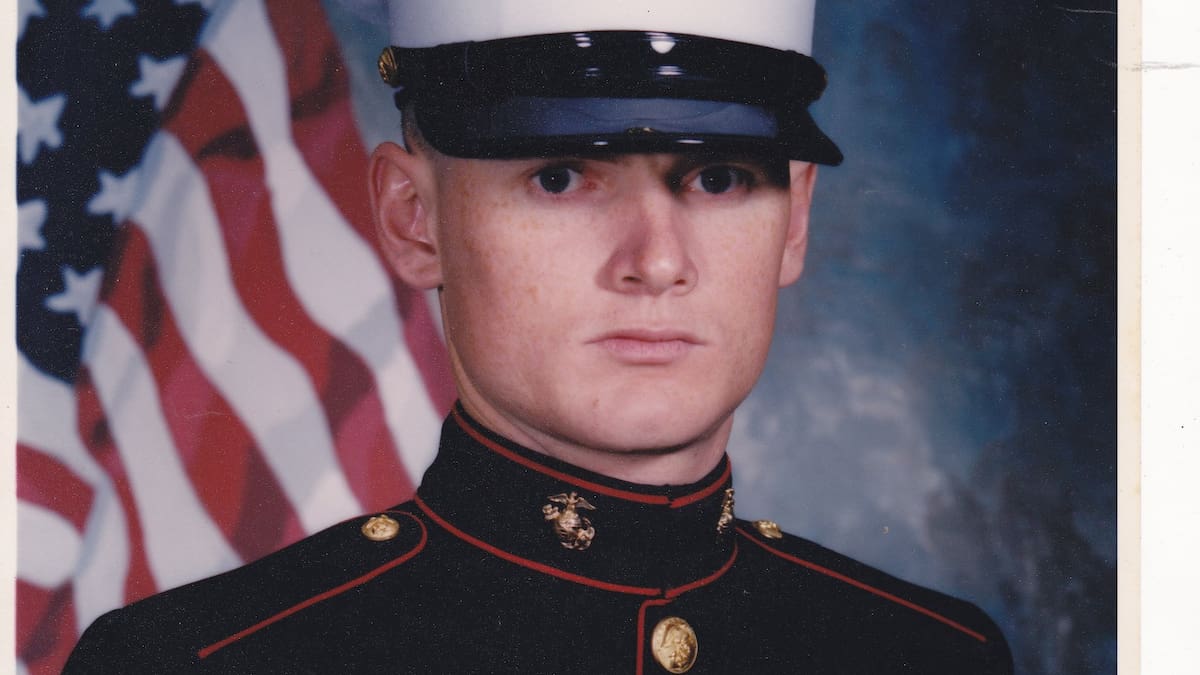
“I feel like I’m fully bonded to it, I mean, I love this country. It’s a way of life that is so unique and so beautiful,” he said.
“When I joined the military, to me, that was one of the best times. Everyone who was serving with us, we all loved the country.”
Canton was born in a decade that automatically means he has birthright citizenship in New Zealand. He is in his 50s, and the birthright citizenship applies to anyone born in Aotearoa before 2006.
His Australian citizenship was revoked when he joined the US Marines. At the time, military service did not require recruits to be permanent residents.
Canton said he was promised US citizenship if he served and was discharged honourably, which he was in 1998.
It was only when renewing his driver’s licence years later that he discovered that had not happened.
“The first time I found out, I figured somebody failed to do the paperwork, so I just [thought] okay, I’ll just go down and fill out a few forms, and we’ll be done.”
That was about a decade ago, and Canton soon found out it was not that straightforward to fix, despite being married to an American citizen – his wife died three years ago.
He then hired a lawyer and spent years trying to navigate the immigration system. In February, after many lost appeals, a judge denied citizenship.
Canton said he has no links to New Zealand – his family moved to Australia about 50 years ago, when he was 5 years old.
“I have no connection to that way of life, I wouldn’t even know where to go or what to do, and it’s so unique to live here in America. It’s a wonderful place to raise your kids.”
Attorney Elizabeth Ricci has represented him pro bono for six years and said it was a complicated case.
Canton had voted, believing he was a US citizen, and that was now a barrier to citizenship.
“He was honourably discharged, he did four years active, four years reserve, believed himself to be a US citizen, so he registered to vote and voted,” Ricci said.
“The rule about voting [and citizenship] changed in 1996, and if you voted or registered to vote after that rule changed, there’s now no waiver available for you to be eligible for you to naturalise, ever.”
Canton’s eligibility to gain US citizenship through the Marines was linked to when he served. He had enlisted in 1991, just weeks before the Persian Gulf conflict ended.
Paul Canton said he has no links to New Zealand.
Ricci said that because his active service began after the conflict had ended, he was denied citizenship based on his military experience.
“The rule is that if you served during that period you could go from undocumented to citizen, so clearly enough people were serving in our military undocumented that they had to even make that rule. But the rule only applied for active duty.”
Ricci said they were now hoping for political intervention.
“We now need a special Bill through Congress or for the President to do something. He [Canton] has written several letters to both [then President Joe] Biden and [President Donald] Trump asking for intervention and has gotten no response.”
Ricci said he could be served with a notice to appear at Immigration Court in Orlando with a hearing weeks, months or years away, because of millions of backlogged cases.
The Department of Internal Affairs confirmed that anyone born in New Zealand before the start of 2006 is automatically a New Zealand citizen.
– RNZ