
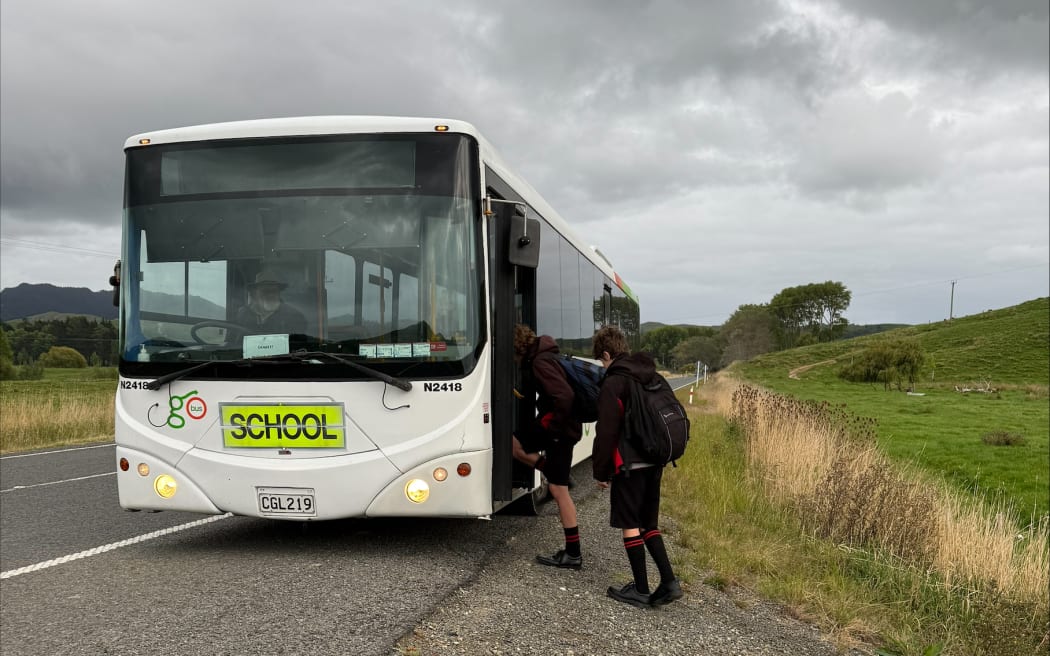
Photo: Toby Williams
Ministry of Education pauses reviews and changes to rural school bus routes.
Officials to review policy and consult with schools and communities.
Changes already brought in won’t be reversed.
Rural families worried about whether their children are still eligible for government-funded buses to school can for now breathe a sigh of relief.
The Ministry of Education confirmed it’s pushed pause on reviews into compliance with rules such as attending the closest high school while it reviews its transport assistance policy.
It’s a welcome decision for regions where changes were due to soon take hold, but has left those already affected feeling frustrated.
Grateful for pause
Tairāwhiti farmer Toby Williams’ two sons attend Gisborne Boys’ High School.
Changes to take effect in the Gisborne region from the second term of the school year are now on hold.
But before the ministry backdown this week, Williams was worried about how his boys and dozens of other teens in the area would get to school from next term. They were ruled ineligible for ministry-funded services to Boys’ High.

Tairāwhiti farmer Toby Williams.
Photo: RNZ / Jimmy Ellingham
“We’re really grateful to the ministry for pausing these changes for us and giving us that bit of extra time to work with them and the schools and the transport providers to be able to provide some routes that work for the community, but also work in terms of being cost efficient and affordable for the government.”
Williams’ 17-year-old son Tristin was stressed about passing his driving test, in case he had to get himself and younger brother Jackson into town, 30 minutes away, each day for class.
Williams wonders why rules most people didn’t know about were suddenly being enforced after being overlooked for so long.
“This bus has run for 40 years and must have been through multiple iterations of reviews. There were 50 kids on the bus.
“It was funny how the bus suddenly needed such drastic changes in our region. Parents were left a bit dumbfounded by the whole thing.”
Changes won’t be reversed
The ministry reviewed more than 250 routes, out of about 1400, throughout the country.
Although it’s paused making new changes, it won’t undo those it’s already made, it confirmed to RNZ on Wednesday.
In Manawatū, Nikita Walker helped organise a user-pays service for children from the towns of Rongotea and Tangimoana to get to school in Palmerston North.
The ministry said a school in Foxton is closer, so it will only put on buses there despite previously funding students on the Palmerston North service for decades.
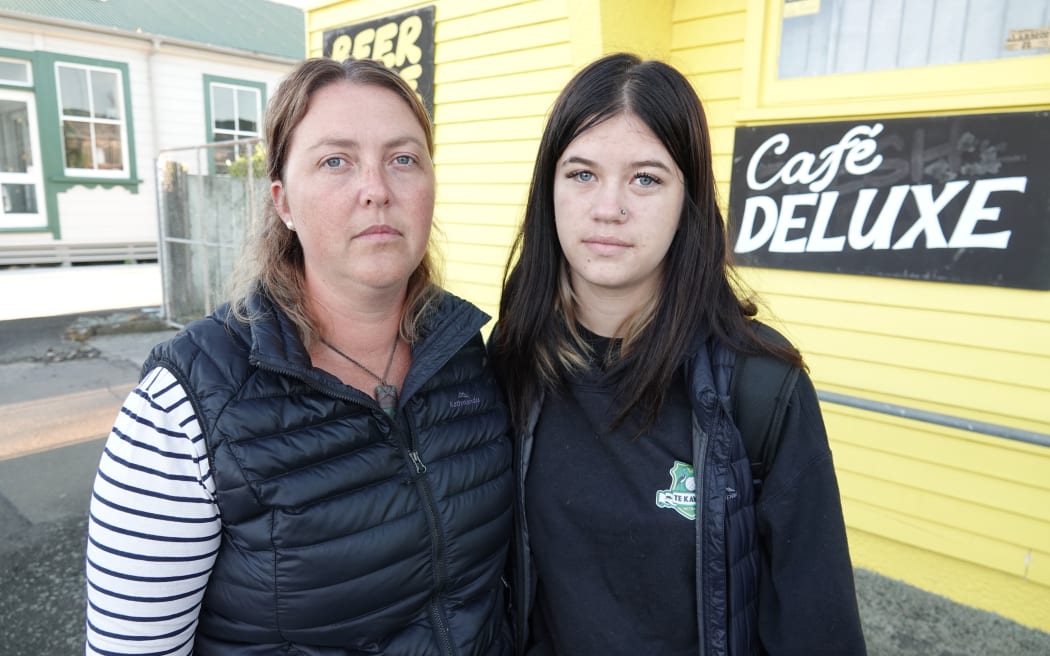
Nikita Walker, pictured with her daughter Jasmine, says parents are finding a user-pays bus service tough to fund.
Photo: RNZ/Jimmy Ellingham
“It’s just hugely disappointing. There are a lot of us who are really in hard times, financially, and we’re all struggling to be able to afford these term passes.”
The user-pays service cost more than $500 a term, she said.
“There has been a drop off in numbers due to the prices. Some people were able to just manage to get by with doing a few concession cards to get on the bus, however, long term it’s just not doable.”
Becs Barr’s petrol bill has tripled to more than $300 a week this year now she has to drive her son Murphy to and from school in Palmerston North from their Horowhenua home.
She’s also unhappy changes already implemented will stay.
“I find that quite bizarre. It should be the same for everybody. All our children should get to school.
“It seems crazy that there are decisions they’ve made for term two that they’re going to put a hold on, but they can’t reverse decisions for term one.”

Becs Barr says all children should be treated equally, so changes already made should be reversed.
Photo: Becs Barr
Thorough review needed – principal
The ministry has said reviews were a routine, ongoing part of its work, but now said it was reviewing its transport assistance policy so changes were “lasting and reflect up to date policy settings”.
“Education minister Erica Stanford has been discussing current transport settings with the ministry for some time and, based on our advice, agreed last week to initiate a policy review,” said James Meffan, the ministry’s group manager for school transport.
“We’ll work with schools, communities and transport providers, and we’ll keep people updated on next steps.”
Gisborne Boys’ High School headmaster Tom Cairns said the ministry needed to come up with something that worked in the regions.
“I think the policy certainly needs to be reviewed and I think it needs to be far more comprehensive than the current review, which was, ‘We’ve got a policy from 1908. We have to enact it.’
“There needs to be some community consultation for it to be purposeful and there was none of that.”
He said schools were just told what was happening for the now-paused changes to the Gisborne region, with no chance to have a say.
“I believe there needs to be a thorough look at it. The untidy bits based around arbitrary geographic locations of schools need to be done away with.”
About 300 students at Palmerston North Boys’ High School are affected by bus eligibility changes brought in this term.
Rector David Bovey said some were finding it hard to get to school.
“The fact that they’ve stopped to have a look at it now is possible, of course, but I’m hoping that will be expanded to looking at the areas where the changes have already been made.”
Sign up for Ngā Pitopito Kōrero, a daily newsletter curated by our editors and delivered straight to your inbox every weekday.