
We have learned some good lessons though – Auckland fared much better in this summer’s storms than it did two years ago, and the stormwater network in my now home of Tauranga performed reasonably well.
Growing up with my sisters in Louisiana, summers were always at the beach house down in Grande Isle.
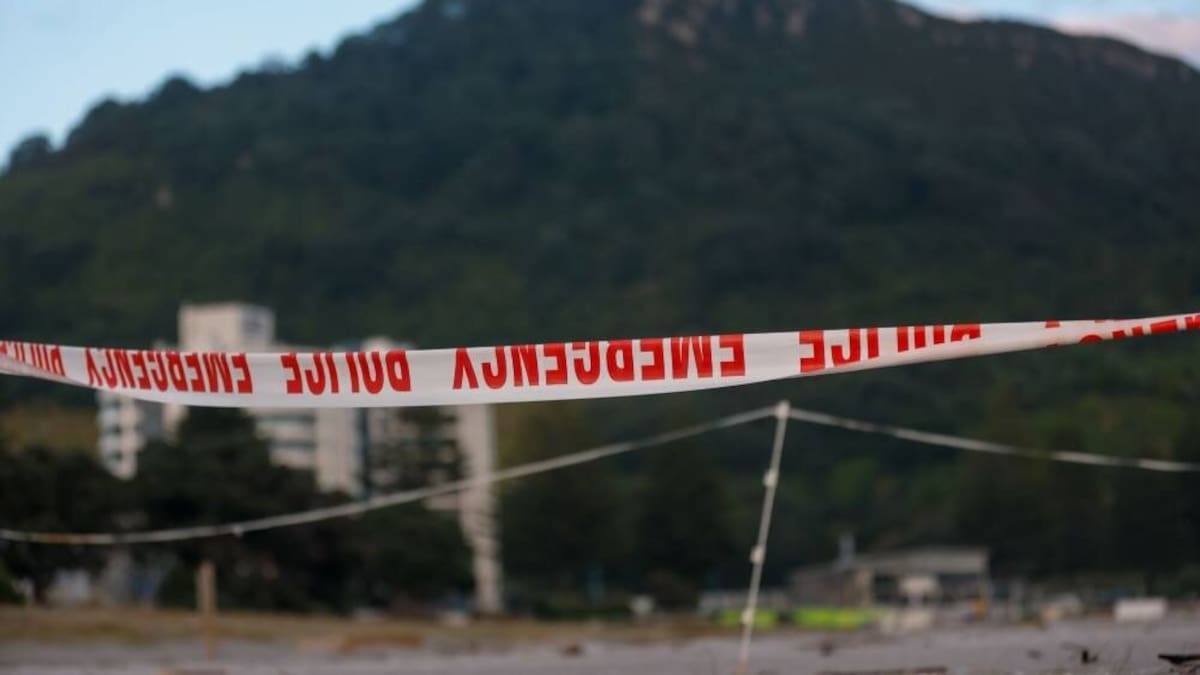
But still, tragedy remains, as we saw with the landslides here in the Bay of Plenty.
Growing up, I was frustrated by all the talk about how to save my community, without any real risk reduction action. So much so that I devoted five years of my life to understanding the implementation gap in climate risk management.
The lack of large-scale risk reduction still frustrates me, but there is hope.
Here in Aotearoa there has been bipartisan action to advance a National Adaptation Framework, which is likely to include legislation to mandate adaptation planning.
While planning phases can be long, having a solid plan is a great place to start.
In the meantime, there are a few thoughts I’d like to share.
The family beach house in Louisiana after Hurricane Katrina.
He waka eke noa – we’re all in the waka together
It’s a well-used whakataukī, and it’s certainly true here. Central and local government, businesses, mana whenua, communities and, yes, homeowners – we’re all going to have an important part to play as we navigate the climate-driven change coming our way.
All the recent legislation and reform announcements show our political leaders are awake to the challenge – we just need to get on with it.
We don’t need all the answers
While predictions can be helpful, the good thing about the future is nothing is pre-determined.
So many variables and factors can and do change all the time. What if sea levels rise a little faster or slower?
What new technology might give us new options? How much will the population grow?
If we waited until we had all the answers, it’d be too late to plan and respond.
Some adaptation planning leans into this uncertainty by creating a series of branching decision points that are always live and fluid, ready to change as the context does.
Boffins like me call this approach Dynamic Adaptive Planning Pathways (DAPP).
In simple terms it gives us a pick-a-path roadmap that helps us plan through uncertainty, respond to signals of change, and make informed decisions at every point.
Done well, it can deliver positive financial, cultural, social and environmental outcomes, for today and the future.
South Dunedin Future programme. Photo / Dunedin City Council
For example, our Beca team has worked on the South Dunedin Future project with partners WSP and Tonkin + Taylor, and alongside Dunedin City Council and Otago Regional Council.
Together, we’ve identified a range of short-term actions that councils can start making progress on now, while we’re delivering the 100-year adaptation plan.
Progress over perfection
One lesson from my PhD was that communities care more about action than scientific certainty. Adaptation pathways approaches can help reduce risk while we’re still figuring things out.
Like all big challenges, climate adaptation can seem a little overwhelming.
Finding a successful path to a resilient future, while also considering things like economic growth, decarbonisation, ageing assets, and social equity, is complex, and the answers are interconnected.
The risk is that we just end up filing it all as “too hard”, or in endless cycles of debate that hold up progress.
If you talk to a stormwater or coastal engineer, they would say they’ve been designing with climate change in mind for over 20 years, so quite a lot of our decisions have already considered some level of climate projections.
The challenge is in areas with older infrastructure or when development and engineering occur in isolation.
We need high-quality risk information to support better decision-making, like in the National Flood Map proposed in the National Adaptation Framework, and updated risk assessment standards.
Then planners need to start using that information quickly, so we encourage the right sort of development in the right places.
Just start
It’s not going to be easy, and there will be bumps and surprises along the way, but we have the tools, the means and the collective brainpower to succeed in creating a sustainable, resilient future for all New Zealanders.
Our communities should start the kōrero, share local knowledge and begin considering the values and vulnerabilities that matter.
Making a plan is about agreeing what’s important to you, as well as identifying the early signals to watch out for as the climate changes.
And most importantly, it’s about finding the low regret, small-win actions to pilot so we can just get moving.
Guest author Dr Laura Robichaux is a Coastal Engineer and Climate Adaptation Specialist at Beca, the NZ founded and headquartered business which is one of the Asia Pacific’s largest independent advisory, design and engineering consultancies. She has over a decade of experience in coastal engineering and adaptation planning, providing guidance to governments, communities and industry in New Zealand, the Pacific, the United States and the Caribbean.