
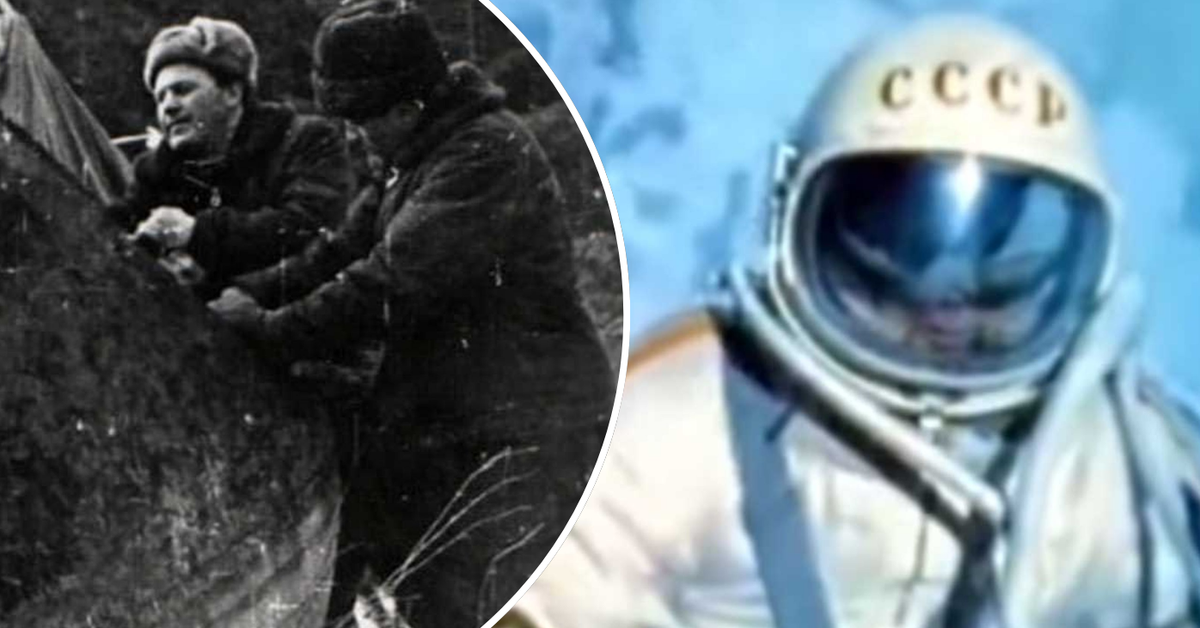
The Voskhod 2 was a massive breakthrough in space exploration, with cosmonaut Alexei Leonov conducting the first ever spacewalk.
The spacewalk was a stunning achievement, albeit one that infuriated Leonov’s own father.
 Alexei Leonov was the first cosmonaut to exit a spacecraft in space itself. (Supplied)
“What is he doing clambering about outside? Somebody must tell him to get back inside immediately. He must be punished for this,” the elder Leonov said.
But when he learnt the spacewalk was a planned event he was delighted.
The spacewalk was a near disaster, with Leonov’s suit inflating so much that he was unable to get back inside the spacecraft.
Sensing something was wrong, Soviet television cut their live broadcast without explanation.
Leonov had to open a hole in his spacesuit to deflate it, putting his life at risk in order to save it.
 Alexei Leonov was almost unable to re-enter the spacecraft. (AAP)Returning to Earth, the cosmonauts realised their automatic guidance system was not working.
Running on manual control, the two landed deep in the forests of Siberia.
The pair were in an uninhabitable cold climate, and once they opened the hatch of the spacecraft with its explosive bolts, they were immediately exposed to the elements.
“We were only too aware that the taiga where we had landed was the habitat of bears and wolves,” Leonov later wrote.
“It was spring, the mating season, when both animals are at their most aggressive.”
 Siberia is one of the most remote places on Earth. (Roscosmos)
The spacecraft was equipped with a bespoke pistol for such a purpose. Fortunately the two did not have to use it.
But they had no idea whether their rescue signal had been received.
They were spotted by a helicopter hours later, but the bulkiness of their spacesuits meant they couldn’t climb the rope ladder dropped down to them.
Eventually a rescue party reached them on foot, and the exhausted cosmonauts had to ski 9km to a clearing where a helicopter could land.
 The pair were not rescued for days. (Roscosmos)