
The New Zealand economy grew in the final quarter of 2025, with the country’s GDP increasing narrowly by 0.2%.
Stats NZ released the data at 10.45am. The overall growth figure, for the three-month period at the end of last year, was lower than what economists were forecasting.
The Government responded to today’s data by pointing to growing disruption from war in the Middle East, with Finance Minister Nicola Willis saying “we’re now in a new world”.
Stats NZ general manager and macroeconomic spokesperson Jason Attewell said: “GDP has now risen in three of the last four quarters.”
The morning’s headlines in 90 seconds, including a massive cyclone bears down on Queensland, and are the Spice Girls making a comeback? (Source: Breakfast)
This is the first time since the year ended September 2024 that the economy has recorded annual growth, according to the statistics agency.
Most industries recorded an increase in economic activity in the December quarter.
“Spending by overseas visitors to New Zealand increased in the December 2025 quarter, contributing to a 7.8% rise in travel services exports,” Attewell said.
“This flowed through to parts of the economy that service tourism, such as rental car hire, retail trade, and accommodation.”
Construction was the largest downward contributor to GDP this quarter, down 1.4%. This followed a 0.8% increase in the September 2025 quarter.
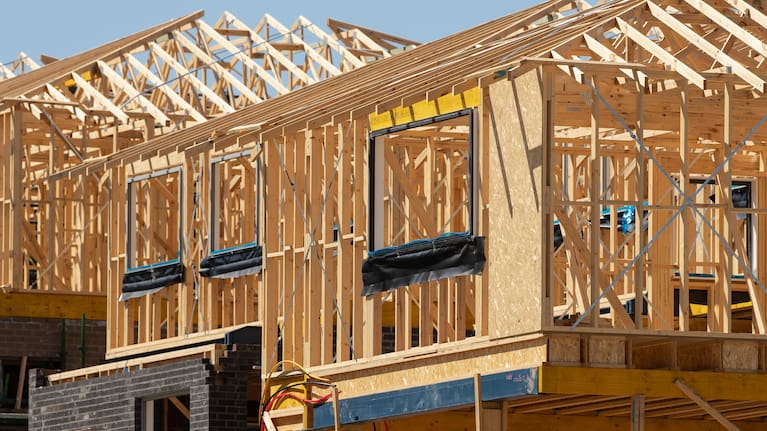
“The volume of building work put in place, a key input into how Stats NZ measures GDP, fell 3.1% in the December 2025 quarter,” Attewell said.
“This was driven by a decrease in non-residential building activity.”
GDP per capita was flat in the December quarter, as the overall increase in GDP was matched by a similar increase in New Zealand’s population, according to Stats NZ.
Today’s figures representing the final quarter of 2025 followed a 0.9% GDP increase measured in the September 2025 quarter
Labour says ‘failure’ exposed, Willis says position strong
Reacting to the announcement, Finance Minister Nicola Willis emphasised the data showed the economy was growing at the end of last year.
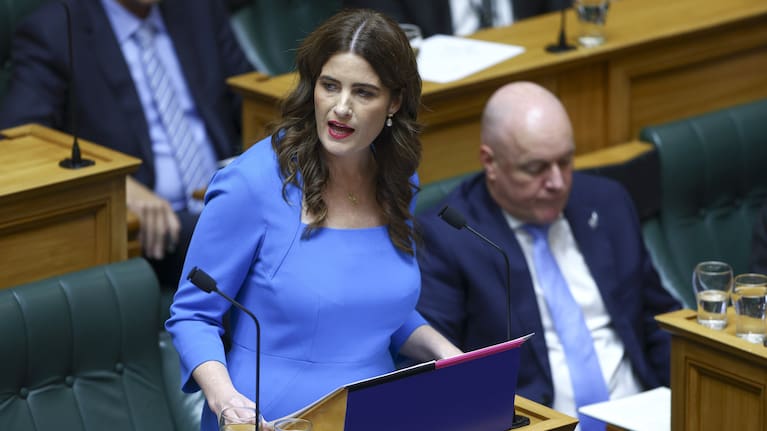
“While GDP data was volatile throughout 2025, the New Zealand economy picked up noticeably in the second half of the year, growing 1.1% over the final six months after being relatively flat over the first half of the year,” she said.
“The conflict [in the Middle East] will have an impact on the economy, but we are starting from a much stronger position now than was the case in the past few years, when high inflation and high interest rates were weighing down on people.
“The full impact of the conflict will depend on the severity of the disruptions and how long they last, but realistic scenarios have so far shown growth continuing in 2026.”
At a media conference later on Wednesday, Willis played down the significance of the GDP figures, saying, “I’ll just be frank, that’s very backward-looking data.
“We’re now in a new world.”
Prime Minister Christopher Luxon, who had returned from a trip to the Pacific, also warned “things could get worse before they actually get better” and said the Government had tasked officials to plan for an eight to 12-week response to the Middle East and fuel crisis.
He said the conflict had not yet had a “material impact on tourism” – a key driver of the December quarter’s growth – but the situation was being closely monitored.

Meanwhile, Labour’s finance and economy spokesperson Barbara Edmonds said the figures laid bare what she described as the Government’s failures.
“Growth of 0.2% is a long way from the ‘recovery’ Christopher Luxon and Nicola Willis keep talking about,” Edmonds said. “For 32,000 people out of work, 2000 leaving every week, and families struggling to get by, those claims ring hollow.”
Edmonds also accused the Government of stalling infrastructure projects — particularly impacting construction.
“They have left New Zealand weaker and more exposed to global shocks. In fact, the economy is smaller than when they took office.
“Let’s be clear, what we’re going through now would be easier to deal with for families if National hadn’t made things much worse.
“Sadly, it’s New Zealand households who are left to fend for themselves as prices continue to rise,” she said.
What did the experts think would happen?
Bank economists forecast a slightly higher rise in GDP in the December quarter when making their predictions ahead of the Stats NZ release this morning.

ANZ economists were the most pessimistic, suggesting the New Zealand economy grew 0.2% in quarter four of 2025. Though all banks forecasted weaker stats than the Reserve Bank’s February monetary policy statement forecast of 0.5% quarter on quarter.
Meanwhile, Kiwibank economists picked 0.3% while ASB and Westpac were optimistic, expecting a 0.4% rise.
Why does today’s release matter less than usual?
Put simply, everything that’s happened in the Middle East. The Q4 quarter data released today covers the state of the New Zealand economy in the last three months of 2025.
Most notably, this excludes the impacts of the most recent conflict in the Middle East.
Oil prices have trebled after major US-Israeli strikes on Iran and subsequent disruption to global shipping through the Strait of Hormuz, alongside international air travel.
The uncertainty created by the conflict has subsequently rocketed through global inflation and economic growth expectations for 2026.
Auckland Transport says 100,000 more people took trips last week compared to this time last year. (Source: 1News)
Kiwibank economist Jarrod Kerr said in an update on Monday: “As good economists we should point out that New Zealand’s December quarter GDP data is out this Thursday.
“But to be honest, we don’t really care. The data is more than three months old, and dated. In light of everything offshore, the outlook is clouded and simply darker.’