
God Knows and MuRli: Ireland’s Hip-Hop Gamechangers
By
·
March 19, 2026
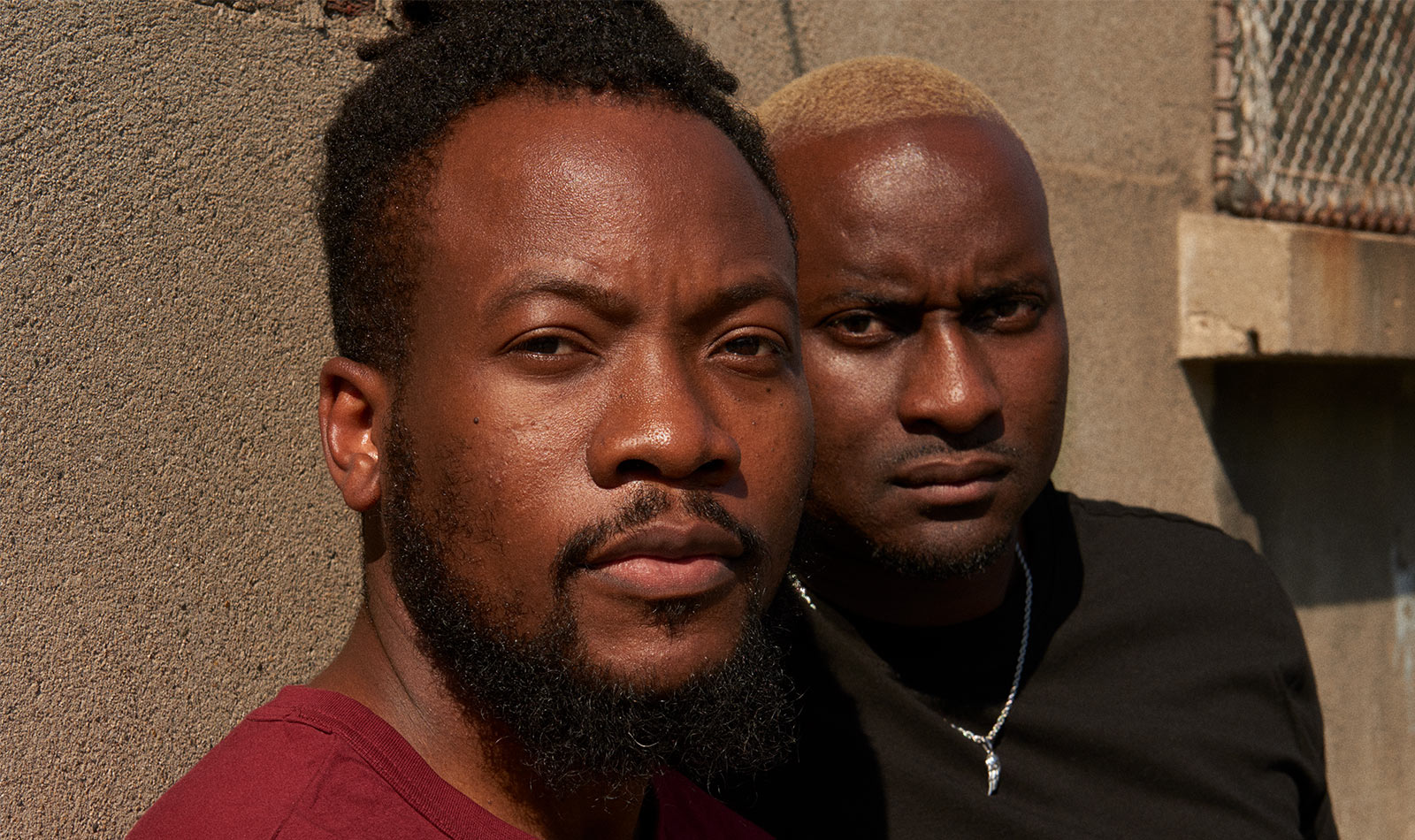
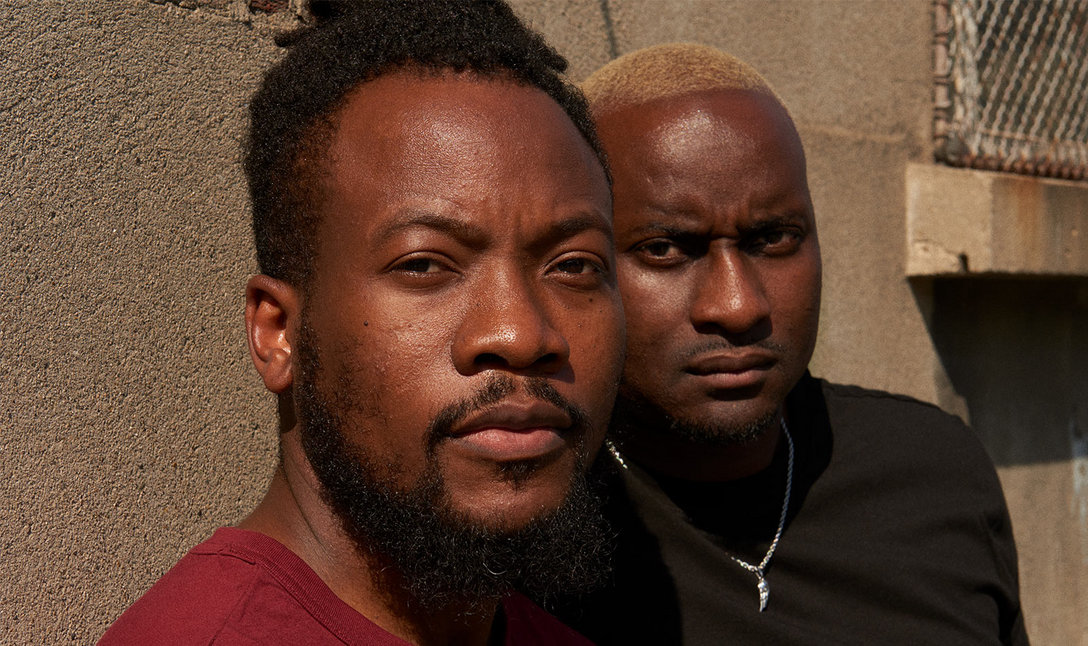
Photo by Daragh Soden
Ten years on from an awards triumph that changed the trajectory of contemporary Irish music, rapper/producers God Knows and MuRli hold court on the former’s debut solo long-player.
“How can I explain it?” muses Zimbabwe-born, Limerick-bred rapper Godknows Munyaradzi Jonas when asked about the response to A Future of the Past, his debut album under his God Knows moniker. “I feel like those who heard it really value it and really appreciate it. To hear my peers, especially when they’ve given it props and given me props for the creation of it and the production, the standard of production…it’s reassuring. It’s reassuring that, y’know, we’re on the right path. I’m still buzzing.”
He speaks with not only the energy that’s marked his solo and collaborative output over a 20-plus-year span, but also the confidence that’s come from those experiences. From burning and selling his own demo CD-Rs in secondary school in the mid-2000s, to winning national accolades and becoming a central part of the development of contemporary Irish hip-hop, God Knows has held things down from his base in the southwestern cities and towns of Ireland, both solo and in a vast body of collaborative efforts.
Joining him on production on A Future of the Past is longtime creative collaborator, Togo native, and fellow Limerick-scene staple Mawuli Boevi, better known as MuRli. The pair share a rich history. Together, they were the emcees that fronted Rusangano Family, a trio that also included Clare scratchologist MynameisjOhn on production and live DJ duties—the first hip-hop act to win the Best Album honors at the RTÉ Choice Music Prize, the Irish equivalent to America’s Grammy Awards or Britain’s Mercury Prize, all the way back in 2016.
“I think for me, it’s more so during the live shows, that’s where I’ve been getting most of the reaction,” MuRli says of the record. “I’m more on the technical side of things. Everything that I put out, I always listen back and go, ‘Okay, for the next one, how would I do it differently?’ Sometimes you can be overly critical of something that is already there, living on its own journey in the world, but I think being at live shows, that’s where I’ve been getting the real reaction, off of the audience, the people, and seeing how the songs connect.”
Released on the duo’s Narolane Record label (co-founded by Limerick wordsmith Denise Chaila, another local peer), A Future of the Past represents a new chapter for God Knows, a maturing of the influence of a multicultural upbringing in Ireland. Of course, the unstoppable force of the young musician must one day at least glance past the immovable object of middle age, a milestone both God Knows and MuRli are only too aware of.
“As I get older, I’m starting to understand why the younger me felt a certain way about some of my favorite artists when it came to a certain point in their career, why they did things that felt like they weren’t trying to impress me, but I get it now,” says MuRli. “I just wasn’t in a place to appreciate it for what it was at the time. Similarly, when it came to working on this thing, the way I’m sort of viewing music or arts now, it’s a bit different from what I would have done maybe ten years ago. I actually see it all as one thing; I think this is just a continuation of what people would have heard in the young me, what people would have heard through my time as part of Rusangano Family, or my production work with different artists. I’m learning all the time.”
For God Knows, while it’s been a matter of slowing down from a once-exponential workload, it’s also been a matter of reframing middle age as the next step in maintaining his own creative process and personal curiosity. “I almost feel like I’m at that same place where a lot of my peers and I were growing up. We grew up in communities of friends who loved music, who also had aspirations of becoming musicians. In a lot of ways, we— I thank God that we still have that same mutual connection, through the love of music, whether it’s sending each other new tracks, or sending each other artists or music that we love, but I also know a lot of my friends went through that crossroads, maintaining the curiosity, because life does happen, and whether it’s taking care of family, or seeing the way forward through an ever-changing landscape.”
“The challenges of being where we are today, at this age, that’s what creates the music that you make,” continues MuRli, touching on the collaborative process in a new phase of life. “There’s some constraints now—you don’t have the time that you had ten years ago, the way you view the world now is different. But also there’s the part where you feel like the world is experiencing the same problems of ten years ago…we tackled these subjects before, but they’re actually just as important now.”
“It is hard to make a living right now, doing anything, but especially as an artist. But you chose this, or it chose you, so you got to embrace it. This [album] is the byproduct of all of those experiences.”
A DIY spirit is not only pervasive across all genres of music in Limerick and its surrounds, but the glue of a community that transcends musical genres and scenes, passing through festivals like the Siege of Limerick metal all-dayer and DIY LK’s annual Féile Na Gréine weekender, and going right into the heart of civic society via the MusicGeneration Limerick City program, where independent musicians provide music education through schools and community outlets, shaping the lives and trajectories of countless young people.
That sense of collaboration forms another essential aspect of A Future of the Past. At the outset of the recording process, MuRli asked, “‘What does a God Knows project look like today,” God Knows remembers. “I said I want to collaborate with my friends…business as usual, I want to collaborate with people that I know and love.” Guests include Libyan-Irish singer-songwriter Farah Elle, Dublin rapper Jafaris, Limerick multi-instrumentalist King Pallas, and Cork-based wordsmith Salamay, while the album is also very much a family affair, with God Knows’s younger brother Dreddy contributing bars to “It’s Been A While,” produced with grime-infused aplomb by their youngest brother Godwin; and sister OMGJOJO bringing vocals to “18-Inch War.”
“I’ve often said that I almost never make music by myself,” opines MuRli. “Collaboration is always in the music that I make, and I think if you leave it up to me, it’ll always be like that. I just like the different colors that everyone brings, and it just helps paint the picture… I’m blessed enough to know really lovely people within our Irish music scene, so whenever I get the opportunity, I call on them and that’s how I do what I do.”
The conversation turns to intentionality and the careful decisions behind big artistic statements, God Knows mulling over the importance of A Future of the Past’s place in his body of work. “For me, I think the last project that had this much intentionality in terms of the poignant things that are being spoken on the record was Let the Dead Bury the Dead,” he says, referencing the award-winning Rusangano album that helped lay the foundations for hip-hop and adjacent sounds becoming part of the mainstream picture in Irish music.
The tenth anniversary of Let the Dead… looms in April, and as it remains a milestone in modern Irish music, and is becoming one of the formative experiences of a generation of young musicians here, the question must be asked: is it a long shadow to get out from underneath? “You don’t want to escape greatness, y’know what I mean,” laughs God Knows. “When you make a body of work that good, not necessarily that you seek to compete with it, but you appreciate that you have that higher gear in you. For me, it’s a privilege, it was always a privilege, when people come back and they quote lyrics, or quote where they were and how the album impacted them and made them feel.”
“We actually took it serious enough to be like, ‘This stuff we’re touching on is important’,” continues MuRli on the record’s legacy, “and I’m just delighted that, you know, we’re ten years in now, maybe a hundred years from now, somebody who can trace their ancestry to Togo or Zimbabwe, being from Ireland, hopefully that will be something that probably even wouldn’t be worth noticing. It would just be like, ‘Okay, this is just another person.’ For many of the stories told on it, and for those reasons alone, I’m actually delighted that Let the Dead Bury the Dead was able to accomplish some of that stuff…they’re not the reason you do them, but just by ticking those boxes, it means that that album lives on.”