
Engineers are working to build batteries that can operate for months or even years without maintenance in extreme environments such as deep oceans and outer space.
A new effort backed by the Defense Advanced Research Projects Agency is now pushing forward a technology that could make that possible.
The project focuses on radiovoltaics, a type of battery that converts nuclear radiation directly into electricity.
Unlike conventional batteries, these systems do not require recharging and can deliver long-term, steady power for remote applications.
Researchers from the University of Toledo are part of a $2.8 million collaboration led by the University of Missouri to develop micro-scale radiovoltaic devices.
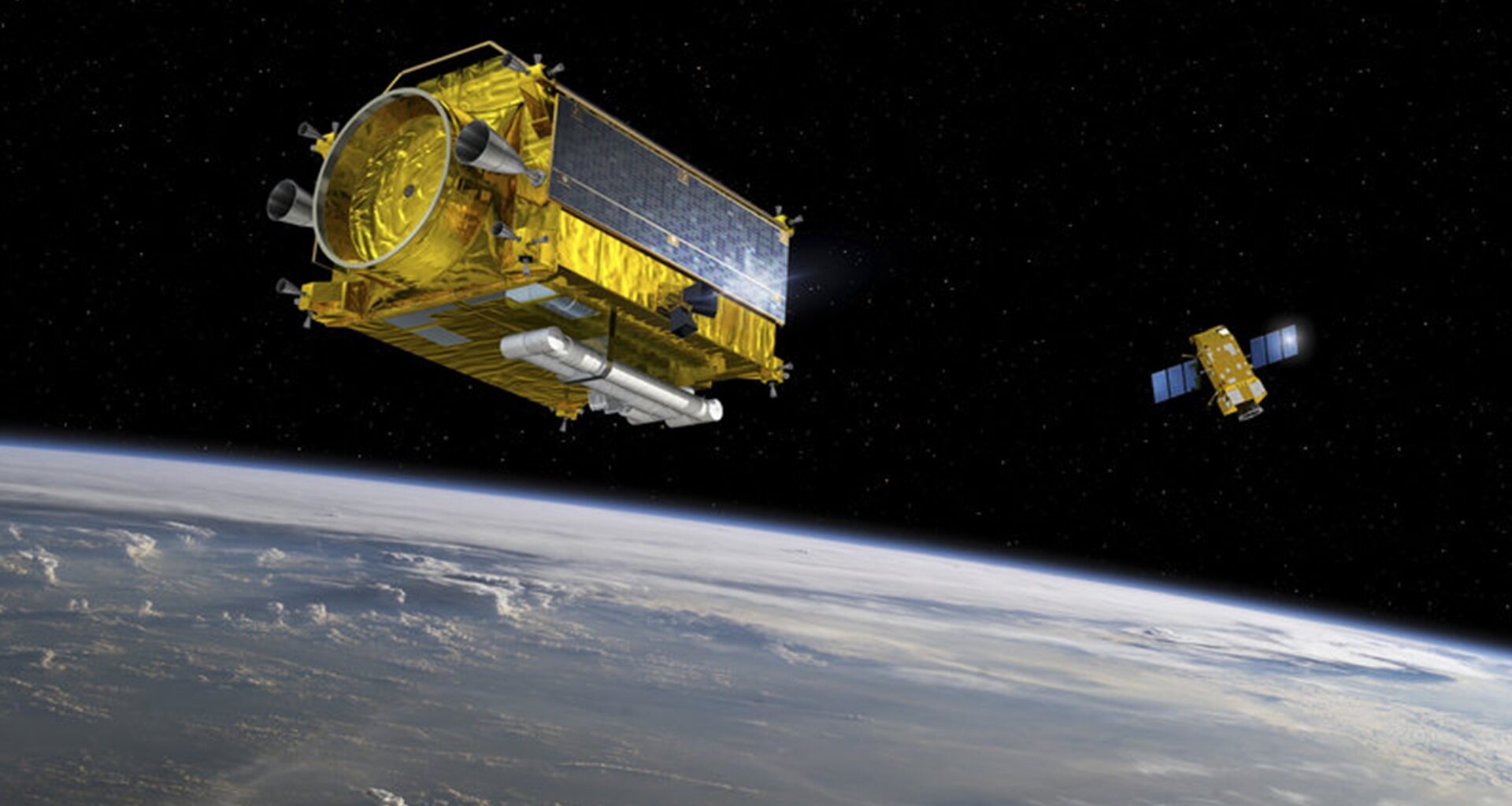
These compact systems are being designed for use in buoys, spacecraft, and remote sensors where replacing or recharging batteries is difficult.
“We’re working under DARPA’s Rads to Watts program, which explores new approaches for directly converting nuclear radiation energy into electricity,” said Dr. Raghav Khanna.
“Our goal is to produce 10 watts of electricity per kilogram of mass,” he added, pointing to a significantly higher power density than current radiovoltaic systems.
Power from radiation
Radiovoltaics work in a way similar to solar cells but rely on radioactive decay instead of sunlight. While solar panels convert photons into electricity, radiovoltaic devices use charged particles emitted from radioactive materials.
This approach allows the batteries to function in environments where sunlight is unavailable or unreliable. It also opens the door for long-duration missions that require uninterrupted power.
The team is focusing on building devices using gallium oxide, a semiconductor material that can better withstand radiation compared to conventional alternatives. This property could improve both efficiency and lifespan.
“Gallium oxide is more radiation tolerant than some alternatives being used in radiovoltaic devices,” Khanna said. “That means they have the potential to work more efficiently and more effectively, which in turn allows for a longer operating life.”
From models to devices
At the University of Toledo, researchers are leading the simulation work that will guide how these devices are built. Using finite element modeling, the team is testing different designs virtually before moving to fabrication.
These simulations are expected to play a critical role in identifying which device structures can deliver the desired performance. Once validated, the designs will be shared with collaborators for physical development.
“When a simulation works, we’ll hand that recipe off to our collaborators,” Khanna said. “We’re anticipating a lot of iteration between the teams in order to optimize the performance of the device.”
The broader collaboration includes partners such as Pennsylvania State University, University of Houston, and the Naval Research Laboratory, combining expertise in materials, modeling, and device engineering.
By targeting higher power density and improved durability, the project aims to move radiovoltaic technology closer to real-world deployment, particularly in scenarios where traditional batteries fall short.