
Your support helps us to tell the story
From reproductive rights to climate change to Big Tech, The Independent is on the ground when the story is developing. Whether it’s investigating the financials of Elon Musk’s pro-Trump PAC or producing our latest documentary, ‘The A Word’, which shines a light on the American women fighting for reproductive rights, we know how important it is to parse out the facts from the messaging.
At such a critical moment in US history, we need reporters on the ground. Your donation allows us to keep sending journalists to speak to both sides of the story.
The Independent is trusted by Americans across the entire political spectrum. And unlike many other quality news outlets, we choose not to lock Americans out of our reporting and analysis with paywalls. We believe quality journalism should be available to everyone, paid for by those who can afford it.
Your support makes all the difference.Read more
Scientists have created the first ever lab-grown oesophagus giving hope to children like two-year-old Casey Mcintyre, who was born with 11cm of his food pipe missing.
Scientists from Great Ormond Street Hospital (GOSH) and University College London (UCL) developed the oesophagus using a donor pig,. If this is developed in humans, it could allow people to swallow again.
This is a major leap towards regenerative treatments for children born with life threatening oesophageal conditions.
“The idea that there could be one operation early in your child’s life, that could transplant a working piece of oesophagus, and then we could move on would be life changing,” Casey’s father, Sean Macintyre, said.
His mother, Silviya Mcintyre, explained Casey has several major operations to close the gap in his food pipe, but it has left him with difficulties speaking.
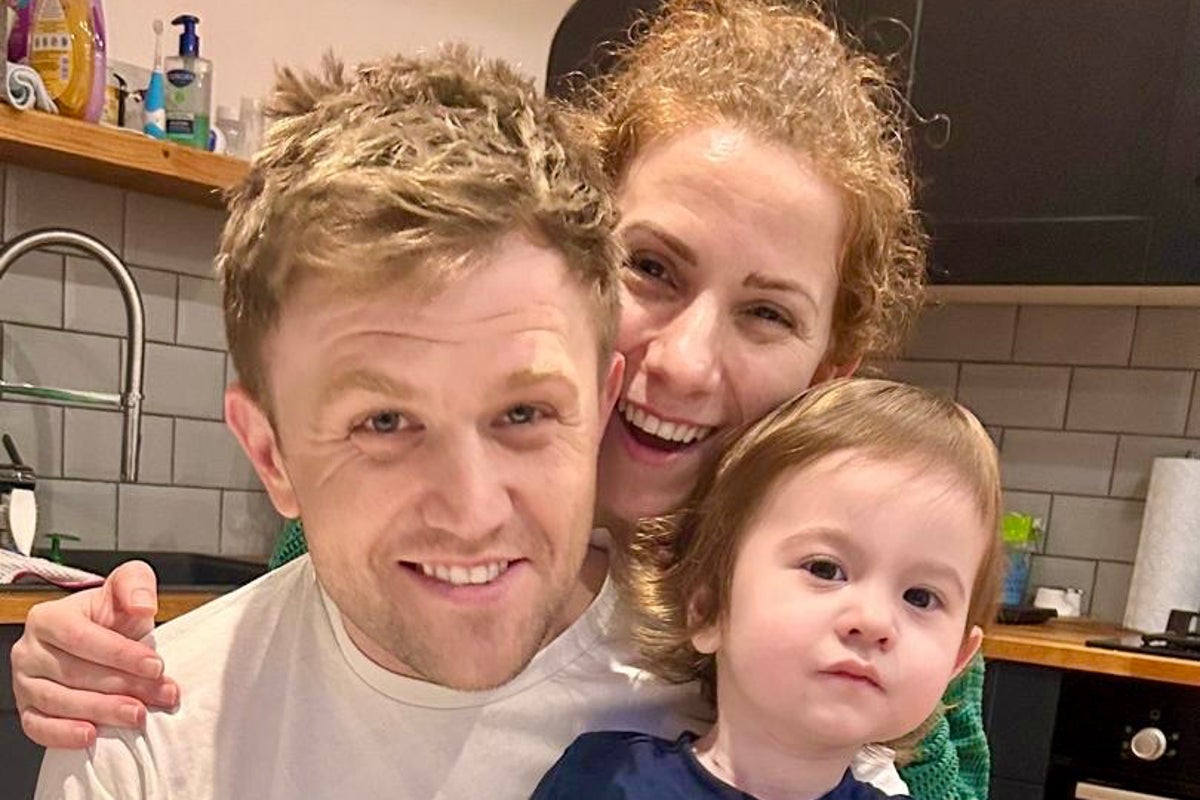
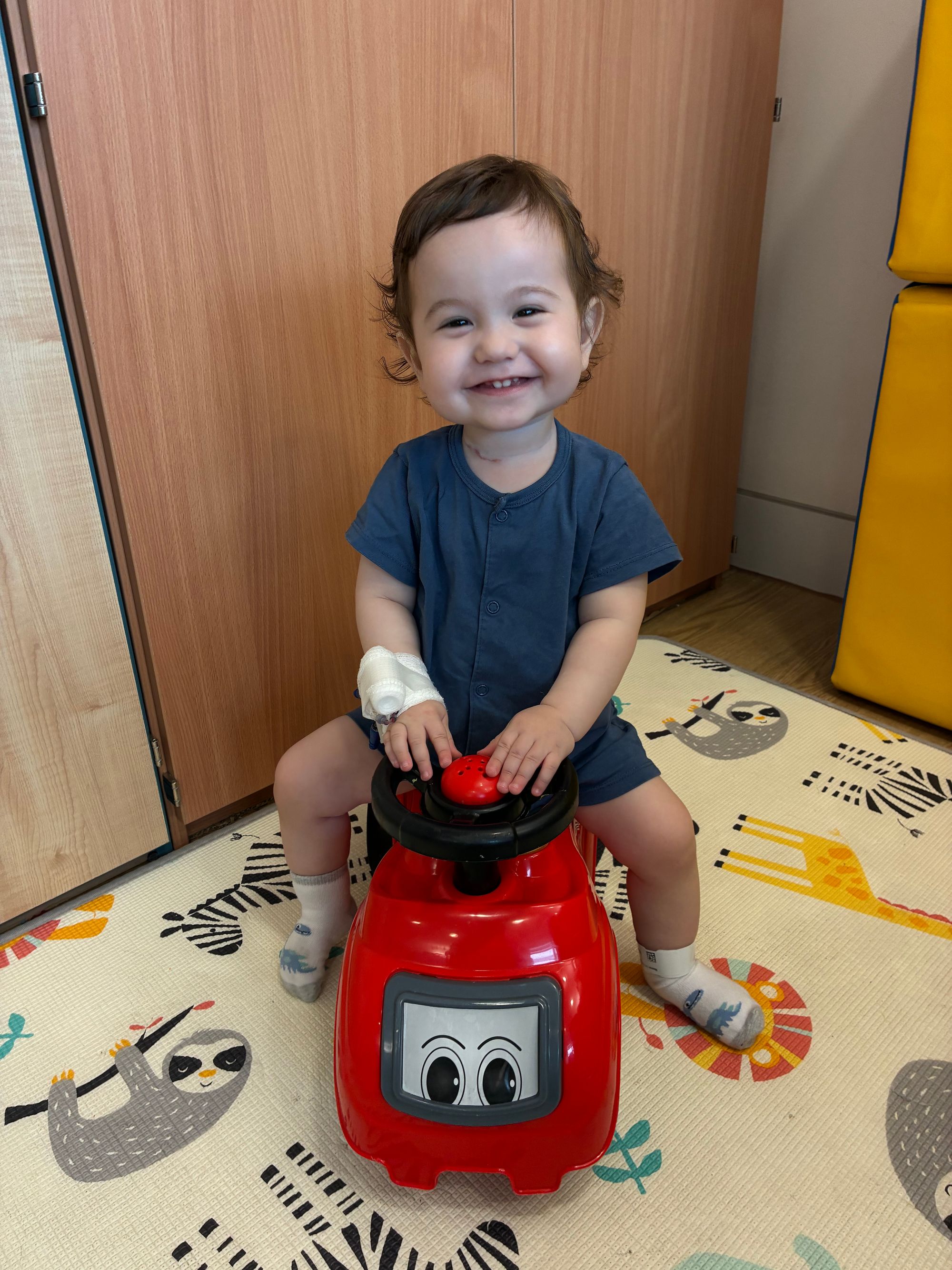 Two-year-old Casey Mcintyre from London was born with 11cm of his oesophagus missing and has had numerous operations (Sean and Silviya Mcintyre)
She said: “We simply couldn’t get the gap to close using his own tissue. After being referred to GOSH we had the best option at the time – pulling up his stomach to close the ‘gap’ but it’s been a long road and he still has a feeding tube while he develops his swallowing.
“The repeated surgeries have left him with some damage to his vocal cords so he’s developing his speech and noise-making to catch up. Once he’s eating enough through his mouth, we’ll be able to take his tube out.”
Casey is just one of around 180 babies born with oesophageal atresia (OA) a year in the UK. About 10 per cent of these children are born with long-gap oesophageal atresia (LGOA) and have an interrupted oesophagus, with a wide gap between the upper and lower segments.
Children born with LGOA cannot survive without invasive surgery and are often given a feeding tube. The surgeries available have side effects including breathing and gastrointestinal problems, and an unknown long term-cancer risk.
The study, published in the journal Nature Biotechnology, showed how scientists can use a donor pig’s oesophagus, which is very similar to a human’s, to grow a new food pipe in a process that takes about two months to complete.
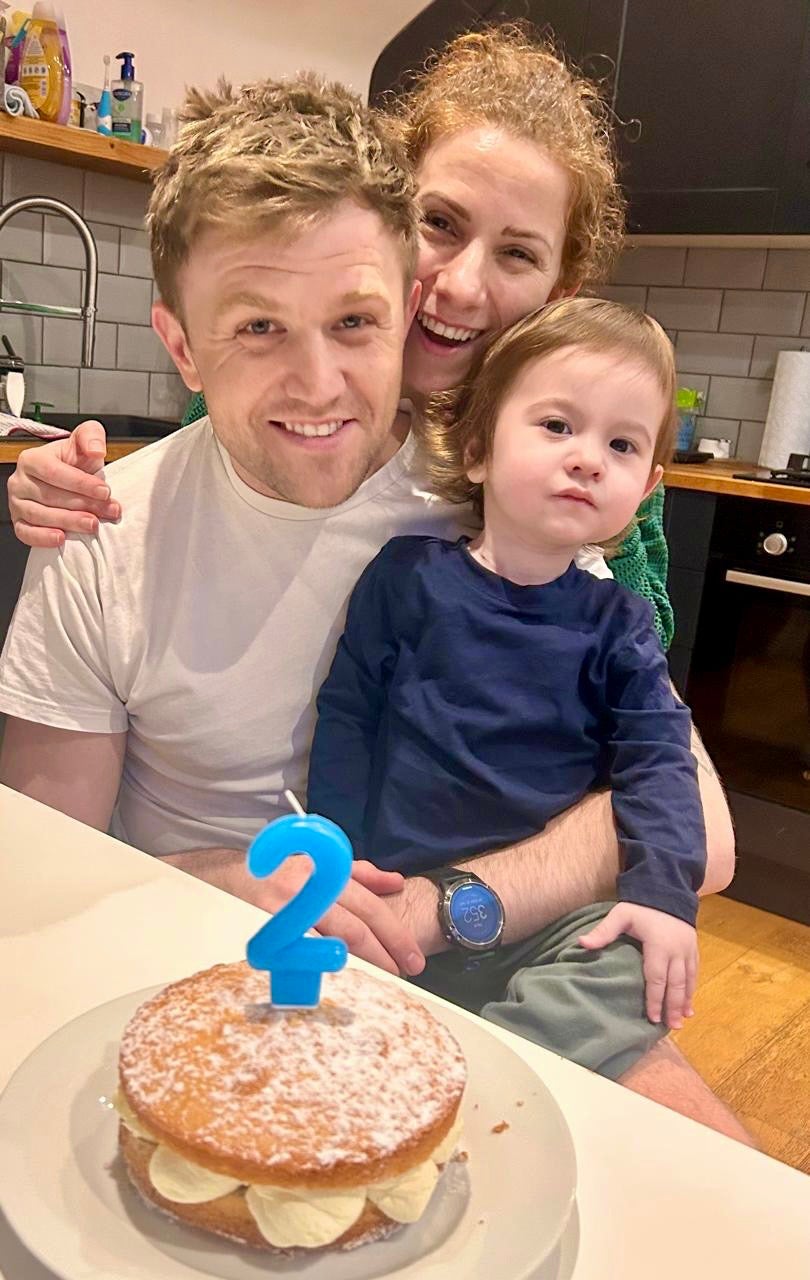 Casey pictured with his parents Sean and Silviya Mcintyre who say a lab grown food pipe would be “life changing” (Sean and Silviya Mcintyre)
First, a “scaffold” was created using a donor pig’s oesophagus, acting as a tube-shaped base for the new organ before being stripped of all pig cells. Then, scientists took muscle cells from the recipient pig, which were multiplied in the lab before being injected directly into the scaffold.
The tube was placed in a special container that pumped growth fluids through the tissue for one week.
All eight pigs survived the first 30 days after the transplant. After six months, five remained alive and the lab-grown scaffolds had developed functional nerves, blood vessels and muscle, allowing it to contract and move like an oesophagus.
The animals could eat normally and grew at a healthy rate, according to researchers.
Researchers explain the oesophagus is a complex organ that can’t always be transplanted, but within five years scientists hope to develop their research in pigs and offer children an engineered food pipe.
Dr Natalie Durkin, paediatric surgical registrar at GOSH and lead author of the study, said: “After successful implantation, our grafts grew, matured and began to function like native tissue. Each one of these steps represents a key milestone in being able to deliver this as a viable treatment option for children in the near future.”