
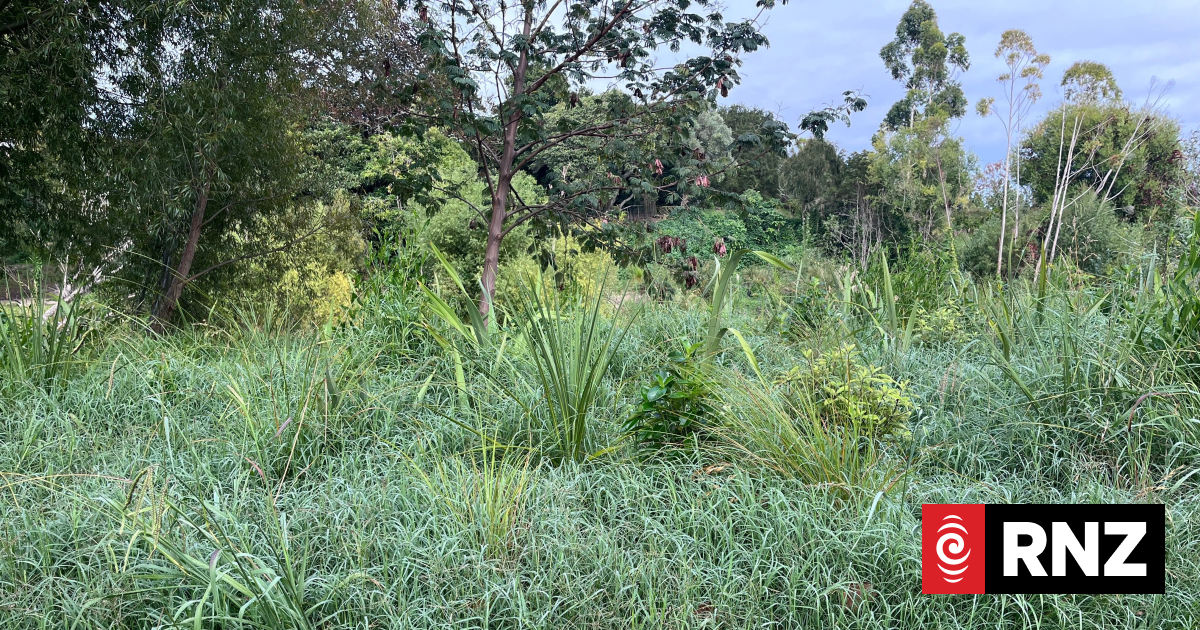
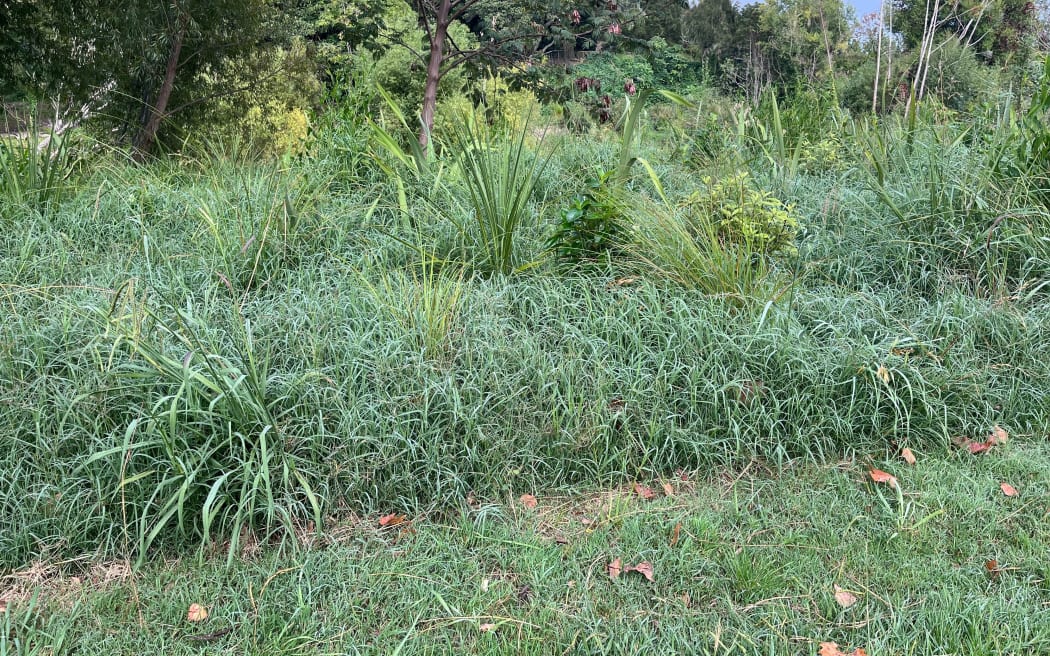
Kikuyu weed at Grant Road reserve.
Photo: LDR / Zita Campbell
A Gisborne resident says that the district council’s native planting in the reserve at the end of his road is an “unmitigated disaster”.
The council planted around 4000 plants at the Grant Road reserve last year, but many of those plants are being “suffocated” by kikuyu weed, Mark Sceats told Local Democracy Reporting.
Some plants appeared to be “dead”, and many were “completely smothered”, with some sections of the weed almost up to his waist, Sceats said.
“My concern is whether it’s ratepayers’ money or government funding, it’s still money that somebody’s had to provide … We’ve got an unmitigated disaster, basically.”
He said he was also concerned the plants were planted “too close together”.

The council agreed that the kikuyu growth at Grant Road was “vigourous”.
But the council spokesperson said that the dense planting of roughly 4000 plants should eventually shade out the kikuyu once canopy closure occurs, which can take three to four years.
Sceats was a retired barrister and solicitor and was also a deputy town clerk, in charge of reserves for a few years in the 1980s, he said.
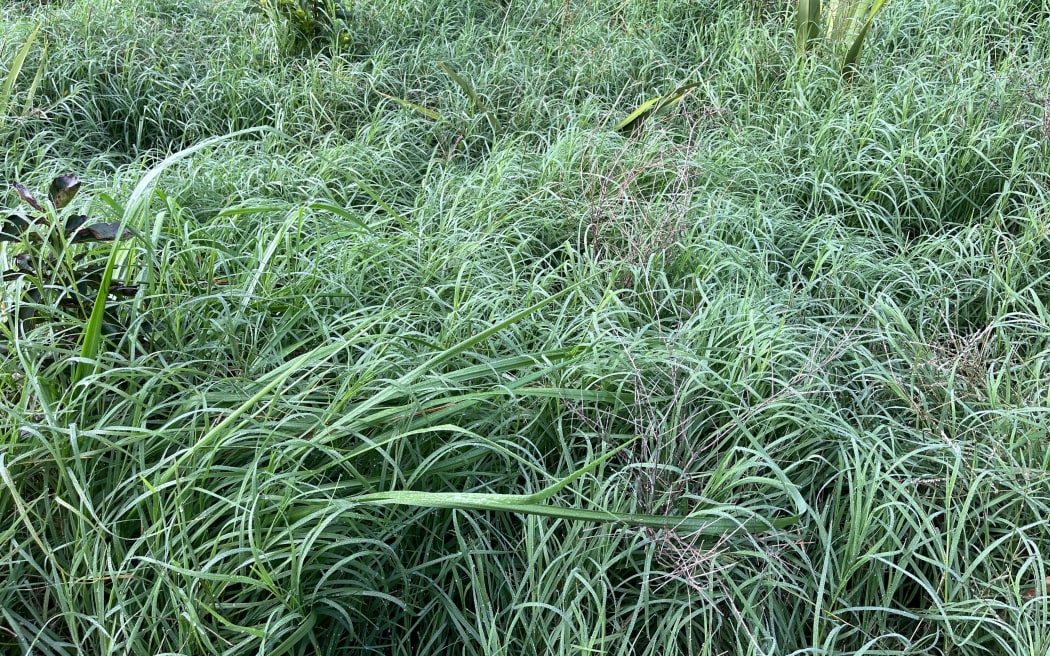
The Gisborne District Council planted 4000 plants at Grant Road reserve last year, primarily harakeke (flax), tī kōuka (cabbage tree) and carex grasses.
Photo: LDR / Zita Campbell
Writing reserve management plans was part of his role, and the council needed to “get the basics right from the start”.
He said the council had put weed mat down and then mulch on top, but did not spray the weeds, which meant the site was now covered.
The native plants were “probably very expensive” and were at risk of being lost.
To remove the weeds would probably mean “many hours” of somebody manually clearing them.
While the planting was good, the council had created a lot of work and expense to maintain it, he added.
Sceats said the council mowed the reserves’ lawns, and in the past week or so, had sprayed some areas, including on the riverbank and had used a weed-eater.
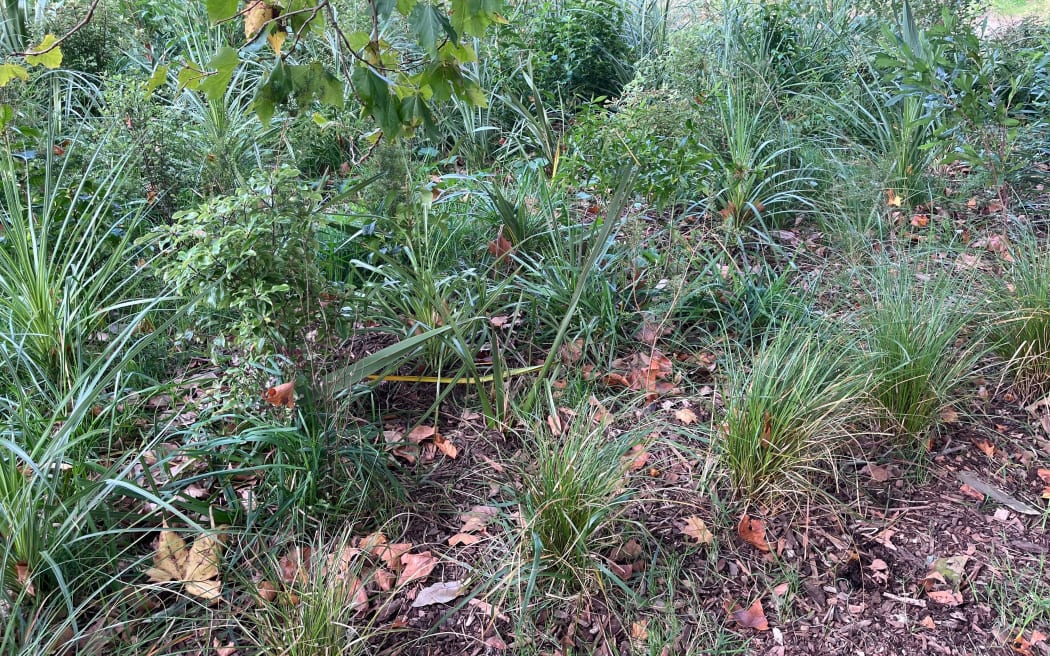
A section of the reserve, sheltered by a tree, was less affected by the kikuyu weed and showed the spacing of the plants, which resident Mark Sceats said had been planted too close together.
Photo: LDR / Zita Campbell
“I would have thought that the riverbank like this would have been something that they would want to protect and that this would have been one of the initial places that you would have done some planting on to protect the bank.”
Council director of liveable communities Michele Frey said the council planned to plant the riverbank this year.
Roughly 4000 plants were planted last year. They were primarily harakeke (flax), tī kōuka (cabbage tree) and carex grasses.
Council were “unable to supply costs” but noted that the planting was 50 percent funded through the Ministry for the Environment’s Freshwater Improvement Fund.
To prepare for the planting, the kikuyu grass was scrub cut but not sprayed before laying wool matting, Frey said.
The dense planting and wool matting were designed to “promote vigourous growth of the native plants and provide faster weed suppression”.
The council had success with this method at another site; however, “each site has its own challenges, and the kikuyu growth at Grant Road is vigourous”.
“The plants have been manually released and sprayed,” Frey said. “The perimeter has been sprayed, and weeds have been pulled.”
LDR is local body journalism co-funded by RNZ and NZ On Air.