
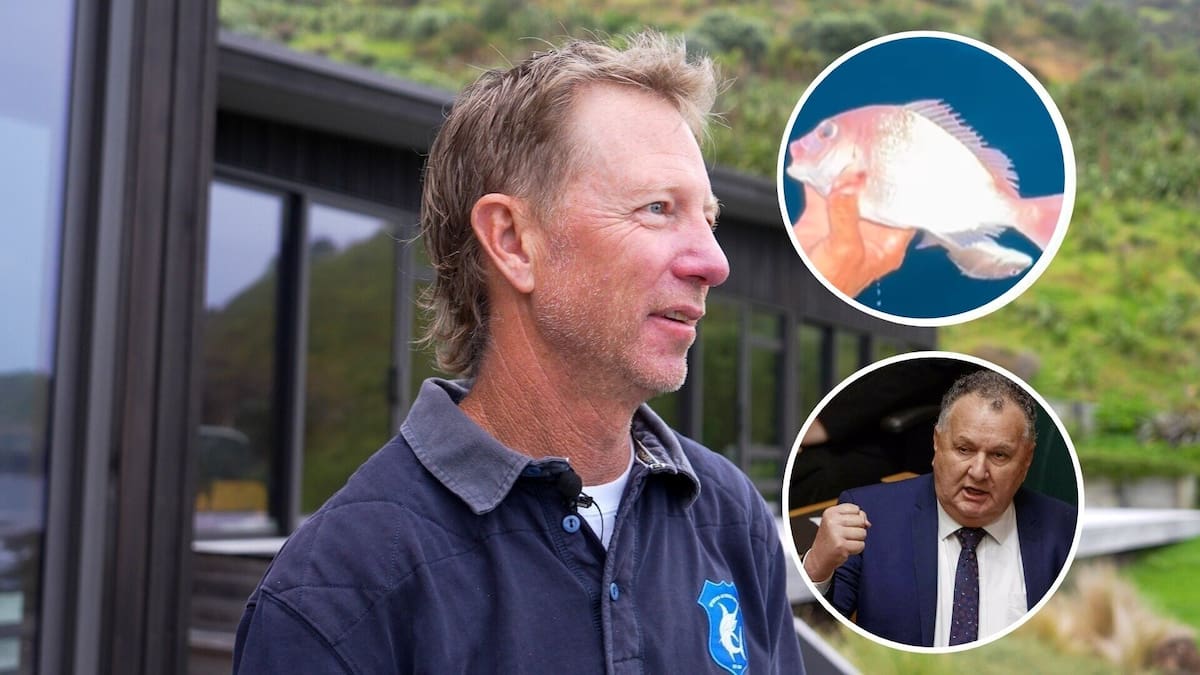
Watson, host of Ultimate Fishing TV, told the Herald the plan was “outrageous and crazy”.
He believes the reforms are about Oceans and Fisheries Minister Shane Jones paying back the fishing industry for backing him.
“It [the proposed changes] supports his friends in the commercial fishing sector. He’s paying the piper,” Watson told the Herald.
Matt Watson says there’s nothing good about planned fishing law changes. Photo / Annaleise Shortland.
The Herald put a series of questions to Jones about the bill on Thursday and Friday but was told he wasn’t available to respond.
“The minister is busy with fuel issues,” a spokeswoman told the Herald.
Jones, who describes himself as a commercial fishing apostle, has previously rejected claims he’s making changes to benefit “industry mates”.
In December, he told the Herald such accusations amounted to “misinformation” being spread on social media.
Oceans and Fisheries Minister Shane Jones. Photo / Mike Scott
The Herald asked MPI whether the plan to remove size limits for the commercial sector was supported by science.
A spokesman said information about nine species of fish whose size limits are proposed to be scrapped showed they had low to moderate chances of survival when returned to the sea.
Putting small fish back – for example snapper under 25cm – is a requirement under current commercial rules.
The spokesman said the bill would mean landing small fish would count against a fisher’s catch allowance, or they would pay a penalty fee known as deemed value.
“The proposals in the bill … provide incentives for fishers to fish selectively,” MPI’s spokesman said.
Industry: ‘This creates a clear disincentive’
A Seafood New Zealand spokeswoman backed MPI’s argument, saying, “This creates a clear disincentive for fishers to catch undersized fish”.
Asked whether there was a market for baby fish, the spokeswoman said there could be some “niche overseas markets” for smaller fish but they would be a low-value and therefore undesirable export.
She said the industry had always supported a system that avoided unnecessary waste.
Undersized snapper were among a line of dead fish spotted in Auckland’s Hauraki Gulf. Photo / Darren Shields
Watson doesn’t accept the argument the bill would promote selective fishing as the reforms don’t dictate that all fish must be landed.
“The system needs to say every single fish you catch comes to shore and is weighed,” he said.
LegaSea’s CEO, Sam Woolford, said the law changes would make it legal to land and sell baby fish while not addressing the core issue of wasteful fishing methods like bottom trawling.
“What they are doing is legalising current behaviour – this does not address the wastage issue,” he said.
Further complicating the debate is that the reforms give commercial operators a range of other benefits, including greater flexibility to discard unwanted catch.
The current rules mean all QMS species must be landed but, under the new bill, MPI’s spokesman said, this would change.
“The bill would give commercial fishers more options about what to do with their catch by allowing them to return QMS species to the sea when monitored by on-board cameras or observers,” the spokesman said.
The public will be blocked from seeing any footage from onboard cameras as part of the reforms.
The changes would also give quota owners the right to carry forward an increased amount of uncaught catch into another fishing year, and the ability for fisheries decisions to be challenged in court would be reduced.
‘It’s just wrong’
Matt Watson says the reforms threaten a public resource for future generations. Photo / Annaleise Shortland
Watson is adamant the bill is all about rewarding big businesses that rely on destructive fishing methods.
“Ministers have basically gone to the seafood industry and said ‘What do you need?’” he said.
“Recreational fishers still have a size limit because the size limit is based on science, that’s common sense. These reforms are very much skewed towards the big corporate fishers.”
He said if the proposed laws were enacted parents would have to explain to children catching their first fish off the wharf that small ones were reserved for “bottom trawlers only”.
“Does that sound fair? Of course it doesn’t.”
MPI said the bill was now before Parliament but subject to change.
Watson urged those concerned about it to ensure their views were known, noting that fish were a public resource and not owned by fishing companies.
“You need to let your elected officials know that if they allow this to go through its first reading, that you won’t vote for them. Ultimately, the politicians care about their survivability and their future.”
Last year, the coalition Government established 12 high protection areas (HPAs) in the Hauraki Gulf, which is one of the country’s most popular fisheries.
A late change to the proposal saw ring net fishers granted exclusive access to fish in two of the HPAs.
That was despite National’s Conservation Minister, Tama Potaka, being warned by officials against such a move.
Following a public backlash, Potaka said National would campaign on reversing the decision ahead of this year’s election.
The Herald sought comment from Potaka about whether he or National supported scrapping the minimum legal-size limits for commercial fishers but he is yet to respond.
Michael Morrah is a senior investigative reporter/team leader at the Herald. He won News Journalist of the Year at the 2025 Voyager Media Awards and has twice been named Reporter of the Year at the New Zealand Television Awards. He has been a broadcast journalist for 20 years and joined the Herald’s video team in July 2024.