
She got a reply from the woman, who said there had been an issue in the main bedroom.
The previous tenant said mushrooms had been growing in the room, and she’d raised the issue several times.
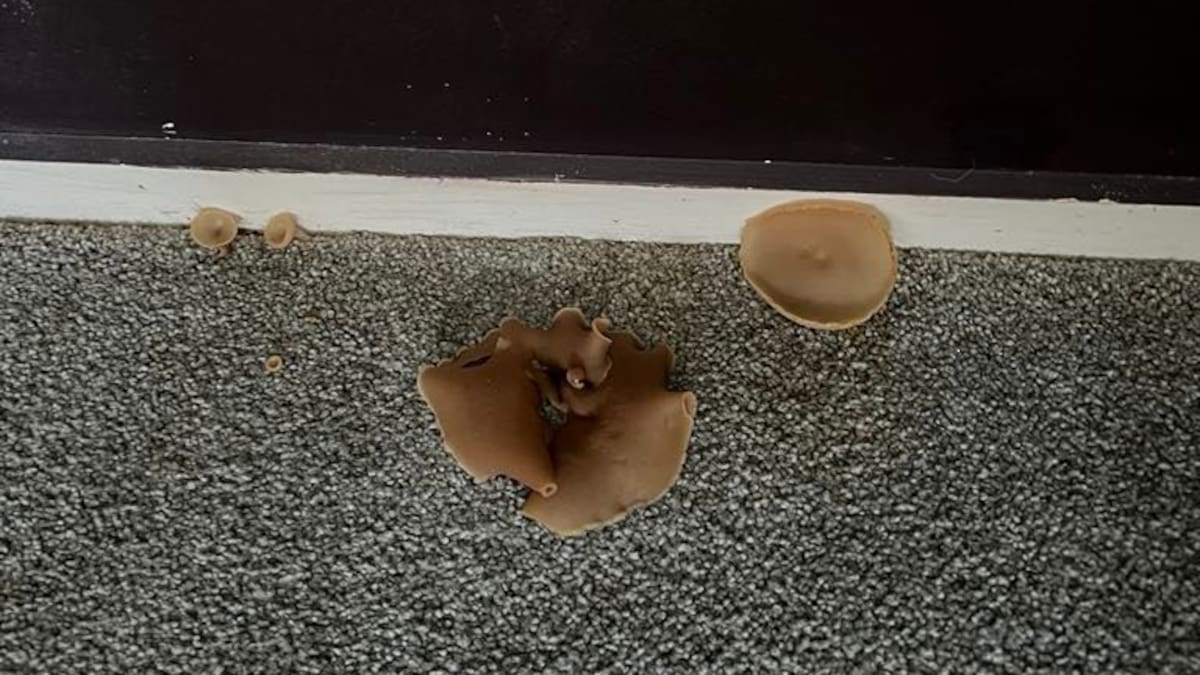
She shared photos of the mushrooms and added, “it kept growing”.
The woman explained that while they had mentioned it, they hadn’t taken the matter any further as they were migrants on temporary visas, and “didn’t want any trouble”.
Now, the Tenancy Tribunal has criticised Barfoot and Thompson property managers Amy Chiu, and her manager, Kelsey Luan, for not addressing the issue before reletting the property, which they managed for owners Olivia and Titus Katiyo.
The photos, which the Tenancy Tribunal found had been supplied to the property manager during a previous tenancy, showed mushrooms growing on the carpet of the main bedroom.
Tribunal adjudicator Toni Prowse said the previous tenants moved out of the master bedroom because of the “foul smell” coming from the mushrooms, and one of them suffered from rhinitis, which was worse when they slept in the room.
“The previous tenants told Ms Chiu about the mushrooms and sent photographs of the mushrooms to her,” Prowse said.
“I am satisfied that Barfoot and Thompson knew there was a problem with the property in the master bedroom and failed to take steps to address the problem.”
She said mushroom growth was “abnormal”, indicated a “serious problem”, and yet the property manager failed to do anything, nor keep a “watching brief” on the area.
Prowse also noted the pre-inspection photographs showed an area of discolouration on the carpet in the same spot where the mushrooms had been growing, but nothing was done to investigate.
Luan was contacted for comment; Chiu did not appear on the company’s website.
In response to NZME’s inquiries, Barfoot and Thompson general manager property management Anil Anna confirmed Chiu no longer worked for the company.
“The level of service provided to the tenants and the approach to important maintenance work was not up to standard in this instance, and we regret that more immediate steps were not taken to fully investigate and resolve the dampness issue,” Anna said.
He said the company took its professional and legal obligations seriously and set high expectations for service to our landlords and tenants, and it regularly updated its processes.
A screenshot of a video taken by the tenants, and submitted to the tribunal, of the inside of the wall between the bathroom and bedroom. Photo/Supplied
The team had implemented recent changes, including upgrading property photography technology and introducing new software to support faster management of maintenance requests.
While in this tenancy, the findings related to failure to maintain breaches, not Healthy Homes, Anna said they had completed recent audits, training, and process improvements to ensure compliance with the final Healthy Homes standards across their portfolio of properties.
Frequent illnesses, respiratory issues, and ‘undue stress’
In the recent case, the tribunal awarded $4200 in exemplary damages for breaches related to failure to maintain the property, which included the dampness and leaking, as well as an issue with the oven, which had no visible dials, and an internal door that had a lock but no key.
Prowse referred to the health effects the tenants experienced – respiratory issues and things they “had never experienced before and had not experienced again since leaving the premises”.
“These included rashes on their bodies, unexplained swelling, nose bleeds, headaches, and bleeding from their ears. The tenants also suffered an unexplained miscarriage,” she said.
The tenants submitted photos of swollen lips, stating that when they went to the hospital, doctors couldn’t determine the cause.
They’d used all their sick leave, which added to their stress, and they provided a letter from their GP confirming frequent doctor’s visits.
The doctor said there had been an improvement in their health since they left the property.
Prowse said the presence of mould and dampness is known to “cause or exacerbate some illnesses”.
While there was no definitive answer as to whether the condition of the property was at the root of the issue, she was “satisfied from the evidence that the leaks in the master bedroom had a detrimental effect on the tenants and their child’s health”.
The Tenancy Tribunal has made a ruling on the tenants’ complaints. Photo / 123RF
She also said she accepted the way the property managers had caused the tenants “undue stress”.
Prowse observed that different property managers had turned up to different hearings, with “different explanations” given for the same issue.
When it was evident that those explanations were not plausible, another explanation was given, she noted.
She said they sought to diminish legitimate complaints, cast the tenants as difficult, and said they lacked insight into the effect on the tenants of having so many items breaking or needing repair.
It was in the public interest that a “significant award” was made, as had the tenants not been persistent in finding the previous tenants, it may have never become clear that the previous tenants had complained about the same issues.
“Ms Chiu and Ms Luan both said at the May hearing that they were unaware of any previous complaints; that was clearly wrong,” Prowse said.
An ongoing leak, and a locked door
The house is a 23-year-old plaster-clad two-storied home in Auckland’s Flat Bush, and was tenanted for eight years by Barfoot and Thompson.
The tenants began renting the property in November 2023, with Chiu as the property manager and Luan as her manager.
There were issues from the get-go, including rubbish left out, an oven with no control markings, window latches and seals that needed repair, and an internal door with a lock but no key.
In one incident, their son locked himself in the room and they had to manipulate the lock to open it.
The adjudicator said that when a landlord didn’t have a key to an internal door, their obligation was to have the lock changed.
There were other issues, including wastewater leaking, an oozing kitchen cooktop, leaks in the ground-floor bathroom, and a hot water cylinder with a faulty valve, but the tenants accepted that these issues had been remedied.
Their biggest issue, and the main reason for their claim, was the upstairs bathroom leak, which they became aware of on June 26, 2024.
After the tenant first reported dampness, a plumber came and attributed the leak to a loose shower elbow. He applied sealant.
But the next day, the tenants told Chiu that they could still hear dripping and were worried it was still leaking.
Chiu told them the noise was just the pipes and normal plumbing noises.
The tenants filed a Tenancy Tribunal application and, on July 6, they moved out of the bedroom.
A few days later, a housing inspector did a report, noting “water stains and moisture penetration”. When he lifted the carpet, he found what appeared to be mould underneath.
An initial roof inspection was done on July 16, but the tribunal ordered more investigations following a hearing on July 29.
On August 9, a plumber, sent by Barfoot and Thompson, found leaking behind the shower lining that had been “going on for some time”. He also commented to the tenants that he’d been at the property before.
Another plumber also attended the property at the same time, and later confirmed to the tribunal that he had previously replaced the shower, and that the shower lining had failed again, this time in a different place.
Prowse was satisfied that the landlord failed to maintain the property by failing to address complaints made by both the previous and current tenants.
This meant the shower leak was not repaired in a reasonable time, and it constituted a breach of the Residential Tenancies Act and Housing Improvement Regulations.
She awarded $4200 in exemplary damages, noting the property managers had already given the tenants a five-week rent abatement, at $100 per week, because they hadn’t been able to use the master bedroom.
Undercover agent sent to the house, say tenants
The tenants also made a claim of a breach of quiet enjoyment after a man, whom they were told was an insurance assessor, came to the property.
They’d been given a warning that an assessor was coming, which didn’t strike them as unusual, given the issues they were having with the shower.
However, the woman became suspicious when he asked to see the garage. When she asked who he was, he said he was a sales agent.
The house was sold after the tenants moved out.
Chiu told the tribunal that she must have got mixed up with another property, and that she had assumed the man was an insurance assessor.
But Prowse thought this “unlikely”.
She read the “somewhat ambiguous” text messages between Chiu and the man, and concluded that Chiu told the tenants an insurance assessor was coming over, but she knew he was actually a sales agent.
“She specifically instructed him to tell the tenants that he was an insurance assessor; if she thought he was an insurance assessor, there would be no need for her to pointedly tell him to tell the tenants that,” she said.
Prowse said that even if she was wrong, and Chiu didn’t know and made assumptions, this fell “well short” of her obligations, as property managers needed to check credentials before sending someone to a tenant’s home.
The tenant was awarded $1400 for this breach.
Woman fought ‘tooth and nail’ to get answers
The tenancy was subject to a series of hearings, including a rehearing after the tenants received information from the plumber who had previously attended the property and advised Barfoot and Thompson about the earlier leak.
In the initial hearing, the adjudicator was satisfied the property manager had been “proactive in resolving issues”; the evidence from the plumbers challenged that.
The adjudicator also noted the irony that “had the landlord provided the documents as instructed before the April hearing, the tenants would not have had the very compelling evidence from the previous tenants regarding the mushroom growth”, which was gathered in between hearings.
The property managers sought name suppression, but this was declined, and the adjudicator said publication allows members of the public to make “informed decisions when choosing a rental”.
“These managers were tasked with defending these claims and they failed to produce documents when requested and told the tribunal that they had no record of previous complaints from previous tenants when that was blatantly incorrect,” Prowse said.
The tenants were granted suppression, however, and speaking to NZME after the appeal periods had lapsed, the woman said both the tenancy and the battle in the tribunal had taken their toll.
They had lost a baby at 9 weeks – a miscarriage she believes was because of the health effects from the property, and the stress.
That loss motivated her to seek justice, but when assessed solely on the compensation they received, she questioned if the fight had been worth it.
She had spent hours collating evidence and attending the many hearings.
“That amount of documentation analysis that went into preparing those documents versus the payout that the tribunal gave us is not worth it,” she said.
“The only thing that made me, because when I lost that child, I promise, even if I don’t win this, I will fight tooth and nail till I get to the bottom of this.”
She feels like they could have been compensated more.
“Nobody can put a price tag on, because it’s intangible, the emotions or the health impact that we went through and what follows upon leaving the property.”
She’d gone into negative sick leave and was put on a performance review.
She feels like the experience had “cost them so much”, but the penalty for the property managers hadn’t been the same.
She was frustrated that the property managers hadn’t been honest about what they had known, and she felt there had been no specific consequences for that.
Ultimately, she thinks the financial penalties should be higher, and property management should be regulated in the way the real estate industry is.
“Every Tom, Dick or Harry can be a property manager,” she said.
“If we improve the housing situation in New Zealand, we can definitely improve the hospital system.”
Hannah Bartlett is a Tauranga-based Open Justice reporter at NZME. She previously covered court and local government for the Nelson Mail, and before that was a radio reporter at Newstalk ZB.