
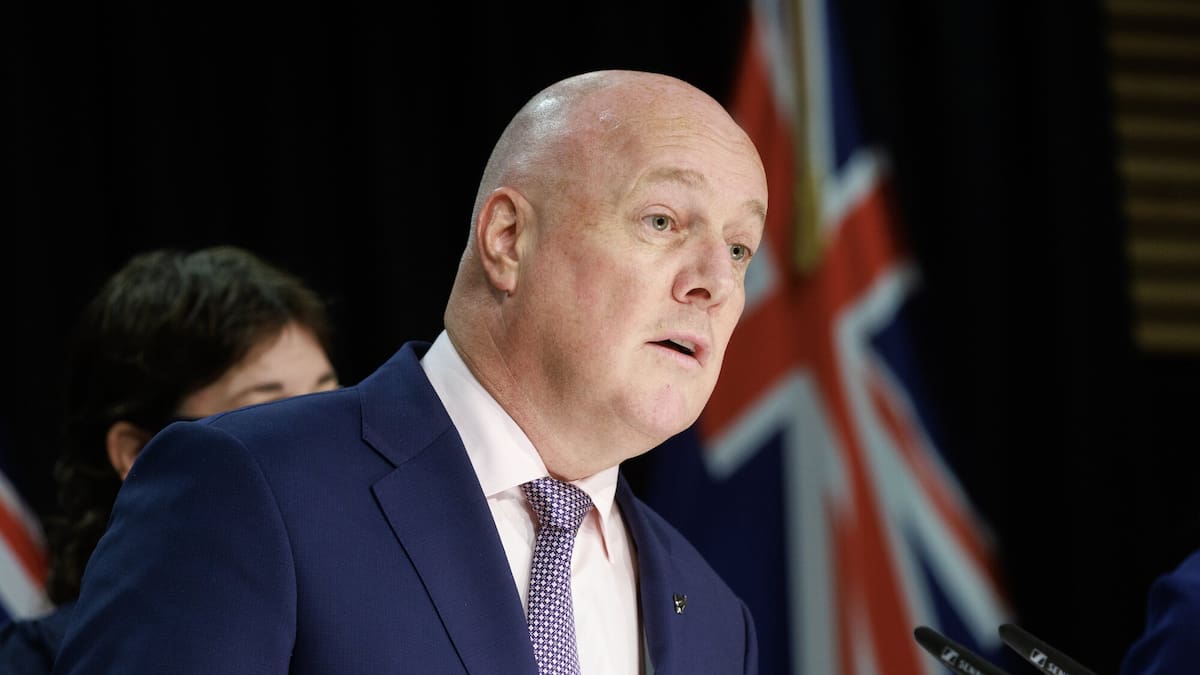
The Prime Minister attempted to water down talk that such a framework could soon be agreed, saying reporting had been “very speculative and ahead of itself” and “we haven’t made a Cabinet decision or had a fulsome discussion about it all”.
He said the US was having conversations with more than 40 countries on critical minerals and “we are part of conversations with lots of countries on issues like this”.
But the Cabinet document said that on November 21, New Zealand officials in Washington met with representatives from the US National Security Council and the Department of Commerce to “discuss critical minerals and express New Zealand’s interest in an arrangement with the US”.
Not long afterwards, on December 1, the Ministry of Foreign Affairs and Trade (MFAT) received a proposed framework.
Resources Minister Shane Jones then took an oral item to Cabinet on the topic on December 17, in which he advised his ministerial colleagues of opportunities and risks.
The Prime Minister attempted to hose down talk that a framework was soon to be signed. Photo / Mark Mitchell
In late January, the Herald and other media outlets reported that discussions were underway between New Zealand and the United States, with the two countries working towards an announcement.
Luxon made his first comment on the matter during his morning media round on February 2, which would have been ahead of a Cabinet meeting later that day.
It was during that meeting that Cabinet “noted that officials have negotiated amendments to the text”.
Ministers also noted New Zealand would not sign the framework at a summit being held in Washington later that week, where other countries were doing deals. Instead, Jones was invited to return to Cabinet at a later point with “further advice” on the framework and “to seek approval for the next steps”.
Following that Cabinet meeting, Luxon continued to talk down reports of a deal being made and refused to say what the benefits could be.
“I appreciate as media you want to talk about that, and you’ve seen reporting over the weekend, but you’ve got well ahead of where Cabinet is,” he said.
“All I’m saying to you is we definitely want to develop a critical mineral sector, absolutely no doubt about it. We will make sure that we do that in our own national interest as we always do.”
At a meeting in Washington that week, New Zealand’s top diplomat “committed to explore further opportunities to expand co-operation on critical minerals” with the United States in a meeting with a senior official from US President Donald Trump’s Administration.
Luxon would later still say discussions were at a “very preliminary” stage.
Resources Minister Shane Jones spoke to Cabinet about it in December. Photo / Mike Scott
The Cabinet paper on the topic highlighted several benefits for New Zealand from the framework, particularly around strengthening economic security and resilience, growing regional development, diversifying trade and investment partnerships.
There were also “risks to signing the framework” outlined, but this is mostly redacted in the document the Herald has seen.
Also largely redacted is a section on the “impact on other international relationships, especially China”. The Herald reported in February that the Chinese Embassy in New Zealand was watching “gathering further information” on the proposed framework.
One aspect of that section which isn’t redacted is a note on US President Donald Trump suggested it could be appropriate to impose tariffs if agreements with countries aren’t reached.
The document also goes into concerns raised by Māori.
As the Herald reported at the time, a memorandum was filed at the Waitangi Tribunal raising concerns an agreement could “be finalised and signed without Māori, or anyone else in Aotearoa, being aware” and may ”breach the principles of rangatiratanga and kāwanatanga”.
Ministers were informed that the Ministry of Foreign Affairs and Trade has engaged with some Māori groups, which raised concerns about the process – “the lack of domestic engagement with affected Māori rights-holders” – the absence of language protecting Māori rights, and New Zealand partnering with the US.
“These groups have recommended formal Government opposition to adopting the framework, a reset of the process, an explicit recognition of Treaty of Waitangi obligations, Māori rights and interests and resource protections, and consent-based approaches to development.”
The paper said officials would ensure all Treaty obligations and commitments were adhered to if further steps were taken. More engagement would take place on actions arising from the framework.
Jamie Ensor is the NZ Herald’s Chief Political Reporter, based in the press gallery at Parliament. He was previously a TV reporter and digital producer in the Newshub press gallery office. He was a finalist in 2025 for Political Journalist of the Year at the Voyager Media Awards.